 Newsletters
 Risk Central
 Digital Edition
A Life of Achievement: The Hanover Insurance Group’s Jack Roche
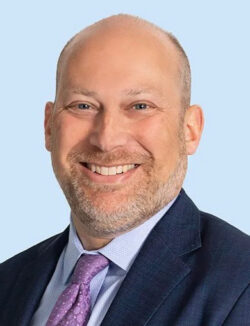
On November 2, 2026 in Boston, The Institutes Griffith Foundation in conjunction with the American Property Casualty Insurance Association presented Jack Roche, the president and CEO of the Hanover Insurance Group, with its 2026 Lifetime Achievement Award.
Later that week, Dan Reynolds, the editor in chief of Risk & Insurance, caught up with Roche to discuss his career and industry perspectives. Roche has announced his intent to retire at the end of 2026.
The following is a transcript of that discussion, edited for length and clarity.
Risk & Insurance: Thanks for meeting with us Jack and congratulations on the award. What initially drew you to commercial lines underwriting, and what has kept you engaged in the field?
Jack Roche: I entered the industry through a commercial lines underwriting training program. Like many others, I fell into this business, but I almost immediately felt a strong fit. As I learned more about the underwriting role, I was drawn to the combination of analytical capability and business development opportunities; building a book of business and almost running your own little business.
At the same time, I understood that you were taking risk for a living, and that required real thoughtfulness. It wasn’t just about going out and playing golf with agents; it was about taking your role seriously. Early on, I simply liked the mix of elements you were able to bring into one job.
As I got further into it, I began learning about other industries. To underwrite in the commercial lines space, you need to understand the manufacturing sector, the construction sector, and technology. Over time, it became fascinating that I got to learn so much about the world around us, albeit through a risk management lens.
It just grew on me, and frankly, I can’t think of anything else I would have rather done.
R&I: What specifically about The Hanover made it such a good professional fit for you?
JR: I had the opportunity to spend nineteen years in the field, building branches and regions and running field operations. As I navigated several consolidations, surviving and thriving through each acquisition of the companies I worked for, I began to yearn to influence strategy rather than simply execute it as a field person.
After spending a year in another company’s home office, I was drawn to The Hanover because of its vision. The concept of building the capabilities of larger, more sophisticated companies while replicating the personal approach of regional carriers; this “best of both” idea really resonated with me.
The more I learned about the company, the more attracted I became. I felt The Hanover was a better fit for me, and that I could make a greater impact there than by working for an industry leader that would do just fine with or without me.
R&I: How would you characterize the company’s strengths today?
JR: Our strengths really lie in making the vision come true. Today, we have a broad set of more specialized products across personal lines and commercial lines. We also have a very unique approach to agency strategy and partnering that I think people know us for.
Additionally, we have an extremely special culture that we have worked very hard to build, which makes attracting top talent far easier than it was twenty years ago when we were just a vision and an ambition. It’s the combination of being a real insurance company with capability, a uniqueness in the way we distribute into the agency system, and the ability to develop an employee value proposition. When people come to this company, they feel what I was hoping for twenty years ago; that they can make a difference and have a different experience than they would on either end of the spectrum.
Working for a big company has some advantages, but it doesn’t necessarily make you feel like you’re making a huge difference. And when you’re working for one of the smaller or less capable companies in our industry, you feel like you have one hand tied behind your back in this more sophisticated stage of industry development.
R&I: How does The Hanover balance the capabilities of a large company with the personal touch of a regional one?
JR: Looking back over my career and the consolidation I was part of, many of the best companies, at least from an agent’s perspective, truly knew how to underwrite. They also had a genuine affection for the agency side of the business and an appreciation of how hard it is to find customers and sell value. A lot of those names have gone away and no longer exist.
Building a newer, more modern version of some of those older companies just made complete sense to me. It feels like we’re filling a void but doing it in a way that’s even more specialized and forward-looking.
The Hanover is in the best place we’ve ever been because we stuck to that fundamental strategy.
R&I: What can the insurance industry do to help the general public better understand its value?
JR: I truly believe the property and casualty industry is a noble business and that we are the backbone of the economy. People, businesses, and families could not take the risks or own the assets that they do without the mechanization of the property and casualty insurance business.
I believe the vast majority of people in this business care about the end consumer and work hard to deliver on that value promise, which is the essence of our business. Unfortunately, over the last two decades, we’ve lost some of that narrative, partly to the plaintiff’s bar.
But even more broadly, people have lost an appreciation for the shared concept of being able to pool our risks together. That idea is not resonating like it once did.
I hope we’ll work to restore that reputation, and I plan to participate in that effort after I leave the business. We need to find ways to ensure people know that our industry attracts individuals who are genuinely customer-focused and that we want to expand our ability to take on risk for businesses and families. That, clearly, is not the image we currently enjoy.
R&I: Looking back on your career, what were some of the most daunting moments you faced, and how did you overcome them?
JR: Early on in my time in this business, I worked for companies that were acquired. M&A is not an easy thing to go through as an employee, and frankly, as a leader. A lot of people ask themselves, particularly when they work for the acquired company, whether they should stay or move on, and if it’s worth the pain and suffering of going through the integration, even if you’re one of the chosen ones.
I went through a half dozen of those in different forms, and by staying through each one, I feel a sense of pride in not taking the easy way out and instead trying to be part of the solution to help integrate the two companies together. I reflect back on that very positively, because it would have been easy to run away and simply accept being merged into another company.
At a different level, more recently, there’s no doubt that in the post-COVID environment, our company hit some real challenges with the inflationary environment and some particularly challenging weather patterns in the back half of 2022 and 2023. It was difficult.
In a lot of ways, there’s a huge silver lining to what came across our company. Everybody rallied behind the fact that we still have a great business, and we have to make our way through those challenges. We had to respond to the market conditions in ways that would help us further diversify the firm and restore ourselves to the top quartile returns we had enjoyed for several years before those challenges emerged.
Most people in our company today look back at 2022 and 2023 as a stimulus to get even better, as opposed to bad luck or bad fortune. We now have the most diversified earnings stream in the history of the company, in part because we showed agility and resilience through that period.
R&I: Thanks for your candor there, Jack. Who are the individuals that have had a significant impact on your professional growth throughout your career?
JR: I’ve had many influences, so I’ll resist the temptation to provide too long of a list. Early in my career, a gentleman by the name of Lou Snage was my boss and eventually a peer, back when I was in the field running branches. I learned more from him than from anyone else that if you don’t build strong relationships, you can’t succeed in this business.
People won’t think of you as the best underwriter for their business, and you won’t establish a trusting relationship, if you don’t start by fundamentally building strong relationships. He’s been retired for about a decade now, but we’re still in touch and talk about the good old days, as well as how this business has transformed and changed for the positive.
I also had the pleasure of working at both Saint Paul and Travelers for Jay Fishman, an incredibly impressive CEO. More than anything, what I learned from him was how to lead with integrity. At the end of the day, you’ll have good days and less good days, and you’ll manage through a variety of circumstances, but I always held Jay in high regard because of the integrity with which he navigated all of those situations.
Last but not least, I would have to mention both Marita Zuraitis and Fred Eppinger, who attracted me to this company twenty years ago and were huge influences on my career. Fred’s vision is the derivative of what we do today, and much of what drew many of us to this company stemmed from that vision.
Perhaps even more importantly, Marita believed in me and gave me opportunities sometimes before I was even ready. She believed in the concept of developing top talent and high-potential individuals.
From the USF&G and Saint Paul days all the way through to when I came to The Hanover, I felt like she made major investments in me that ultimately positioned me to run this company. I’m very appreciative of their support, and of many others, but those are the four who stand out most to me.
R&I: Looking back on your tenure, what accomplishments are you most proud of?
JR: At our recent investor day, held virtually, I discussed the results of the last six years and how we met or exceeded the targets we set for our investors. However, the most impressive accomplishment, in my view, is that we have built a business with true sustainability. We have earned the right to go to the next level, with highly talented people across the important parts of our company and capabilities that work in a more integrated way than any place I’ve ever experienced.
This business has grown so complex that if people only know what comes at them through their current roles; what I call deep and narrow specialists, they can’t compete in this far more complex and uncertain time. You need real business people who understand the business more broadly and have the opportunity to gain experience beyond what naturally comes through their current roles.
That, I believe, is what sets this company up for future success. We have outsized talent for the size of our company and a business approach that is integrated, allowing people to be more comprehensive in how they solve problems and pursue truly profitable growth opportunities. &