Newsletters
 Risk Central
 Digital Edition
7 Questions for CorVel’s Sarah Scott
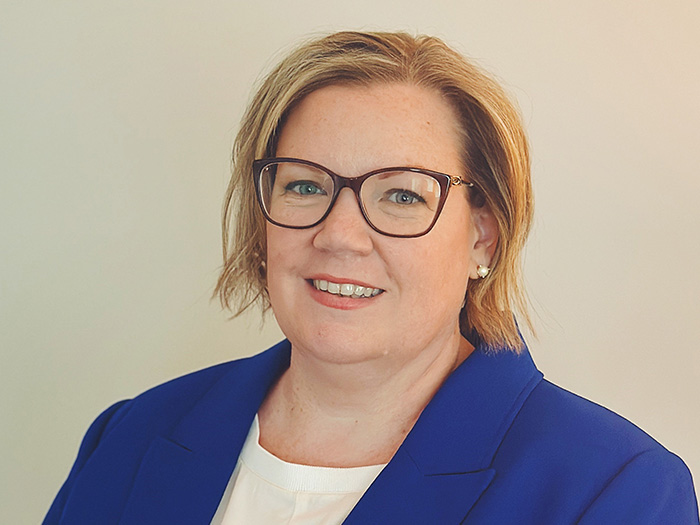
Risk & Insurance® recently caught up with Sarah Scott, President and CEO of CorVel. What follows is a transcript of that discussion, edited for length and clarity.
Risk & Insurance: You’ve been with CorVel for over 26 years, most recently leading product and corporate services. Now that you’re taking the helm as CEO from this internal position, you know the company’s technology and culture very well. How are you planning to balance preserving the long-term legacy and proprietary platforms with the need to inject fresh, disruptive strategies into the claims management market?
Sarah Scott: One of the advantages of being with CorVel for over 26 years is that I’ve had the opportunity to see the business from many different perspectives. I started as a nurse case manager, spent years working with clients in account management, led product development, and now focus on enterprise strategy. Each role has taught me one thing: lasting success comes from continuously improving while staying true to core values.
I’m looking to build upon that solid foundation, examine our strengths, and then introduce technology to make a difference. Michael Combs has built a culture defined by innovation, fiscal discipline, and enduring customer partnerships. My responsibility is to preserve those strengths while preparing CorVel for its next stage of growth.
My priorities are straightforward. First, continue to advance AI and technology in ways that improve outcomes, enhance quality, and make a difference for injured parties. Second, preserve that entrepreneurial culture that has always differentiated CorVel — that spirit of looking at unique and different ways to deliver value for our clients.
Third, invest in the next generation of leaders. As we advance with technology and AI, the next generation of leaders will need a unique skill set to manage the organization through change management and AI adoption while building on the expertise of our adjusters and clinical staff.
R&I: CorVel has been discussing a shift from reactive claims processing to proactive risk intervention. Practically speaking, how does CorVel’s clinically integrated model use AI to change the first twenty-four hours after a worker injury in 2026 compared to a decade ago?
SS: Over the last decade, our industry has recognized that the greatest opportunity to influence claim outcomes lies within the first twenty-four hours. Early intervention has become standard, and a much more proactive approach means that many cases that would have become actual claims in the past are now resolved as first aid incidents or never develop into complex claims at all.
However, this progress has created a unique challenge: the claims we do manage are now much more complex. Our claims and clinical professionals are evaluating more clinical information, coordinating multiple providers, and identifying psychosocial risks while trying to make critical decisions earlier in the process. We know the first twenty-four hours set the course for the entire recovery.
Our focus is ensuring our integrated claims and clinical teams have the right information when they need it, and AI helps organize that information for us. It helps identify emerging risks and surface relevant insights to our team more quickly. It also allows experienced professionals to remain responsible for strategy and decision-making — we see technology as a way to enhance human judgment, not replace it.
Ultimately, the first twenty-four hours remain critical, but we’re accomplishing far more in that timeframe as claim complexity has increased over time.
R&I: With significant strains across the U.S. healthcare system — including provider shortages and delayed specialist wait times — how is CorVel using telehealth capabilities and other tools to ensure injured workers aren’t caught in these bottlenecks?
SS: This ultimately comes down to access to care, which is one of the biggest challenges our industry faces. But more broadly, it’s not just about timely access — it’s about making sure injured workers get the right care early on. As demand grows for specialized providers, delays in reaching the right provider can have a meaningful impact.
For example, if an individual receives two weeks of treatment in occupational medicine before getting to an orthopedic specialist, that’s two weeks of delay in their recovery. So it’s not just about getting to a provider — it’s ensuring that from the onset, they’re seeing the right type of specialist and receiving the appropriate care.
We use telehealth to help shorten the time it takes for injured workers to engage with the right clinician. Combined with our Advocacy 24/7 program, national PPO network, and clinical resources, we help connect injured workers with the right specialists as early as possible. Our clinical teams understand their local provider communities and help facilitate timely access to the appropriate level of care.
R&I: Beyond providing timely and specialized care to injured workers, what other cultural shifts or initiatives is CorVel championing internally to ensure both employers and workers feel supported?
SS: Ultimately, everything comes back to supporting the injured party. Claim professionals and case managers enter this profession because they want to help people. They don’t want to spend their day searching through documents and completing administrative tasks — they want to make a difference.
Technology supports that mission by removing routine tasks, allowing professionals to engage more effectively with involved parties and make a meaningful impact on care and recovery for individuals. It also allows them to build stronger client relationships and understand unique client needs.
They can serve as facilitators between the injured party, the medical provider, and the employer to help ensure timely recovery, reduce time away from work, and ultimately reduce costs.
R&I: Workers’ compensation is expanding to include mental injuries like PTSD for first responders and healthcare workers. Historically, workers’ comp was built around physical injuries and conditions. How do TPAs evolve to fairly evaluate and support the behavioral health side of claims that won’t necessarily show up on an X-ray?
SS: Recovery has always been about much more than just the physical injury an individual is recovering from. I think we’ve seen two trends in this space. One is the greater recognition of behavioral health factors that can influence recovery from a physical injury. The other is the increasing prevalence of primary psychological injury claims in certain jurisdictions or within specific industries and occupations.
Both trends require a more holistic approach to claims management. When it’s a physical injury, we need earlier identification of those psychosocial barriers to improve recovery and reduce overall claim duration. We need to support successful return to work for that individual. Here again is an area where technology can help identify potential risk factors early so we can engage in those discussions as early as possible.
Our clinical professionals can also help determine appropriate intervention. Maybe that’s a telehealth engagement with a behavioral health specialist or getting them into an appropriate type of care or program in their local area through our specialty networks.
As mental health claims evolve, TPAs are going to need broader clinical capabilities and strong partnerships with behavioral health providers. We talked a little bit already about the provider shortage and the impact we’re seeing, and that’s most prevalent in the behavioral health space. To effectively address primary psychological injuries, it is essential to have knowledgeable providers who can offer timely access to care. Delays in treatment can slow recovery, so it’s important to ensure that individuals can see a provider promptly.
R&I: In recent years, many carriers have aggressively piloted AI for predictive analytics, claims triage, and wearable tech, yet early adoption hasn’t necessarily translated to strong business outcomes. What is your specific framework for moving AI into verifiable ROI?
SS: One of the biggest misconceptions about AI is that simply implementing the technology will create value, and it doesn’t. Real value comes from AI that is thoughtfully integrated into the way people work every day. We think about AI as decision support rather than decision replacement.
If people spend their day thinking about AI, we’ve probably designed it wrong. The best AI is almost invisible — it shouldn’t require people to stop and think about what they’re doing or interact with another application. It needs to be embedded in the workflow that organizes information, surfaces relevant insights, and helps professionals digest complex information so they can make better strategic decisions.
The technology should fit naturally into the workflow, helping people act on relevant information without adding another system or process to manage.
We don’t measure success within our framework by AI adoption alone. We really measure whether it’s improving the quality and consistency of decisions and enhancing the injured party’s experience. Do we see recovery more quickly? Do we see better outcomes for our clients?
Looking beyond just those adoption measures is critical. Seeing the impact on claim performance and the difference it makes for the people involved is what matters most in how we evaluate success.
R&I: What is your three to five year vision for CorVel, and what do you hope will be the definitive hallmark of your tenure?
SS: Five years can feel like a long way off given the pace of change, but over the next three years, I want CorVel to continue to be recognized for bringing clinical and operational excellence together in a way that meaningfully improves the claims experience everyone involved.
We’ve built a strong integrated model. The next step is to embed intelligent technology more deeply into that foundation so our teams can make better decisions, respond earlier, and spend more time supporting injured workers. AI will reshape our industry, but it will not be the sole differentiator. What matters is how thoughtfully we apply it alongside the expertise of our people.
For me, success will be measured by the impact we have: better outcomes for injured workers, stronger results for our clients, and an organization where people continue to see the value of the work they do. That is the future we are building toward. &