Newsletters
 Risk Central
 Digital Edition
2026 Theo Award Winner: C.R. England
 Think about what it means to be hurt on the job when your job is long-haul trucking.
You’re alone. You might be at a rest stop in a state you’ve never been to. You have no easy way to get to a doctor. You don’t know exactly who to call or what’s supposed to happen next. And you’re already stressed — because trucking, as Sara Kruser will tell you directly, is a thankless profession.
“We would not have anything on our shelves that we purchase without our drivers,” says Kruser, Senior Workers’ Compensation Manager at C.R. England, the Salt Lake City-based carrier she has called home for nine years. “And they are alone a lot.”
That reality — the isolation, the distance, the stress of being hurt in an unfamiliar place without anyone physically present to help — is what C.R. England set out to address. Not because it was a regulatory requirement. Because it was the right thing to do.
A Workforce Unlike Any Other
C.R. England was once the largest refrigerated over-the-road carrier in the country, with drivers who could be on the road for a month at a stretch. Since COVID, the business model has shifted toward dedicated regional routes — which means drivers are generally home more often. But even now, “more often” might mean once a week. And three or four days away from home, away from family, away from any support system, is a long time when you’re dealing with an injury, a workers’ comp claim, or anything else that’s weighing on you.
The workforce is also changing. More women are entering trucking — a growing demographic that brings its own particular pressures when the road means days away from children. Younger drivers, some coming straight out of C.R. England’s own CDL training schools, are navigating adulthood and professional responsibility simultaneously. A driver in their twenties, managing their first real job, their first extended time away from home, and the sudden complexity of a workers’ comp claim — that’s a lot to carry alone.
“Some of our younger drivers,” Kruser says, “they’re becoming an adult and becoming responsible, and then you’ve got mom and dad calling constantly. And while they’re driving, they can’t be on the phone. You get caught on the phone and there are DOT regulations. So there’s just stressors with that.”
The Meeting in Starbucks
The solution Kruser found grew from an unlikely beginning: a chance encounter at a conference coffee line.
She’d been aware of the Kind Souls Foundation for years — watching from the sidelines as founder Teresa built it from a fledgling idea into a growing national organization. The foundation’s model is straightforward: volunteers connect with injured workers and their families, offering a human ear, local community resources, and support through whatever they’re navigating. Not medical advice. Not legal guidance. Just someone who listens and helps.
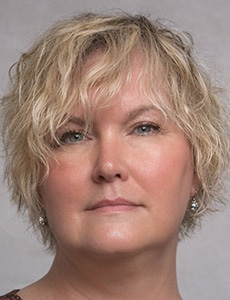
Sara Kruser, Senior Workers’ Compensation Manager at C.R. England
Kruser had an instinct that her drivers needed exactly that. But she saw something the original model didn’t cover: the need extended beyond formal workers’ comp claims. Drivers were struggling with home situations, with loneliness, with mental health stressors that weren’t directly tied to an injury but were very real. The EAP — while technically available — carried a trust problem.
“Sometimes employees still don’t believe it’s confidential because they feel it’s a purchased program and therefore there’s reporting,” she says. “I didn’t want that to scare them away from maybe talking to somebody.”
Kind Souls was different. It’s completely disconnected from the employer. No reporting. No data flowing back. And for drivers, there’s an additional layer of sensitivity — certain mental health diagnoses can affect DOT clearance to operate a commercial vehicle. Knowing that the conversation stays truly private removes a significant barrier to getting help.
Kruser pitched Kind Souls founder Teresa directly: could they expand the model to serve C.R. England’s entire workforce — not just injured workers — accessible through a link in the driver toolbox app that drivers use throughout their day? Teresa took the idea back internally, talked it over, and said yes.
“That’s how I began my journey with Kind Souls,” Kruser says. “I just saw the need. I know the struggles our drivers have — whether it’s work related, disability related, family related, anything — and just thought it would be a really good resource.”
Sitting Out in the Wild
Kruser is refreshingly honest about what she knows and doesn’t know about how the program is performing.
Because Kind Souls provides no reporting — by design — she has no visibility into utilization numbers, outcomes, or volume. “I don’t know how many calls we’ve ever had,” she says. “I’m just sitting out here in the wild hoping that it’s working.”
It’s the kind of admission that might sound like a weakness but actually speaks to the integrity of the whole initiative. The point isn’t to generate data. The point is to genuinely offer something — and then trust that drivers will use it when they need it, on their own terms, without anyone at C.R. England ever finding out.
What Kruser does know is that the program fills a gap that nothing else in the workers’ comp ecosystem was designed to fill. When a driver is hurt and confused and alone and doesn’t know who to call, the claims process can feel like one more adversarial system in an already difficult moment. Having access to a volunteer who will simply listen — and who can point them toward local resources, or a podcast that speaks to what they’re going through — changes the texture of that experience.
“It really can wreak havoc on you,” she says of the isolation long-haul drivers face. “Kind Souls really offers them support. Somebody to talk to and maybe help you through something, whatever you’re going through.”
Workers’ compensation doesn’t have to be adversarial, says Kruser. The claims process doesn’t have to feel like a system designed to minimize rather than support. When you meet people where they are — physically and emotionally — and treat them as human beings rather than case numbers, everything gets better.
“The trucking industry as a whole is very thankless,” Kruser says. “I respect our drivers. What I’ve tried to do is make sure that when they need something, it’s there.” &

 The Theo Award celebrates its sophomore year, honoring 28 workers’ compensation programs for their excellence and service to workers across the nation. To learn more about the award and amazing qualities each winner possesses, visit here.