Newsletters
 Risk Central
 Digital Edition
Shipping Incidents Drop but Structural Risks Intensify as Geopolitical Shocks Reshape Global Trade
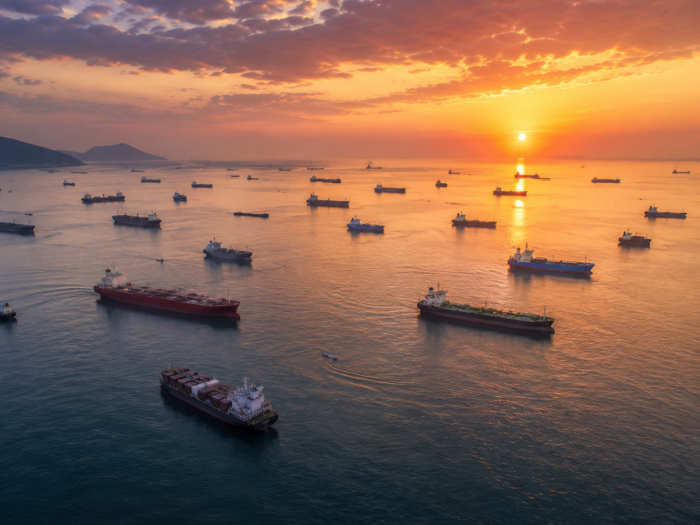
Reported shipping incidents fell sharply in 2025, but the improvement masked a deepening risk landscape driven by geopolitical upheaval, fleet aging, and surging hull and cargo claims, Allianz Commercial found in its annual Safety and Shipping Review 2026.
The number of reported casualties or incidents involving vessels over 100 gross tons declined 16% year over year, to 2,818 in 2025 from 3,353 in 2024. Total losses also continued a longer-term downward trend, falling to 43 vessels in 2025 from a decade-average of 70 per year between 2021 and 2025, which itself is 37% below the previous five-year average of 111 per year.
Geopolitical Shocks Expose Systemic Vulnerabilities
The most significant development covered in the review is the blockade of the Strait of Hormuz, which the report describes as a first in the waterway’s history, including the Iran-Iraq war of the 1980s.
The blockade all but halted transits through the strait, with daily vessel passages falling from roughly 100 to 140 to as few as two to four. More than 1,500 vessels and 20,000 seafarers were trapped in the Persian Gulf at the peak of the blockade in May 2026, and 14 seafarers had lost their lives in the conflict, according to the International Maritime Organization. As of June 11, Allianz Commercial counted 46 vessels impacted in the strait. Tankers accounted for about half of the incidents reported (22) and container ships for about a quarter (11), with the remainder spread across bulk carriers, general cargo ships, and a handful of other vessel types.
The report draws a direct line between the blockade and insurance claims exposure. Allianz Commercial said it had received significant claims notifications, including potential total losses, covering container ships, oil tankers, and bulk carriers damaged by missiles and drones. Marine insurers maintained continuity of coverage throughout the conflict, albeit at increased hull and cargo premiums, the report noted.
The blockade also raised a broader concern for risk managers: the potential normalization of transit fees on strategic waterways. Proposals to impose tolls on Hormuz passage, the report warned, could set a precedent extending to other critical chokepoints such as the Strait of Malacca, the Bosphorus, or Gibraltar, turning freedom of navigation into “a commodified and contested service rather than a shared international principle.”
Fire, Aging Fleets, and Non-OEM Parts Drive Severity
On the hull and cargo side, fire remains one of the most consequential risks, the report said. There were 218 reported fire incidents in 2025, the second-highest total over the past decade, despite a decline from 255 in 2024.
The report linked several large losses to lithium-ion batteries carried aboard car carriers and container ships. Global lithium-ion battery deployment in 2025 was six times the level of just five years earlier, and demand is expected to double by 2030. Current safety standards for car carriers — some of which now carry up to 10,000 vehicles — were designed for vessels carrying roughly half that number, the report noted.
Mis-declared cargo contributed to approximately a quarter of all cargo-related incidents, according to industry reports cited by Allianz Commercial. The review pointed to an industry initiative by the World Shipping Council and National Cargo Bureau using artificial intelligence to screen container bookings globally as a step toward addressing the problem.
Fleet aging compounded these concerns, according to the report. The average age of the global shipping fleet reached 23 years in 2025, up from around 20 years before the pandemic. Vessels 20 years or older now account for 24% of the global container ship fleet, the highest proportion in decades.
Vessels in that age bracket account for more than half of all safety incidents, the report found. The increasing use of non-original equipment manufacturer parts — driven by cost pressures and constrained availability — has also raised the risk of shipboard blackouts, as illustrated by the 2024 collision of the container ship Dali with the Francis Scott Key Bridge in Baltimore.
Cargo theft rounded out the severity picture, with Allianz Commercial reporting a fivefold increase in cargo theft losses since late 2022, driven by organized criminal groups using cyber fraud, falsified documents, and phantom carrier schemes to divert high-value shipments.
Obtain the full report here. &