Newsletters
 Risk Central
 Digital Edition
Severe Convective Storms Dethrone Tropical Cyclones as the Costliest Global Peril
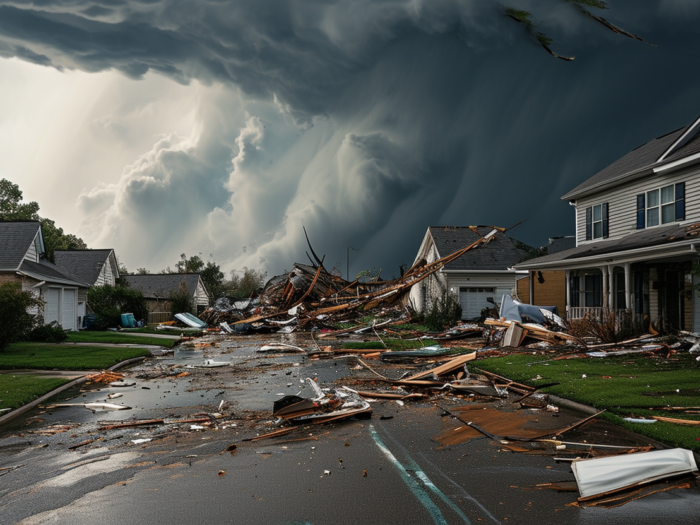
Severe convective storms have surpassed tropical cyclones to become the costliest insured peril of the 21st century, driven by escalating high-frequency, high-severity outbreaks predominantly in the United States, according to Aon’s 2026 Climate and Catastrophe Insight report.
The changing risk profile reflects a fundamental reorganization of natural hazard patterns. Severe convective storms (SCS) also generated $61 billion in insured losses globally in 2025 alone—the third-highest on record—from 61 events, underscoring how frequently these events now strike. SCS also was the largest source of economic losses in 2025, with 82 events resulting in $82 billion of losses.
On a cumulative basis, since 2020 there have been 306 SCS events resulting in a billion dollars or more of economic losses, while tropical cyclones producing losses of this scale totaled 282, the report noted.
Meanwhile, the volume of billion-dollar catastrophes is accelerating. In 2025, there were 49 billion-dollar economic loss events, ahead of the long-term average of 46, while insured losses from billion-dollar events hit 30—far surpassing the historical average of 17, according to the report. The U.S. remained the epicenter of this volatility, accounting for more than 54% of global economic losses and 81% of global insured losses, reaching $103 billion, Aon said.
The year’s most costly events were California’s Palisades and Eaton fires, which caused $58 billion in economic damages and $41 billion in insured losses—making them the most expensive wildfires ever recorded globally, Aon said. Despite global economic losses from catastrophes of $260 billion in 2025, representing the lowest total since 2015, insured payouts remained elevated at $127 billion, marking the sixth consecutive year exceeding the $100 billion threshold.
Closing Critical Protection Gaps
While the protection gap between economic and insured losses improved to 51%—the lowest protection gap on record—this figure masks a troubling disparity, the report said. The improvement resulted from concentrated high-impact events in developed markets like the U.S., whereas emerging markets continue to face substantial uninsured exposure, with more than half of economic losses remaining uncovered in many regions.
Parametric insurance products—which automatically release funds when specified trigger conditions are met—have emerged as a critical tool for addressing the gap, the report noted. Jamaica exemplified this advantage, securing more than $650 million in liquidity within two months following Hurricane Melissa through catastrophe bond protection with parametric triggers, enabling faster community recovery compared to traditional indemnity insurance.
Building Resilience in an Evolving Climate
In addition to encouraging alternative risk management solutions, the Aon report calls for “increased resilience via smarter technology and stronger infrastructure; better forecasting, resilient building standards and modernized infrastructure to reduce long-term damage and assist communities and businesses to recover faster.”
“Resilience today must be both physical and financial,” said Michal Lorinc, head of Aon’s catastrophe insight and author of the report. “Organizations are urged to embed adaptation into their workforce and location strategies, invest in predictive analytics and encourage cross-functional approaches to weather risk. As climate events continue to affect people and property, the opportunity lies in using data to strengthen preparedness, rethink risk management strategies and build partnerships that support faster recovery and long-term resilience.”