Newsletters
 Risk Central
 Digital Edition
Ryan Murphy on the Future of Workers’ Comp, AI, Talent and Knowledge Transfer
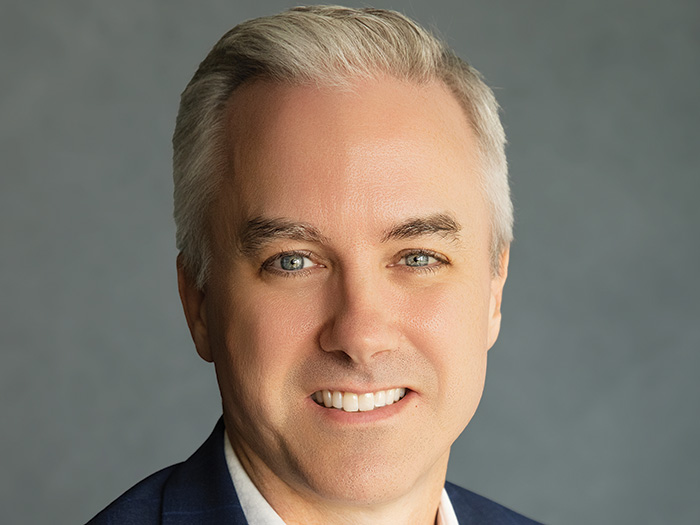
Workers’ compensation claims executives are facing a new landscape enabled by revolutionary AI technology, but hindered by a long simmering talent crisis that faces the insurance industry writ large.
For Ryan Murphy, Vice President of Product, Enterprise Claims at CorVel Corporation, the onus is on leaders in the industry to make sure knowledge transfer, technology-enabled triage of information, and courting the next generation of claims professionals remains at the forefront of organizational strategy.
The interview below was edited for length and clarity.
Risk & Insurance: Describe your career path and your climb to your current position at CorVel.
Ryan Murphy: I started as a claims assistant and worked my way up through the various claim levels that still exist today, beginning with medical only. There was an opportunity to manage some indemnity claims. The next logical step was supervisor, and then I transitioned to account management, and did that for several years. I then had an opportunity to work within operations as a claim manager, and then as a district manager later on, here at CorVel. I was a district manager for 12 or 13 years, and now here I am as a Vice President.
R&I: The aging workforce remains a major problem in the insurance industry generally as retirements increase, and for workers’ comp claims handling organizations in particular. How do we recruit new talent and meet this challenge?
RM: I think the first thing to emphasize is that you can have a career and that there is opportunity for growth and development within the claims industry. I think a lot of people have a view that is very rote and prescriptive, but it really isn’t.
Claims allows you to use your creativity when managing claims or settling claims. There’s the investigation piece, which is really problem solving. There’s the negotiation piece and having that debate about what a claim is worth. And you can really help someone navigate the path to recovery. For me, negotiation and helping a person through a crisis to make decisions along the way and educating them throughout the process were the two things that I’ve enjoyed the most.
To attract new people we have to be tech-forward, making sure that we integrate technology into the system as much as possible in ways that take mundane tasks off of your desk, and you’re able to focus on the creative parts
of the job that people actually enjoy.
R&I: How do we market the workers’ comp industry to new graduates looking to make a difference?
RM: I think the biggest thing that any college grad is looking for is an opportunity, number one. Once they get their foot in the door, then they’re looking for an opportunity to have a voice and recognition along the way. We need to show that we’ve invested in their talent and recognize that they’re making contributions — that goes a long way. You can be developed and coached along the way and you can have a long career.
R&I: AI is at the forefront of both potential risk and potential reward across the insurance industry. From your viewpoint as a claims executive, what is the most significant risk of AI?
RM: I think the biggest risk today is rushing into anything AI-related without a clear path or design of what the problem is that you’re trying to solve — technology for technology’s sake. AI isn’t always something that the end user is going to see. It can help to develop tools and processes quicker and the end tool may not be an AI-enabled tool. It might be something where we shorten the roadmap to get to the destination. Organizations should move deliberately and be consistent in their approach. You might have a plan, but you also have to make sure that it matches your vision and strategy overall.
R&I: As we lose veteran workers’ comp claims handlers to retirement, how do we ensure knowledge transfer to the new guard beyond just the typical training and mentorship programs?
RM: I think one of the biggest things is just making sure that knowledge is not hoarded or guarded and that it’s shared continuously. We have programs like our badge program in which the employee needs to have a certain number of badges in order to be eligible for merit increases and bonuses at the end of the year.
One way we do that is through continuous training that we hold monthly for all of our claim specialists and all of our nurse case managers. It’s not just onboarding, it’s a continuous stream of information that is provided to the employees here both within the claim organization and the Managed Care Organization, to ensure that folks are not falling behind, and that knowledge is shared across the spectrum. We want to make sure that we’re focusing on developing tomorrow’s claims leaders as opposed to just today’s claim specialists.
R&I: What is the greatest challenge facing the workers’ comp industry today? How do you think we solve it?
RM: The biggest challenge that I see is the amount of information coming at the claim specialist and toward the claim desk and the complexity of it. Claim professionals are seeing information from orthopedics, from attorneys, from employers, from states looking for EDI requirements, and things in state forms, across a book of business, or a book of claims, up to possibly 130 claims. A claims handler might see updates on a third of their claims every day. How do we help people organize that and put that into something that is workable as opposed to just an information dump on their desk?
For us, this is where AI comes in to help summarize some of these documents and help adjusters prioritize so that they’re not spending an equal amount of time on a PT visit sometime in February as a surgical report from March. Really focusing on what needs to be focused on as opposed to ‘everything’s important, and I don’t know how I’m going to get to it.’ In that sense, organization of all of that data is essential. The amount of information coming to adjusters is really, in my opinion, something that we need to continue to try to manage.
R&I: What’s the best advice you’ve received over your career in claims and how has this advice served your development as a leader in
the industry?
RM: The best advice I’ve received is to be flexible and willing to take risks. Some of the greatest opportunities in my career came from stepping outside my comfort zone and taking on challenges I wasn’t completely sure I was ready for. Those experiences exposed me to different people, new ideas, and opportunities I never would have found if I’d stayed on a familiar path.
That mindset has stayed with me throughout my career. I’ve learned that growth rarely comes from doing what you’re already comfortable doing. Every new challenge has taught me something about myself, expanded my perspective, and prepared me for the next opportunity.
As leaders, we have a responsibility to create those same opportunities for others. &