Newsletters
 Risk Central
 Digital Edition
RISKWORLD 2026: Westfield Specialty’s Tony Chimera
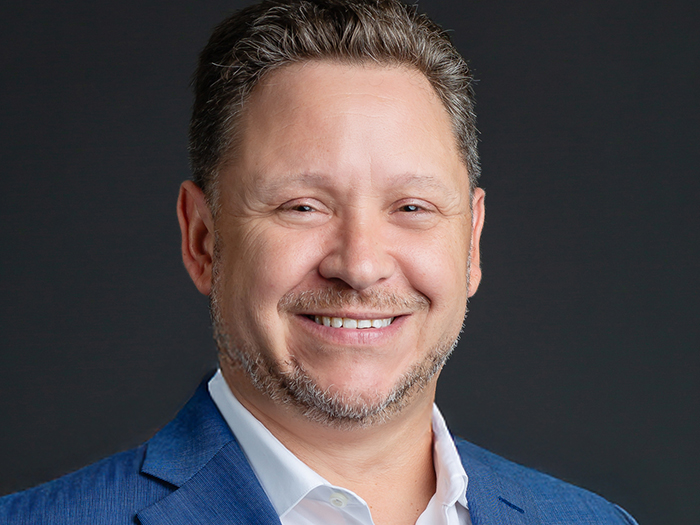
At RISKWORLD in Philadelphia, Risk & Insurance caught up with Tony Chimera, Chief Administrative Officer for Westfield Specialty. What follows is a transcript of that discussion, edited for length and clarity.
Risk & Insurance: Thanks for meeting with us Tony. During a soft market, many firms tighten their belts. How do you maintain a long-term commitment to talent development when the immediate market cycle is putting pressure on margins?
Tony Chimera: That question is near and dear to my heart right now because we have a talent shortage in the industry. We’re kidding ourselves if we don’t acknowledge it. With the market softening, I worry about the things that historically get cut—typically talent development and hiring.
I would argue that in a soft market, we should double down and actually invest more in those areas. I’m not a fool, though. Most organizations probably will not do that because everything is very short-term focused.
For us, the fact that we’re not a publicly-traded company is a nice benefit. We’re not short-term focused. We need more talent in this industry, and we need to attract people to it.
We really need to tell the story of why insurance makes sense for someone and highlight all the gifts it has brought to people in the industry. That’s how you attract people. Keeping them is about listening to them, investing in their development, and providing access and opportunity to high-profile projects.
It’s a balancing act. I can’t hire five times as many trainees as I did in the hard market, but I can hire more because we’re growing. It’s important to have honest conversations with leadership about the trade-offs—we could hire a ten-year underwriter, or we could bring on three trainees or ten interns.
These discussions matter, even amid the significant pressure on organizations. There are inefficiencies elsewhere. If we hire good people, it’s a compounding benefit over time that will deliver real value to the organization.
R&I: Does a softer market provide a breather that allows for more intensive training and upskilling, or does it change the types of skills being prioritized?
TC: I don’t think it provides a breather. Brokers and carriers are under a lot of stress to deliver results. Organizationally, you have to understand that and ask, “How can we get the most impact?”
It can’t be an HR program, but you want to do it efficiently. So rather than a breather, it provides an opportunity to remind the organization of our values and our long-term strategies. In the short term, yes, you’re under a lot of pressure, so the question becomes how can we provide resources to offer some relief.
Ultimately, it’s all about wanting to exist ten, fifteen, or twenty years from now. You can’t take a year off.
R&I: How do skillset priorities for talent development differ between hard and soft markets?
TC: If you have talent that hasn’t been through a soft market, that’s a different experience than other markets. You need to provide people with the tools to cope with both soft and hard markets.
That said, relationship building, business acumen, and negotiating skills remain critically important across that continuum, regardless of which market it is. My advice is don’t stop investing in those areas.
Continue to provide people with experiences that allow them to use what you teach them. It doesn’t really change; it’s just a different atmosphere in which you’re applying those skills.
R&I: What is your talent strategy for coaching and preventing brain drain as the external landscape becomes more competitive?
TC: There is a talent deficit. Even in a market where competitors are closing their insurance shops, downsizing, or merging, talent is as tight as it has ever been.
What we focus on sounds basic: listen to your team. We are conducting stay interviews with all of our staff, face to face, rather than relying on an impersonal engagement survey. The goal is to gather insight on what we are doing well, what we aren’t doing well, and what we may not be doing at all.
From there, we focus on actionable items that our teams want. In my estimation, people generally leave for two reasons: their boss, or because they are at an organization that doesn’t hear them. I think we have good people, so we’ve addressed the first reason, and the stay interviews are an effort to continually address the second.
Beyond that, you have to provide opportunities and reward people for their achievements. These are all seemingly basic things, but I would argue that more than half of the industry messes that part up, and that is why people leave.
R&I: How can the insurance industry shift its narrative to highlight its role as a primary driver of global innovation and resilience, rather than being viewed as a necessary evil?
TC: For a while, it was endearing to hear insurance professionals say they never planned to work in the industry—that they fell into it by mistake. But that story has lost its shelf life. To a student or someone looking to switch industries, hearing that someone “fell in a pothole and never got out” doesn’t exactly inspire them to consider insurance as a great place to build a career.
We need to focus on what this industry actually does. A tagline I use is “Follow Your Passions,” because everyone I know in this industry who is amazing and super talented loves what they do and is passionate about it.
There is no part of people’s interests, hobbies, or industries that we don’t cover. For example, if you like riding horses, you could become an equine underwriter. Making those connection points is how we crack the egg of getting people to consider insurance.
R&I: How will AI impact talent and career opportunities in the insurance industry?
TC: Insurance is such a good secret. We need to unwrap it for students, for people in other industries, and for emerging talent. We often discuss how AI will impact other industries, but the insurance industry needs more talent, not less.
AI is not going to slow down the number of people we hire. It’s going to change the jobs and make the work better, ultimately making insurance more of an industry of choice. We just have to tell the story.
R&I: What is the hook used to convince top-tier talent outside of traditional circles that insurance is a dynamic, tech-forward industry rather than a legacy one?
TC: It’s hard because it’s the strangest thing to me that people still think we’re selling life insurance door to door. That go to market strategy hasn’t existed for a long, long time. We always joke about it—I’ll go to universities and lead off my presentation by saying, “I’m not the guy who denied your parents’ roofing claim. I’m not the guy who didn’t pay for your car accident. We don’t do that stuff. This is what we do.”
Part of it is breaking down those norms, and part of it is being present. In the soft market, I don’t think the industry does a good enough job—some companies better than others—of being present at universities and in their communities. Insurance has a bad name, so people have retracted from that a little bit, and in some cases they just don’t have the resources to do it.
You can’t go to a university, or even a high school, just once. You need to go multiple times to build and strengthen relationships. It’s an investment, and as an industry, we need to talk about the industry story.
I want to hire plenty of people, and I can’t hire enough young talent. We need to get beyond the competitive mindset—I’ll refer candidates to pretty much every company here on the show floor if I know it’s a good company and the person will be taken care of. We need to do that as an industry, and it doesn’t happen often enough.
R&I: Does rebranding the insurance industry begin with an external marketing campaign or an internal cultural overhaul to shift how employees perceive their own impact?
TC: In reality, it’s probably both. There’s a real opportunity here, and organizations like Spencer, WSIA, and Gamma do a great job of representing the industry. We simply need to do more of that.
Externally, we need one unified message that speaks to the range of career choices available and the impact those careers have on both the community and the individual. That’s one piece of the equation.
Internally, you have to tell the story, and it has to be consistent. At Westfield Specialty, we’re fortunate to have a great leadership team, so I’m confident the message we’re sending is consistent. At other organizations, however, it’ may be more fractured—divided by line of business or by geography.
We need to crowdfund the talent issue as an industry. If we don’t, five or ten years from now, we’re going to have a very big problem. We see all these new companies starting up, but they won’t be able to continue if we don’t have the talent—much less allow the companies already here to keep growing.
R&I: With the advancement of AI and automation, what soft skills are being prioritized to ensure the workforce remains irreplaceable?
TC: There’s widespread concern that AI will impact work, and it will—specifically transactional work. Honestly, I never wanted our people doing transactional work in the first place. They only had to because the technology didn’t exist to let them focus on what truly matters.
The soft skills we’re emphasizing are relationship-building and expanding knowledge. Good underwriters, claims people, and actuaries are intensely curious. Beyond their individual accounts, we want them to understand the entire risk ecosystem.
We’re moving away from the “bind a deal on a cocktail napkin” world we used to operate in. Now that the transactional work is taken care of, our people can focus on disciplined risk selection and pursuing more business. That’s the future we’re building toward.
With all due respect, I think people are labeling anything that’s an efficiency or technology play as AI, and it’s not. Personal lines will be impacted by AI far more than specialty. In the specialty space, we’ve always leveraged technology to enhance our capabilities so underwriters and claims professionals can deliver the best results.
AI also represents a huge opportunity to attract talent to the industry. Insurance and technology used to be two words you’d never use together, but that’s changed significantly. I expect it will continue to change, and that shift will draw more people into the industry.
R&I: Beyond retention rates, what key performance indicators demonstrate that an investment in a leadership development program is yielding a more capable organization?
TC: There are definitely quantifiable things you can track, but I always get a little nervous about them. To use an example from the HR world, many organizations talk about time to hire. Well, if our time to hire is three days and we hire awful people, that’s not the stat I want.
The same applies to leadership development. Sometimes organizations get focused on promotion rates, and while that absolutely has its place, if you become singularly focused on it, you may manage to that result and potentially ignore long-term needs and strategies.
For us, I don’t want to deliver a global program and try to shoehorn everyone into it just so I can say I sent 40% of our staff to a leadership development class. I’d rather do tailored engagements. While a lot of the content will be reused, we’ll build around specific needs and areas of focus. The key is customization.
R&I: How should companies measure the return on investment of leadership development initiatives?
TC: Manage to the outcomes you want. Leadership development is going to be hard to quantify, so look to measure qualitative results.
It’s going to be things like, are we retaining talent? Rather than focusing on promotion rates, consider whether employees are getting exposed to new projects and learning new skills. Are they getting new territories? Manager feedback and employee feedback is also important.
Don’t get focused on, “we spent X on development, and how do we monetize that in five years?” I don’t know that that’s possible because there are so many variables, but you can concentrate on broadening teams’ skill sets and opportunities to ensure the company is positioned to be successful in the long-term.
R&I: How do you define your role as CAO, and what does it entail within the organization?
TC: The title of CAO means so many different things in different organizations, so it’s important to clearly understand what the role is. I’d call it a chief activity officer, not a chief administrative officer.
At Westfield Specialty, I view my role as removing hurdles for people, enabling their success, and understanding what they do, how they do it, and what the possibilities are.
R&I: How do you prevent administrative duties from overshadowing other responsibilities in this role?
TC: If this job were purely administrative, I would probably be the wrong person for it. In a well-functioning organization, this role belongs to someone who is connected both ways—to senior leadership and to the people doing the work on the ground.
It’s about bridging those two sides and creating solutions that enable everyone to be successful.
R&I: What emerging risks in the insurance industry are not receiving enough attention?
TC: Talent is an emerging risk in the industry. People are talking about it, but not enough, and I worry about a false sense of security.
A number of organizations have made significant layoffs, and some are talking about even more layoffs. The reality is we need a lot of new talent—now, tomorrow, the next day. We can’t talk about that often enough. &