Newsletters
 Risk Central
 Digital Edition
RISKWORLD 2026: Surety Insights with Nationwide’s Tony Albanese
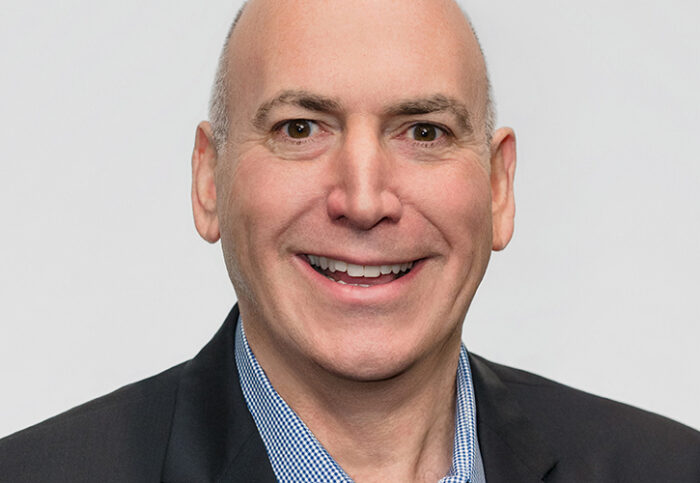
From market health to the talent crunch, the surety business has a world of risk and reward to contend with. Tony Albanese, executive vice president – head of surety, Nationwide sat down with us at RISKWORLD 2026 to provide a deeper look at the surety landscape as it stands today.
Risk & Insurance: How would you describe today’s surety landscape? What are you keeping an eye on in 2026?
Tony Albanese: It’s a very healthy market. I think there’s been a lot of discipline out of the last couple of years. Just coming out of COVID, we saw some losses, and a year or so later, some of the reinsurers sustained losses because of the primary surety companies. But I think at this point, it’s for the most part, settled down a bit.
There’s still a couple losses out there in certain sectors. But for the main industry, it’s been very healthy, very competitive, and we’re very optimistic about the future.
R&I: What would you say are the risk-rewards of underwriting large, complex infrastructure projects? What are the challenges and what are the successes?
TA: We underwrite them at Nationwide, and I think some of the rewards are that you’re dealing with a smaller group of the universe of contractors. They’re highly sophisticated. There’s lots of transparency from our clients, as I said, they’re very sophisticated. You have a good chance to really get to know them well.
And so, you develop those deep relationships, which helps you to better understand their risk profile and work closely with those companies as clients. Those are some of the best rewards.
Some of the risks stem from the very large projects. There’s economic factors, there’s political factors, there’s environmental. You’ve got to work closely with and understand the risk, understand that, if you’re doing a large infrastructure project, they’re typically very long in nature, and so the political and economic environment can change over time.
You really have to make sure you have very strong clients that can weather those storms and that they have the financial staying power to continue on.
R&I: We would be remiss if we didn’t mention technologies. Are there any ones specifically that you are utilizing or keeping an eye on these days?
TA: Of course: AI. Within the surety operation at Nationwide, we are looking at ways to embrace AI. We have an AI Task Force. We look at opportunities to streamline workflows, make things more efficient.
But I make sure to talk to the team about AI in that AI won’t replace you, but the person who knows AI better than you might replace you, in time. So it’s a good idea to embrace it and find the ways to streamline the work, take mundane tasks and make them more automated.
We do, with our underwriting, not replace what the underwriters do, but try to find the tools and the resources that they need to get their job done more efficiently. AI can help with research and account summaries, meeting notes, and be a tool to help summarize those things and get to the salient points.
R&I: I like how you said that it’s not like AI is going to replace you, but someone who might know it more might replace you, because that’s the world we’re living in. And it makes a lot of sense, and it’s a positive way to look at it.
TA: We just had a conference with some of our top agents, and it was interesting. Some of them are afraid of using it, and I tell them not to be afraid. And I think it’s really important to hear how others use it, because that’s how we learn its potential use cases. Through how people are using it. And then you say, “Oh, I hadn’t thought about that,” or “What a great way to incorporate that into workflow.”
R&I: How would you describe the talent landscape for your space right now?
TA: There’s a war on talent within the surety industry. It’s a great career, and we’re constantly at war to retain our talent as well as attract new talent. One of the things that we did a few years ago, we really understood that in order to grow and develop bench strength, you really have to bring in your own talent to do that.
What we’ve done is we have an intern program and a trainee program. We really want to bring interns in from their rising junior to rising senior year [of college], and then at the end of their junior year, before they start their senior year, we’ve had at least a year or two to work with them and then to offer them a job, if they’re the right candidate for us and it’s the right fit for them.
We’ve really embraced that and have developed some bench strength and a nice pipeline.
Industry wide, I sit on the board of the Surety and Fidelity Association of America, and on its foundation board. And so, we give out scholarships for students who begin careers in the surety industry, and we incorporate that into our intern program and training. It’s really meaningful. A student can get up to $10,000 in scholarship aid, and I think that really kind of helps put some teeth behind the program.
R&I: What are some of the other ways that the industry can bring more talent into the fold?
TA: Thinking outside the box and looking at other careers. We hired a young individual who started a job in something else and really thought, “You know, I want a career.” And so they came to us with probably about three years of experience, and I liked the fact that they had done something else and had made the decision that they wanted a career.
We embraced it, and they’re doing really well. It comes back to looking not just at college students, but also folks who are early in their work lives, and now really want a career, because I think it’s a great career. I’ve done this since I graduated college, and I never looked back.
R&I: How did you find yourself in insurance? Was it something you studied?
TA: I fell into it. In college, I found myself looking at the Career Center, and there were a couple opportunities. This one just seemed very interesting. Back then, it was before the internet, so there was not a lot of information on surety [readily available], but it sounded really interesting — the opportunity to travel and relocate as a young person was appealing to me.
I’ve just really enjoyed doing it since. I’ve made lifelong friends and it’s an interesting career, because we touch so many different businesses and so many different industries that we work with that it’s always so interesting.
R&I: To finish our talk, is there a message you’d like to leave readers with?
TA: With the current economic environment, we’re looking at what’s going on with the war [in Iran] and the short-term and long-term impacts that might have, specifically around fuel and how that could impact construction and other industries and affect pricing.
We’re keeping an eye on that and seeing how that will play out.
I think the industry post-COVID is a lot more astute in placing clauses within contracts to allow for a price escalation. And so I think that’s prepared us for the current environment as it continues to change. That’s something that we’re always looking at and including in our underwriting, too. &