Newsletters
 Risk Central
 Digital Edition
RISKWORLD 2026: FM Intellium Vice President Chris Dempsey
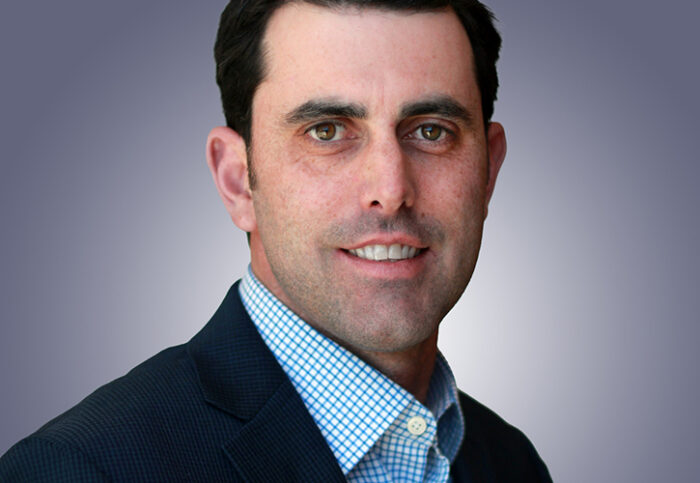
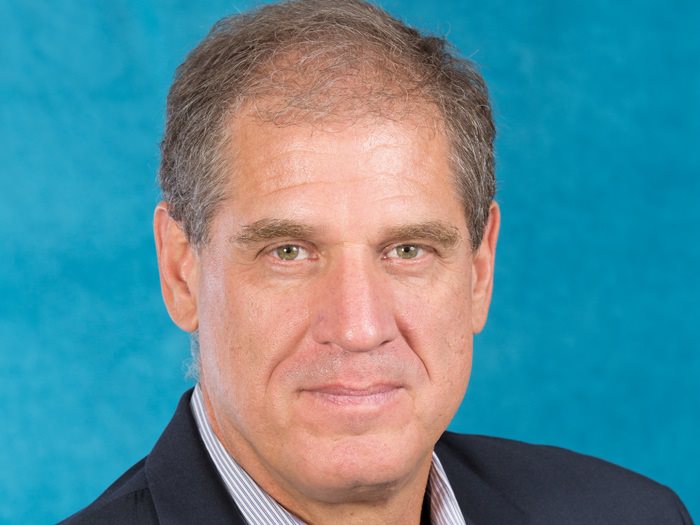
At RISKWORLD 2026 in Philadelphia, Dan Reynolds, the editor in chief of Risk & Insurance, caught up with Chris Dempsey, senior vice president of FM Intellium. What follows is a transcript of that discussion, edited for length and clarity.
Risk & Insurance: Thanks for meeting with us Chris. What led to the formation of FM Intellium, and what are its goals as they relate to data center construction and operation?
Chris Dempsey: As a company, FM has been around for nearly two hundred years in the property insurance space, with a huge emphasis on engineering-led risk mitigation. We’ve been in the data center space for a long time as well, insuring many different data centers and insuring a portfolio of about $250 billion in asset value over the last two decades.
We developed FM Intellium as a business focused on what we call the data center ecosystem because we recognized an opportunity a little over two-and-a-half years ago. It was a chance for us to bring our financial strength into the space and provide significant capacity, while also leveraging our engineering expertise, research, and science to address and understand both today’s and tomorrow’s risks.
That’s why we doubled down on our engagement with the data center industry, and that led to the creation of FM Intellium about a year ago.
R&I: What feedback have you received from owners and insurers since the formation of the business unit? In other words, how is it resonating in the marketplace?
CD: It has resonated extremely well. We’re filling a need in a number of different areas. When you consider the data center industry and the importance of minimizing any type of downtime, uptime is significantly important to operations—you simply can’t be down for even seconds.
Having a unit focused on identifying risk and coming to the table with solutions around risk mitigation, regardless of the peril, has been a key differentiator. Whether it’s construction-related risks, fire, or natural catastrophes, we take an engineering-first approach. At the end of the day, investors, owner-operators, and tenants can have assurance around how they’re designing and building resilient data centers.
On top of that, knowing how to mitigate risk and understanding the challenges the industry faces today has allowed us to bring significant capacity to the table, which is a major topic of discussion given current capacity constraints. The question becomes how to insure data center campuses with substantial asset value under roof, including both the physical structure and the equipment within it.
Our ability to understand risk and engineer it first, then leverage our financial strength to deliver significant capacity, has been something that has resonated really well within the industry.
R&I: What risks might be flying under the radar in the data center industry, and what exposures are underwriters and engineering teams keeping a close watch on?
CD: When you think about the technology and innovation, whether it’s cooling or how power is generated, associated risks will continue to evolve. How we’re building and protecting against some of those exposures is evolving weekly, if not daily.
It all revolves around how to build resilience into operations to prevent any loss of uptime. A couple of things are very prevalent, and one of those is power generation. It takes a significant amount of power to run some of these hyperscale-size data centers.
How that is designed and built, and the redundancy captured within that design, is front and center. The technology coming into power is evolving—is it traditional thermal power or renewable? We’re starting to see things like SMRs, or small modular reactors, coming into play in terms of how power is provided. All of that innovation is evolving, and so those risks are changing.
R&I: What percentage of currently operational data centers have their own adjacent power generating systems?
CD: Today, it is a relatively small percentage. Putting an exact number on it is difficult, but it is in the low single digits. But this is changing quite rapidly. The industry is looking at that and thinking it could change as early as next year into the following year, moving to nearly 20% or a much higher figure.
Just about every single data center company, owner-operator, and even investors have developed a robust strategy on how they are going to address on-site or behind-the-meter power. This creates some of that dependency, or rather that redundancy, which is so important.
It allows them to work within or alongside the local power grid, because it’s all about having a redundant power supply. That way, you don’t end up with an unexpected disruption in the relationship.
R&I: FM has a deep history in risk engineering. How does it articulate that experience when speaking with prospective and existing clients?
CD: The way I would explain it is to first look at the industry itself. Our approach to bringing engineering expertise, advice, and risk transfer into this space is to view it within the broader data and digital ecosystem.
You have the data center at the heart of it, but you also have power generation in a number of different forms. Beyond that, there is other critical infrastructure, component manufacturing, and an extremely robust supply chain that all feed into the end user.
That’s how we’re trying to look at it—very holistically. We have expertise across many of those different spaces, spanning the entire infrastructure and supply chain.
We bring that lens into both the design parameters and what those assets look like in terms of operations.
R&I: Given the magnitude of investment in this sector, what does it feel like professionally to have been placed in charge of this initiative since its formation a year ago?
CD: In one word, exciting. But to expand on that, innovation, technology changes, and really trying to understand and focus on future risks are what make this role so fulfilling for me. Being able to add value to where the industry is actually heading is incredibly rewarding.
In my mind, there’s no question that data centers are critical infrastructure when you think about the global economy and society.
Being a part of that, not just through the FM lens, but within the industry itself, is personally exciting for me and exciting for us as a company. &