Newsletters
 Risk Central
 Digital Edition
RISKWORLD 2026: Chatting with Lucy Pilko, CEO Americas, AXA XL

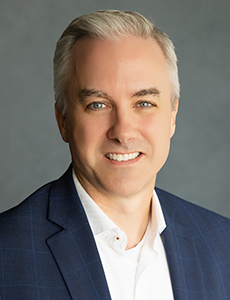
At RISKWORLD in Philadelphia, Dan Reynolds, editor in chief of Risk & Insurance, caught up with Lucy Pilko, CEO, Americas, for AXA XL. What follows is a transcript of that discussion, edited for length and clarity.
Risk & Insurance: After two and a half years in the CEO role, what accomplishments are you most pleased about?
Lucy Pilko: I joined AXA XL because of the incredible potential of this organization. The opportunity to build upon our success I felt this was a successful, established player in the large commercial business and with so much potential to do more. The opportunity to invest in building a bigger, more diversified, more client-centric portfolio had deep appeal to me. The support from Scott Gunter and the AXA XL leadership team, and the broader AXA organization, in terms of the investments we want to make to expand our platform here, has been tremendous. There’s runway almost everywhere we look.
What’s been very exciting about the progress we’ve made over the last couple of years is, first, our client-centricity. We’ve moved from a model that was perhaps more product-silo oriented to one that really starts with the client and the potential client—understanding their business, their needs, and their approach to risk management.
The product offering was never really the big challenge. In the large commercial space, we had the breadth and depth of product, but the question was whether we were bringing it to the client and offering them the solutions that sat within the toolkit. I think we’re doing a much more consistent job of that now.
We’ve invested in client relationship leaders and are engaging in opportunities on a client basis in a much more collaborative way. Collaboration was always sort of in our genes, but it wasn’t nearly as systematic as it is now in North America.
R&I: How is the team collaborating differently in today’s market environment?
LP: The messages have to change as the market environment changes. It’s been a very challenging few years, not just for us, but for leaders across all sorts of industries responding to supply chain challenges, cyber challenges, and rising costs of liability. These are complex times in terms of risk.
From a large commercial perspective, much of it is about the partnerial way we can approach clients and the breadth and depth of solutions we have—whether those are risk transfer, risk engineering support, or captives and structured risk solutions that are more about balance sheet plays for clients. There’s a lot we can do to bring our insights and claims expertise to help them manage these costs of risk.
It’s also been very exciting to launch two new businesses. Some of this lived within the portfolio but not at scale—our pursuit of a mid-market offering and our wholesale solutions business, which is a combination of our E&S open brokerage and our program business.
that may not be the big topic at RIMS, because RIMS is not necessarily about those marketplaces. But they’re important marketplaces, and they make us a more resilient carrier. because the markets aren’t all moving in the same direction in terms of pricing cycles. The more places we can play—diversification by client industry, client size, geography, and product line—the better positioned we are to be a stable partner and capacity provider across rate cycles.
R&I: Which products developed over the past couple of years have gained particular traction?
LP: A couple of things come to mind. First, we’ve developed an endorsement to our cyber policy around generative AI to support clients training large language models around IP infringement, data protection, and other liability associated with erroneous outcomes. It scratches the surface of what will need to be developed.
What’s exciting about that work is that we’ve said, “Look, this is an unknown space, and we want to be shoulder to shoulder with the client figuring it out.” We want to put some of our capital at risk because this is one of the most exciting things that’s happened in my lifetime. It’s an opportunity for innovation and investment, but clients need insurers willing to go along that journey with them.
For me, it’s less about whether this is a blockbuster product yet and more about the journey we’re starting with clients—a multi-decade journey to actually get to resolution.
Another example, in the mid-market space, is our combined form, which looks at environmental and liability and puts everything together in one place. What I like about it is that these were capabilities that already existed in our organization—they just weren’t as easy to access in a unified way.
That tells me we can recombine the capabilities we have in a more client-centric way. That’s powerful because it makes the purchase experience better. Product innovation happens everywhere, all the time, but I think it’s most exciting when we’ve really said, “Okay, what does the client need? What’s really missing? And how can we help bring a solution?”
R&I: How important is it for insurers to learn alongside clients, particularly when it comes to emerging technologies like AI?
LP: That is the name of the game right now—learning at pace. The technology is moving faster than our human ability to understand it or harness it. Transforming ourselves as an organization allows us to have an almost peer-to-peer exchange with our clients about how it’s been for them, what’s going well, and what’s challenging.
If we’re not on that journey from a risk perspective with our clients, we will always be behind in the learning. If you’re not participating in the current moment, you won’t be asking the sharper question because you won’t have experienced it. That comes with some real risk.
We’ve been thoughtful about what we do with that, because we have to protect our balance sheet as well. But I want to be known for being a player that brings solutions when the world is not black and white, but gray.
R&I: What other initiatives are on your radar moving forward?
LP: We’ve defined what I think is an ambitious set of growth goals for the organization. Rather than launching new initiatives per se, we’re in the early innings of capturing those opportunities. In both mid-market and wholesale, we’re less than 1% of those marketplaces.
So rather than saying, “I’m going to add this new thing and that new thing,” in many respects it’s about continuing on that journey. The investments we’re making in people, processes, products, and technology are building businesses for the future.
R&I: Beyond AI, what emerging risks are you watching closely?
LP: A few topics come to mind, and I imagine there are many more. We do an emerging risk report every year, which is a great exercise for us to engage externally on the topic, but it’s also a great exercise internally to ask what we’re not paying enough attention to and what could pop that we need to be doing the thinking, modeling, and risk-prevention analysis on now to help clients.
From a property perspective, the balance of what we’ve thought of as nat cat versus secondary perils is changing. We need to help clients think about what feels like more of an “always on” risk. The attritional numbers feel like they creep up relative to the cat numbers these days.
That’s a mind shift we need to work with clients on, because there’s a lot you can do about secondary perils, but you need to be proactive about it.
Valuation risk is another area. D&O is obviously a huge business for us, and we’re watching what’s happening to valuations of things like software companies that continue to have excellent earnings but have seen absolute volatility in their stock prices. Particularly in this world of AI, I expect we’re going to see a lot more market volatility. The market overall may go up, but individual stocks may see more volatility, which puts pressure on directors and officers in different ways.
R&I: What’s your view on around tech company performance relative to the massive investment in data centers and AI?
LP: There’s been a lot of investment, and from an AI perspective, the users of AI—myself included, with the personal apps I use—are not paying the full cost associated with those tools. The tech companies have a real need to monetize the investments they’ve made.
What does that look like? What does that journey look like? It’s less about whether the technology works—maybe it’s a question of capacity from a data center perspective—and more about the fully loaded cost of AI and what happens to behavior when the expectation is that people pay the full cost.
It may be very difficult to monetize, given its nature as this kind of organic, expanding microbe. At what point do you put a stop on the train line and say, “Here’s where you pay”?
If you think about the early days of the internet and the dot-com boom, valuations were based on eyeballs and similar metrics. Over time, the economics became more real. That may happen here as well.
Supply chain and inflation are also areas to watch. We used to think about supply chain disruptions as events that drove almost point-in-time issues. While we still have those—we can probably all think of a few right now—the consistency of that disruption, or the move from a more global supply chain to more regional supply chains, is going to be a big shift for many companies and could add a lot of risk to their operations.
That’s coupled with what looks like a higher inflationary environment than we’ve had in the recent past. The question is whether that’s fully embedded in how companies are approaching their businesses.
R&I: With talk of a talent gap across the industry, how do you view recruitment and retention strategies at AXA XL?
LP: In line with our growth ambitions, we’ve been doing a lot of hiring this year. There is a dearth of talent in the market. The cost of risk is going up, and the need for insurance at some level is going up, but the number of experienced players or talent in the insurance industry is not going up at the same pace.
That means we have to do a few things. We have to become more productive and efficient, using the tools at our fingertips—including AI—to make the math work differently. We also have to do a better job of training people and investing from early career stages all the way through to more creative off-ramps for people, where they can do part-time work or continue to consult.
People are living longer and often want to be intellectually engaged. The question is whether it has to be all or nothing. We’ve been spending a lot of time thinking about those topics.
On the flip side, in the claims space there’s always conversation about a retirement cliff—and it is a real retirement cliff. There are going to be real challenges in terms of talent. There’s also so much change happening in the legal industry right now that there’s going to be an inflow of young, talented attorneys who could do a lot of this work if they’re properly trained, enabled, and partnered with some of these folks looking for a glide path in the back half of their career.
It’s not an unsolvable problem, in my opinion, but it takes creativity and time to solve.
R&I: Beyond the United States, where do you see the strongest opportunities in the Americas?
LP: The two places we’re focused on are Bermuda and Canada. We celebrated our 40th anniversary in Bermuda this year and are proud to be one of the founding insurers in that marketplace. The need for bigger towers in casualty and blocks of capacity on different things means I see a lot of potential there.
In Canada, we see a lot of opportunity and momentum growing right now. I’ll be in Montreal and Toronto later this month. We have five offices there, but we need more talent to meet the demands we’re seeing. &