Newsletters
 Risk Central
 Digital Edition
How Workers’ Compensation Can Better Manage the Rising Tide of PTSD Presumption Claims

Post-traumatic stress disorder (PTSD) claims have rapidly become one of the most complex issues in workers’ compensation. Over the past several years, legislatures across the country have moved to make it easier for first responders, health care workers, and other trauma-exposed employees to access care through presumption laws — statutes that automatically link a PTSD diagnosis to the job rather than requiring the injured worker to prove causation.
That shift has brought relief to many workers who previously struggled to have their claims accepted. But it has also raised new questions for payers, regulators, and clinicians about how PTSD should be diagnosed, treated, and managed over what could be a very long claim lifecycle.
“When you create a presumption, you tighten that process and remove some of the questionability,” said Kevin Tribout, VP of Public Policy and Regulatory Affairs at Optum. “Under the law, you’re presuming that this injury or mental health condition is work-related.”
Understanding the Three Traumatic Exposure Patterns of PTSD
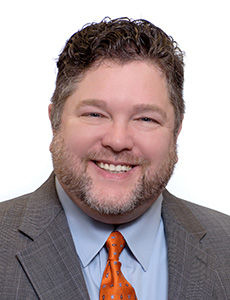
Kevin Tribout, VP of Public Policy and Regulatory Affairs, Optum
Not all PTSD claims look the same, and understanding the differences is critical to managing them effectively. Dr. Robert Hall, Medical Director at Optum, described three general categories of PTSD claims that he commonly sees.
The first is the clearly identifiable PTSD claim tied to a single traumatic event. “We have a health care worker who was attacked by a patient, a delivery driver who was involved in a motor vehicle accident, or a retail clerk who was involved in a robbery,” Dr. Hall said. “There’s just no question, and it makes sense.”
The second category — often referred to as complex or cumulative PTSD — develops over time from repeated exposure to trauma. “A classic example is firefighters, first responders, or police officers who day in and day out are exposed to repeated micro levels of events that ultimately result in PTSD because they’re exposed on a chronic basis,” Dr. Hall said. “That’s where it becomes more difficult to prove, because it’s not that one single event.”
Dr. Hall shared the story of a close friend, a firefighter, who went undiagnosed for years while experiencing nightmares, heart palpitations, and persistent sleep problems. “It turned out he had been repeatedly exposed to a mental marathon every single shift — drug overdoses, fires, and working as an EMT,” Dr. Hall said. “The severity of how he was affected by this microdosing of multiple traumatic events over time was significant.”
The third category involves secondary exposure — workers who develop PTSD without experiencing a traumatic event firsthand. “A police dispatcher who hears something on the phone, or someone hears about a family member or close friend who was involved in a severely traumatic event,” Dr. Hall said. “It’s not even that the person experienced the trauma themselves, but they are aware of or in close relationship with somebody who did.”
Left unaddressed, PTSD can snowball into additional health problems. “We start seeing people with high blood pressure, losing sleep, and developing depression,” Dr. Hall said. “Unfortunately, there’s also a higher risk of suicide in people who have PTSD.”
A Rapidly Evolving Legislative Landscape

Dr. Robert Hall, Medical Director, Optum
The statutory picture has shifted quickly. “We’ve seen legislation in almost all 50 states, whether or not it has passed,” Tribout said. Roughly 25 states have enacted some form of PTSD presumption, while 14 states have not yet implemented any such framework.
The underlying rationale is broadly accepted among policymakers. First responders, hospital workers, and others regularly exposed to traumatic events need timely access to care. But Tribout noted that the specifics of the legislation often leave gaps that can complicate claim handling.
“Most legislation doesn’t drill down into the specifics. Many policies don’t require a diagnosis, and I believe a diagnosis should be required,” Tribout said. “Injured workers should see a licensed psychiatrist or psychologist to ensure PTSD is the root cause of what’s going on.”
The concern is that without a formal diagnosis from a trained specialist, PTSD can be over-diagnosed — or, conversely, missed entirely. “In many places, it can take up to several months to get in to see a psychiatrist,” Dr. Hall said. “You’re looking at primary care providers, physician assistants, or social workers who have not received formal training in PTSD making the diagnosis when the patient hasn’t received a full psychological or psychiatric evaluation.”
Some states have started to address access challenges. California and New York, for example, allow injured workers with a PTSD diagnosis to designate a psychiatrist or psychologist as the primary treating provider, eliminating the need for a referral. “This smooths the transition because you don’t need to see one doctor to get a referral for another,” Tribout said.
Regulators, meanwhile, are grappling with questions about long-term cost and claim duration. “You have a police officer who’s 29 years old, has been on the force for eight years, and gets diagnosed with PTSD. Is this something that’s going to run until they’re 89 when they pass away?” Tribout said. “A lot of the regulators are trying to figure this out.”
Best Practices for Treating PTSD in a Workers’ Compensation Claim
Effective management of PTSD claims starts with a proper diagnosis and extends through a coordinated, dual-pronged treatment approach that combines medication and psychotherapy.
As a pharmacy benefit manager, Optum evaluates several factors when supporting clients on PTSD claims. The first priority is ensuring prescribed medications are appropriate for the condition. “Some medications can potentially exacerbate PTSD, while others can help improve it,” Dr. Hall said. “This is where our clients depend on us to ensure proper medication management.”
The second priority is avoiding medication conflicts with comorbidities. “We would prefer not to see a medication to treat PTSD that also increases blood pressure in a patient with known hypertension,” Dr. Hall said. Optum focuses on medications with FDA approval or well-established off-label use for PTSD.
But medication alone is not enough. “Complementary to medication management, we also look for evidence that patients are receiving psychotherapy, cognitive behavioral therapy, or psychological intervention where they have a chance to talk,” Dr. Hall said. “These individuals need to discuss what they’ve experienced rather than keeping it internalized.”
When clinical records suggest psychotherapy is missing from the treatment plan, Optum advocates for its inclusion. “If we believe cognitive therapy should be incorporated, we will ask for more information,” Dr. Hall said. “We’ll then ask that client to highly consider this as part of the recommendations they pass down to their prescriber. That’s the key: it’s a dual-pronged approach.”
Stigma also remains a significant barrier to effective treatment — particularly for workers whose jobs may be affected by a diagnosis. “If they receive a diagnosis of PTSD, it can affect their ability to carry a firearm, which fundamentally changes their livelihood,” Dr. Hall said. “The stigma is really a potential barrier to getting these folks the help they need.”
With the right combination of timely diagnosis, appropriate medication management, and psychotherapy, recovery is possible. “If an injured worker can return to work and no longer experiences flashbacks and nightmares, having addressed their challenges through medication and psychotherapy, I believe it is curable,” Dr. Hall said.
As PTSD presumption laws continue to expand, payers and regulators will need partners who can help balance access to care with responsible claim management. “My advice to anyone making decisions on this — whether from a legislative standpoint or a client standpoint — is that every one of these potential diagnoses should be taken very seriously,” Dr. Hall said. “We’re talking about a very real risk to that person’s overall health and the rest of their life.” &