Newsletters
 Risk Central
 Digital Edition
Property Claims Face Mounting Pressure From Talent Loss, AI Gaps And Climate Volatility

Nearly a quarter of claims adjusters are expected to retire by the end of 2027, according to Sedgwick’s 2026 Loss Adjusting Insights Report, which draws on industry data and Sedgwick’s own claims-handling experience to identify eight trends reshaping property claims.
The report found that 73% of insurance professionals believe the greatest impact of this retirement wave will be the loss of institutional knowledge, while 62% expect a shortage of mentorship opportunities as experienced staff exit the workforce. Meanwhile, AI technology is projected to create more than $100 billion in value for insurers, yet Sedgwick found that while up to 82% of carriers use AI tools in their operations, only 7% have achieved scalable success.
Workforce And Technology Gaps Widen
The retirement wave, which Sedgwick’s Andy McCallum, vice president of Specialty Operations, called the “silver tsunami,” is shrinking the talent pool faster than new professionals can enter the industry, according to the report. Beyond capacity, carriers are losing policy knowledge and decision-making expertise that took years to develop.
The report also found that 20% of insurance companies say hiring talent has become more difficult compared with the previous year, raising questions about whether leaner staffing models adopted during periods of lower claim volume can withstand a sudden spike in activity.
On the technology side, the report found that AI adoption is accelerating but remains fragmented. Many carriers begin with isolated pilots that improve individual tasks without connecting to broader claims operations, leaving data trapped in silos.
Governance is emerging as a parallel challenge: more than half of U.S. states have adopted AI guidance influenced by the NAIC Model AI Bulletin, and Texas’s TDI Bulletin B-0003-26 clarified that AI-enabled insurance activities are subject to existing laws.
Sedgwick’s research found that 70% of organizations have established dedicated AI risk committees, but only 14% report being operationally prepared to implement AI safely and effectively, while 48% have governance guardrails still in process.
Complex Assets Drive Claim Severity
The report identified data centers, energy infrastructure and large-scale construction projects as sources of escalating claim complexity. Data centers represent an estimated $2 trillion-plus global insurable asset base, and because their systems are highly interconnected, minor incidents like water leaks or copper-wire theft can disrupt operations well beyond the point of impact.
The report found that 57% of significant data center outages cost more than $100,000, and 20% cost more than $1 million, with severity often driven more by restoration speed than the extent of physical damage. One study cited in the report found that 56% of planned U.S. data center projects are located in areas highly exposed to hurricanes, severe storms, earthquakes or winter weather.
In the energy sector, global electricity demand is expected to double by 2050, and more than 2,500 gigawatts of renewable energy, battery storage and large-load projects are awaiting grid connection worldwide, according to the report. Battery energy storage systems present particular challenges, as severe weather can trigger thermal runaway, fire and explosions requiring specialized investigation.
Separately, builder’s risk claims are being complicated by labor shortages and supply chain disruptions, with lead times for specialized equipment more than doubling over the past five years, the report found. Large-scale commercial projects can carry total insurable construction values ranging from $10 billion to $30 billion, and the report noted that 349,000 new construction workers are needed to meet 2026 demand across large-scale U.S. commercial projects.
Catastrophes And Disputes Add Pressure
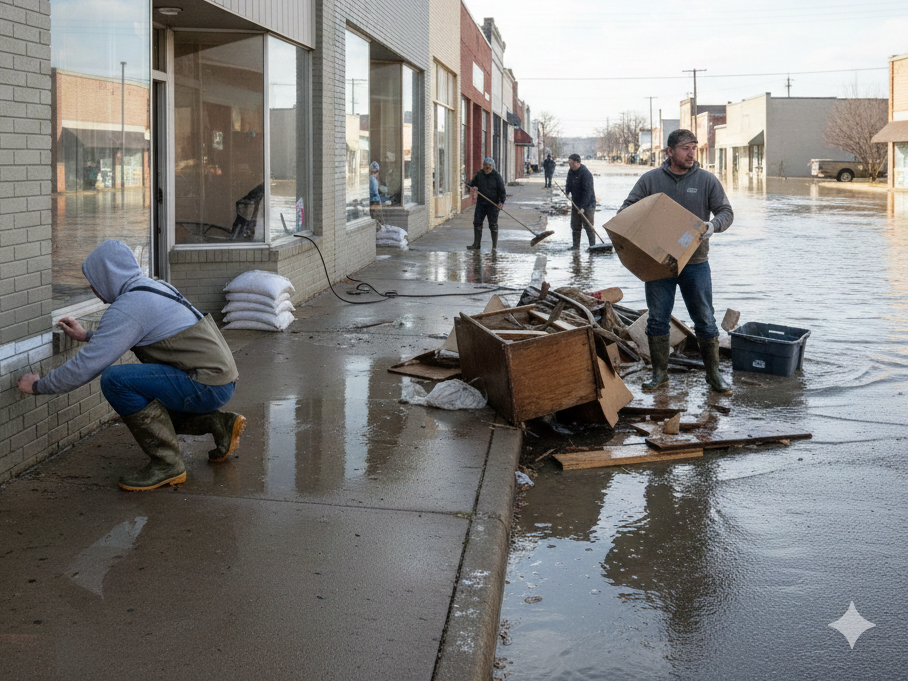
Climate volatility is compounding these challenges. The U.S. experienced 23 weather disasters in 2025 that each surpassed $1 billion in damages, and the average downtime between billion-dollar disasters fell to just 10 days that year, according to the report. Non-hurricane perils accounted for the three costliest U.S. weather events of 2025, generating a combined $78 billion in damages.
The report also found that claims reported after 90 days are 10 times more likely to result in litigation than those reported within the first 90 days, and overall claim severity hit its highest recorded level in 2025, up 26% year over year. Loss-value disputes are also intensifying: a recent Iowa hail claim produced an appraisal award more than $80,000 above the policyholder’s original proof of loss, and more than 3,500 homeowners’ policy disputes were brought before federal courts in 2025, the most in any year since 2009, the report found.
Obtain the full report here. &