Newsletters
 Risk Central
 Digital Edition
Predict & Prevent® Podcast 25: From Insurance Payer to Prevention Partner

As climate disasters, cyberattacks, and geopolitical instability increasingly intersect, traditional insurance models are reaching their limits. AXA is shifting from simply paying claims after disasters to actively helping to prevent losses before they happen.
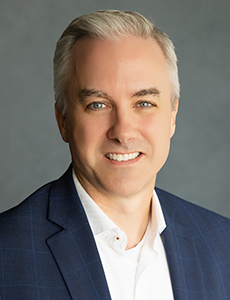
Pierre du Rostu, CEO of the AXA Digital Commercial Platform, recently discussed his team’s platform with Pete Miller, CEO of The Institutes and host of the Predict & Prevent® podcast.
The AXA Digital Commercial Platform is the winner of the International Insurance Society’s 2025 Global Innovation Award for Predict & Prevent, which was awarded at the IIS Global Insurance Forum, Oct. 26-27 in Rüschlikon, Switzerland.
On the podcast du Rostu and Miller explored how technology is transforming insurance from reactive payer to proactive partner.

Pierre du Rostu, CEO of AXA Digital Commercial platform
The AXA Digital Commercial Platform combines AI, IoT sensors, real-time satellite data, and risk management expertise into what du Rostu calls “a one-stop-shop risk management solution.”
Built on Amazon Web Services cloud platform, the AXA platform processes data to help businesses identify vulnerabilities and emerging threats before damage occurs.
Du Rostu explains why this shift is necessary through the concept of “polycrisis”—how modern risks interconnect rather than occur in isolation.
“Climate change creates social instability. Social instability could lead to geopolitical crisis, geopolitical crisis could lead to cyberattack, to supply chain disruption,” he explains.
The numbers are stark. According to du Rostu, two-thirds of climate-related losses last year were uninsured. For cyber risks, over 90% of losses lack coverage, and geopolitical risks fare even worse.
“We, as an industry, have to completely reinvent our model because this is not the model of tomorrow,” he states.
Traditional insurance relies on historical data spanning decades. The platform’s AI approach integrates live data to create what du Rostu calls “actual ground truth estimates of risks.” For wildfire prevention, as an example, the platform combines real-time satellite imagery with 20 factors including temperature, vegetation density, topography, and human presence. European firefighting companies now use these predictions to deploy resources more effectively.
Du Rostu uses a medical analogy: “We are moving from curative medicine to preventive medicine, so I go to the doctor when I’m sick, but instead of that, I’m going to the doctor in order not to become sick.”
The platform allows AXA to orchestrate an ecosystem of partners, from specialized startups to large corporations. Combined with traditional loss prevention engineering and field expertise, this approach enables AXA to scale globally and support clients facing complex, interconnected risks.
Du Rostu’s vision represents AXA’s shift “from payer to partner”—strengthening relationships with clients who rely on AXA not only for protection but also for prevention. While insurance coverage remains necessary, it can no longer be the sole answer to modern risks.
To listen to this and other episodes, visit predictandprevent.org, or look for Predict & Prevent on most podcasting platforms. &