 Newsletters
 Risk Central
 Digital Edition
Navigating the Risks of Psychedelic Therapy

Soon after Oregon legalized the use of psilocybin in 2020, the active ingredient in “magic mushrooms,” Portland-based insurance broker Todd Foster heard from an attorney friend.
Schools planning to train and accredit facilitators who would administer the drug at licensed service centers were having trouble getting liability coverage, Foster said. He encountered similar hurdles placing policies for the service centers themselves.
“Insurance is conservative in nature, and this is something that’s highly stigmatized and has never been done before,” said Foster, a partner at Oath Insurance. “So, there’s obviously a lot of pushback.”
Foster, who had experience finding coverage for cannabis companies, pushed back. He talked with underwriters and carriers, listened to their concerns, explained the safeguards embedded in Oregon’s psilocybin program, and walked them through how people would be taking the drug.
“I know my partners are like, ‘You spend too much time,’ because the ROI, business written versus time spent on this, is definitely way underwater,” Foster said. “But it’s something that I believe in, and I know that it’s going to expand to other states quickly.”
Regulations Evolving
Indeed, over the past decade, advocates have pushed for loosening the legal limits on psychedelics, arguing that adults should be free to use them and that the drugs are effective at treating persistent mental health conditions, such as post-traumatic stress disorder. The arguments are making headway at the state level. Oregon and Colorado both enacted programs allowing facilities to administer psilocybin in supervised settings, and New Mexico is expected to launch a program in December 2026.
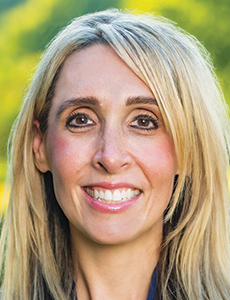
Melissa Burke, senior vice president and head of client services for P&C insurer AmTrust Financial Services
Other states are considering similar measures. More than two dozen have introduced or passed legislation related to the use of psychedelics, and the movement extends beyond traditionally left-leaning states, according to the UC Berkeley Center for the Science of Psychedelics. In 2025, the Republican-controlled legislature in Texas approved $50 million in funding for a program to research an emerging drug called ibogaine. The plant-based hallucinogenic is being studied for its potential to treat opioid use disorder, depression and PTSD.
Federal policy is evolving as well. The Trump administration has taken steps to pave the way for approval of psychedelic medications. In October, for example, the U.S. Food and Drug Administration issued a request for information on potential approaches to designing early-phase clinical trials of ibogaine. The drug is currently classified as Schedule 1, meaning it is considered to have a high potential for abuse and no acceptable medical use, though researchers can study it.
People have used psilocybin and other psychedelic drugs recreationally, if illegally, for centuries. Some mind-altering substances also have established medical uses. Ketamine is not technically a psychedelic but can be mildly hallucinogenic; it has been allowed in the U.S. as an anesthetic since 1970. MDMA, another non-psychedelic with mind-altering qualities, was used to treat mental illness in the 20th century. But during the war on drugs in the 1980s, the U.S. reclassified the drug, known as ecstasy, as a Schedule 1 substance.
There’s no question psychedelics are unlike other medications on the market.
“It’s not the kind of drug that you get prescribed and you go home and you take it,” said Vince Sliwoski, a Portland-based partner at the law firm Harris Sliwoski. His clients include companies licensed to administer psilocybin in Colorado and Oregon. Both states generally require people to use the drug at licensed facilities.
In Oregon, people don’t need a doctor’s prescription or medical reason to take psilocybin, nor do they need to be Oregon residents. But they are required to participate in a preparation session and fill out intake forms, which screen for concerns such as suicidal thoughts. Facilitators administer psilocybin in supervised settings, and people remain at the clinic while the drug works its way out of their system.
By following stringent protocols, clinics and providers can mitigate the risks, reassure carriers and take the focus off the drugs themselves, attorneys and brokers said.
“The clinics that will be insurable and defensible years from now will be the ones that are building really robust, rigorous protocols, including rigorous patient screening, and have really documented, meticulous, informed consent procedures and compliance audits,” said Kimberly Chew, a senior counsel and co-leader of the psychedelics and emerging therapies practice at law firm Husch Blackwell.
Mitigating the Risks
In general, industry observers say the risks of psychedelics are not unlike other exposures more familiar to insurers.
One of the first hurdles for insurers is the drugs’ legal status. Psychedelics remain illegal under federal law. Marijuana faced a similar conflict between state and federal law after California legalized it for medical use in 1996. Since then, medical and recreational marijuana programs have expanded across the country. It’s now legal medicine in about 40 states and legal recreationally in 24.
Insurers have followed. Just one or two carriers offered coverage in the early days of legal marijuana, Foster said. “Fast forward to today, I’ve got over a dozen carriers for every line of business.”
Insurance policies generally exclude coverage for illegal acts. But policies can be designed to insure actions in situations involving something that is legal at the state level, said Ryan Kostiuk, a Vancouver, British Columbia-based vice president for brokerage firm HUB International. He began looking into psychedelics as efforts to legalize them gathered steam about five years ago in the U.S. and Canada. “You just have to be very careful about which carriers you’re using and which broker you’re using to make sure that those types of things get carved out of the policies,” Kostiuk said.
If insurers can get past the legal status of psychedelics, they next confront the effect the substances have on people who take them.
The drugs can induce a state in which people are open to suggestion and outside influence. That heightened suggestibility may contribute to therapeutic breakthroughs when the drugs are used to treat depression, PTSD and other behavioral disorders. But it can also make users vulnerable to unscrupulous providers. The industry has already attracted lawsuits alleging that people administering the drugs took sexual and financial advantage of their patients, said Jonathan Bound, product innovation lead for Bermuda-based Relm Insurance, a carrier specializing in hard-to-place risks, including psychedelics.
The risk exists in any doctor-patient relationship and with other drugs, such as common anesthetics, he said. Other familiar drug-related risks include potential side effects over the short and long terms.
“They are mind-altering substances. So there are the unknown unknowns that can come out of having one’s mind altered,” Bound said.
And like bars, restaurants and other venues serving alcohol, psychedelic treatment centers have to account for the risk that people drive off under the influence. “Bodies just react to it differently. Can’t have someone driving home while the road’s moving sideways on them,” Bound said.
Employers may have similar qualms about people showing up to work fresh from a mind-bending experience with psilocybin. But it’s not all that different from the workplace risk associated with other drugs, such as opioids and amphetamines, said Melissa Burke, senior vice president and head of client services for P&C insurer AmTrust Financial Services.
Employers already have an obligation to keep workers safe, she said. Ideally, that translates into setting and enforcing policies ahead of time that establish how to respond when an employee appears impaired and when intervention may be necessary.
“If they notice someone is drowsy, not focused, making mistakes, they need to be aware of the workplace and speak to that employee,” Burke said. “Every time there’s a new wave of exposure, we shouldn’t need to rewrite all these policies. They should be applicable no matter the substance.” &