Newsletters
 Risk Central
 Digital Edition
Predict & Prevent® Podcast Episode 27: New Technology Listens for Early Earthquake Warnings
For decades, seismologists have insisted that forecasting earthquakes is impossible. Itamar Zabari, co-founder and CEO of AstroTeq.ai, is proving them wrong, and the implications for governments, insurers, and industries worldwide are profound.
In the latest episode of the Predict & Prevent podcast, host Pete Miller, CPCU and CEO of The Institutes, sits down with Zabari to discuss how AstroTeq is using cosmic radiation data from deep space, satellite imagery, and AI-driven machine learning to forecast earthquakes up to 25 days before they strike. To put that figure in context, California’s ShakeAlert system cost tens of millions of dollars to build and delivers roughly 12 seconds of warning when it works.
The science behind AstroTeq’s approach originated with research conducted by Zabari’s wife, Noemi, an astrophysicist. Her professor had been collecting cosmic radiation data in Chile in 2010 when a massive earthquake struck. A significant anomaly appeared in the data just before the event, but it went unexamined for a decade.
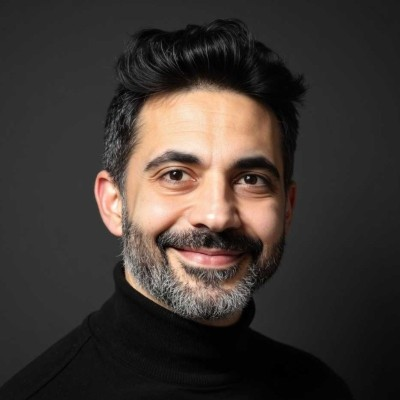
Itamar Zabari, CEO and co-founder of AstroTeq
When researchers finally revisited it, the statistical relationship between cosmic radiation and seismic activity proved remarkably strong, reaching sigma five, the same strength of confidence threshold used to confirm the discovery of the Higgs boson particle.
Zabari recognized that publishing academic papers was not going to save lives, so he founded AstroTeq to turn the research into a deployable commercial product. The system now draws on multiple data channels, including cosmic radiation sensors, thermal satellite imaging, and additional proprietary sources, processed through stacked machine learning models. The result is a forecast that identifies not just whether an earthquake is coming, but where, when, and at what magnitude.
“The earth does tell us that an earthquake is about to happen,” Zabari explains. “It’s just whispering. It’s whispering through different data channels. And so you really need to listen to the whispers and connect them in order to create a coherent picture.”
The practical value of days of advance notice rather than seconds is significant. Factories can be shut down and secured before machinery is damaged. Workers can be evacuated. Nuclear power plants can enter safe mode. Infrastructure operators can protect critical systems. Communities can evacuate.
Zabari estimates that proper preparation can reduce damages by a factor of anywhere from 1-to-7 up to 1-to-160, depending on the industry. He points to the 2011 Tohoku earthquake and subsequent nuclear disaster, which caused damage normalized to nearly half a trillion dollars in today’s valuation, as a stark illustration of what inadequate warning time costs.
For insurers, the conversation is equally compelling. Zabari describes how early discussions with insurance markets were met with skepticism, but as carriers began shifting from reactive compensation models toward proactive prevention, the value proposition became clearer.
Insurers can embed AstroTeq’s system into policy requirements, the way anti-theft technology or sprinkler systems are already mandated in some policies, while also using advance notice to pre-position loss adjusters, capture pre-event satellite imagery, and accelerate claims assessments after an event.
AstroTeq is currently working with partners in Turkey, conducting a pilot with Tokio Marine in Japan, and has recently met with Chile’s National Emergency Office. Mexico, Italy, Indonesia, and California are all on the company’s expansion list.
Listen to the full episode, “New Technology Listens for Early Earthquake Warnings,” to hear the details that could change how you think about catastrophic earthquake risk. &