Newsletters
 Risk Central
 Digital Edition
Insurance Availability Now Hinges On Neighborhood-Level Resilience, Not Just Individual Buildings, Report Finds
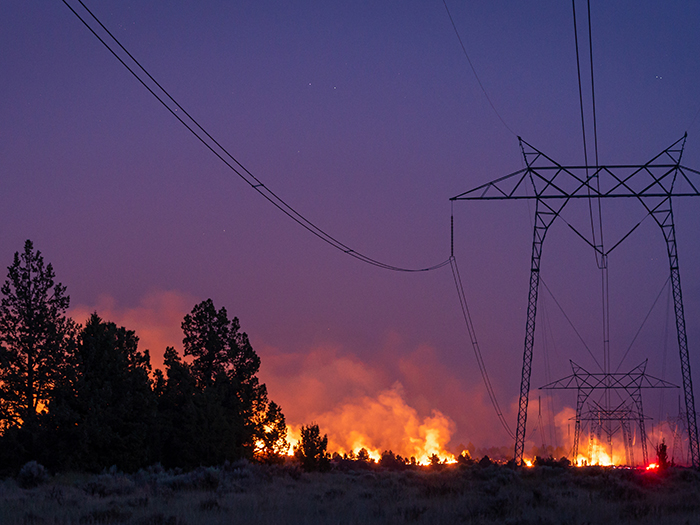
Whether a property can be insured increasingly depends less on how well an individual building is fortified than on the resilience of the community around it, according to a report from the World Economic Forum produced in collaboration with Marsh.
The report, “Addressing Insurability: A Playbook for Investing in Place-Based Resilience,” defines insurability as the availability of adequate coverage at an affordable price and argues that investments such as storm drainage, flood defenses and wildfire buffers are becoming critical to preserving it.
The stakes are rising: global insured losses from natural catastrophes hit $107 billion in 2025, topping $100 billion every year since 2020. In California, homeowners insurance premiums are up 84% since 2020, partly driven by wildfire risk, the report said. In Australia, 1.3 million properties are projected to be uninsurable by 2100, while 10% of Canadian homes are already uninsurable due to extreme weather, according to the report.
The report frames this as fundamentally a risk management failure rather than an insurance failure. A fortified building may still be at risk if off-site conditions such as storm drainage fail or nearby vegetation is inadequately managed, the report said, and roughly 80% of buildings that will exist in 2050 have already been built, often based on outdated weather data. Business interruption compounds the problem: after the 2025 Palisades Fire in California, Malibu businesses that escaped the flames still saw an average 70% revenue decline over five months because a coastal highway closure cut them off from customers, the report found.
The Free-Rider Problem Blocking Investment
The core obstacle, according to the report, is a collective-action failure. Measures such as storm drainage, natural flood defenses and wildfire buffers benefit many stakeholders, but the costs typically fall on only a few, leaving no single actor with sufficient incentive to invest alone. Marsh’s Climate Adaptation Survey 2026, cited in the report, found businesses point to governments and regulators (31%) and investors (24%) as the parties most needing to act. Yet the economic case for resilience is strong: the report cites studies showing each $1 invested in adaptation and resilience yields between $2 and $10 in benefits, with one analysis of 320 investments across 12 countries estimating returns exceeding $10 over a 10-year period.
Data gaps make the case harder to act on. In Paradise, California, where the 2018 Camp Fire caused $12.5 billion in insured losses, analysis by the Nature Conservancy and Marsh Re found that adding wildfire buffers around the town’s edge reduced modeled losses by 27%, and combining buffers with modern building codes produced a compounded reduction of around 42%, cutting total modeled losses from more than $10 billion to about $6 billion, the report said.
In Ireland, where flooding has caused more than €800 million ($909 million) in damage and insurers have classified entire neighborhoods as uninsurable using crude location data, the London School of Economics’ Grantham Research Institute has proposed a national flood-risk data platform to let government agencies, insurers and lenders share hazard and claims data.
Financing and Recognition Remain Underdeveloped
Even where resilience measures exist, financing them is difficult because benefits are spread across many parties over decades while costs are concentrated upfront, the report said.
Emerging mechanisms include resilience improvement districts in states such as Connecticut and California, which ringfence areas so that property value gains help repay the investment, and risk-pooling facilities such as the Urban Infrastructure Insurance Facility, which aims to provide €100 million ($114 million) in tailored coverage protecting at least 7.5 million people across Latin American and Caribbean cities.
A pilot in New York City, community-based catastrophe insurance arranged through the Center for NYC Neighborhoods, allows a single policy to cover many households, distributing emergency grants of up to $15,000 per household within days when flooding exceeds a preset threshold.
Markets also lack trusted ways to translate resilience into pricing, the report found. The report points to the U.S. Community Rating System, in place since 1990, which offers premium discounts reaching 45% at Class 1 for eligible policyholders in communities that improve flood-plain management, as an example of place-level recognition working at scale over 35 years.
Around 42% of global economic damage caused by natural catastrophe events is insured, the report said, while 74% of small businesses globally are underinsured. The report identifies mapping risk data, financing structures, trusted recognition metrics and captured co-benefits, such as biodiversity gains or carbon sequestration, as the four interventions coalitions need to pursue together.
Obtain the full report here. &