Newsletters
 Risk Central
 Digital Edition
Global Insurance Forum to Kick Off at Lloyd’s in London in November

Risk & Insurance recently caught up with Josh Landau, the president of the International Insurance Society. The purpose of our talk was to get some details about the society’s upcoming Global Insurance Forum to be held at Loyd’s in London on November 15 and 16.
Some of the speakers to be featured at the event include Stephen Catlin, Founder and Life President with the Convex Group Limited; Patrick Tiernan, CEO of Lloyd’s and Dawn Miller, Chief Commercial Officer, Lloyd’s CEO, Lloyd’s America.
To learn more about the event and to register, tap this link.
Risk & Insurance: Thanks for meeting with us Josh. Every insurance conference promises to address the industry’s biggest challenges. What makes this year’s Global Insurance Forum different?
Josh Landau: Two things: the venue and the moment. We’re convening at Lloyd’s in London — the birthplace of modern risk-sharing — which gives GIF a symbolic weight this year that goes beyond just another stop on the conference circuit. But more importantly, we’re bringing together C-suite leaders at a genuine inflection point. Capital is being redeployed, AI has moved from pilot to production, and volatility — geopolitical, financial, climate — has become the operating environment rather than an occasional disruption. GIF isn’t designed as a series of panels talking *about* the industry’s challenges; it’s designed as a working session for the people actually making the capital and strategic decisions. That’s always been our differentiator as an association-led forum rather than a trade show.
R&I: Why was “Turning Volatility Into Value” chosen as the theme?
JL: It came directly from our members. Our 2026 Global Priorities Survey of nearly 20,000 C-suite executives and senior leaders globally showed financial market volatility overtaking inflation as the industry’s leading economic concern for the first time.
So, volatility is clearly top of mind. But we didn’t want a theme that treated volatility purely as a threat to be defended against. Pricing and absorbing uncertainty is our industry’s core competency; it’s literally what underwriting is.
The theme is a deliberate reframe: volatility isn’t just risk to be managed, it’s the raw material insurers are uniquely positioned to convert into growth, product innovation, and competitive advantage.
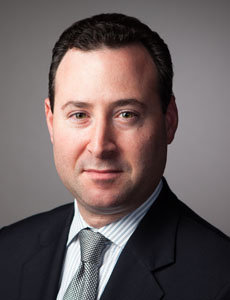
Josh Landau, president, International Insurance Society
R&I: Thanks for that Josh. When we use a word like “value” what does that mean in today’s environment?
JL: It’s become multidimensional in a way it wasn’t ten years ago. Value used to be shorthand for combined ratio and ROE, full stop. Today it also has to capture capital efficiency and discipline, the speed and quality of the customer experience, and perhaps most critically, the industry’s contribution to narrowing the protection gap.
Boards and rating agencies are asking the same underlying question in different languages: is this balance sheet resilient *and* is it enabling growth? The insurers getting real traction this year are the ones treating those as the same question rather than a trade-off.
R&I: Are insurance executives feeling more optimistic than they were a year ago?
JL: I’d call it purposeful rather than purely optimistic. Growth and product innovation are still showing up as top priorities in our member data, so there’s real conviction in the industry’s ability to expand. But that conviction is sitting right alongside heightened concern about financial market volatility, which our survey shows has now overtaken inflation as executives’ top economic worry.
So, the honest read is: leaders aren’t waiting for the volatility to pass before they act — they’re building strategy that assumes it’s permanent. That’s a more mature posture than optimism or pessimism, and it’s exactly what we wanted GIF’s agenda to reflect.
R&I: Nearly every insurer is exploring AI, but many are still figuring out how to scale it. How will GIF help attendees think differently about AI adoption?
JL: The numbers tell the story of where we are: 71% of executives now cite AI as their top priority in our latest survey, up from single digits just a few years ago. So the “should we adopt AI” conversation is over.
The real conversation now is scaling, governance, and ROI. Where the Global Insurance Forum adds value is getting past the vendor-pitch version of that conversation. We’re putting the executives who are actually accountable for scaling AI; across underwriting, claims, distribution, and capital management, in the same room to talk candidly about what’s working, what isn’t, and how they’re managing model risk and regulatory expectations along the way. That peer-to-peer, C-suite-level candor is harder to get anywhere else.
R&I: As economic and geopolitical conditions evolve, insurers are rethinking how they deploy capital to support growth while maintaining resilience. Why is capital strategy such a critical topic for global insurance leaders right now?
JL: Because the old playbook — hold capital defensively, deploy it cautiously — doesn’t match the pace of change insurers are operating in. Rate environments are shifting, alternative and third-party capital continues to reshape reinsurance and specialty markets, and geopolitical fragmentation is forcing insurers to rethink where and how they’re exposed.
At the same time, rating agencies and regulators haven’t lowered the bar on resilience. So leaders are being asked to do two things simultaneously that used to be sequential: fund growth and prove resilience, in real time, to the same stakeholders. Getting that capital allocation right — not just how much, but how fast and where — is now a board-level strategic question, not a treasury function.
R&I: The “Leadership Perspective: A View from the Top” session describes resilience as a strategic imperative rather than just a risk-management objective. How has insurers’ understanding of resilience evolved in recent years?
JL: Resilience used to live in the risk committee. It was about capital adequacy, catastrophe modeling, and regulatory compliance and it was largely a defensive and technical discipline.
What’s changed is that boards now treat resilience as a growth enabler and a trust signal, not just a solvency requirement. Customers, employees, and investors are all making judgments about an insurer’s resilience the same way they judge its growth strategy.
So the leaders we’re featuring in that session aren’t talking about resilience as insurance against bad outcomes — they’re talking about it as a source of competitive differentiation and a precondition for being able to take on new risk with confidence. That shift, from a defensive posture to a strategic one, is one of the more significant changes in how the C-suite thinks about our industry.
R&I: That’s great, Josh, appreciate your time. Anything about the forum that you want to get across to our readers that I didn’t ask you about that you wanted to say? Or do you think we covered it?
JL: I think we covered it but I would just like to reiterate that it’s at Lloyd’s in November. We’re very excited to be able to bring industry leaders and influencers together to look at the world’s challenges and solutions through the lens of insurance. &