Newsletters
 Risk Central
 Digital Edition
Climate Stress Is Cutting Roof Lifespans Across the US, With Implications for Property Risk
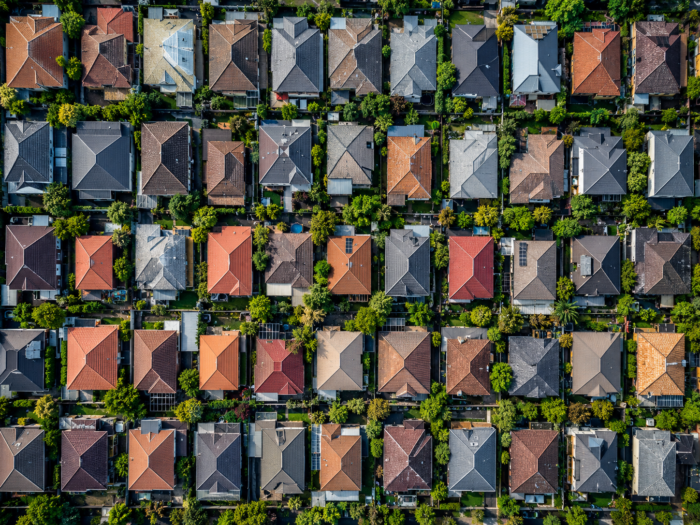
An analysis of more than 2.8 billion roof images across nearly 2,100 U.S. counties finds that ongoing climate conditions, including daily temperature swings, humidity, and intensifying rainfall, are quietly eroding roof lifespans and reshaping property risk in ways that catastrophe models alone may not capture, according to a report by Nearmap.
Nearmap, which conducted the analysis using AI-derived data from its historical aerial imagery archive, found that average roof age ranges from 16.2 years in Nevada to just 8.9 years in Louisiana. The firm said the gap is likely driven by climate conditions, construction standards, and material choices, while noting the climate signal is hard to ignore.
Three Climate Factors Drive the Steepest Losses in Roof Longevity
The analysis identified three variables with the strongest correlation to reduced roof lifespans.
The first is thermal stress: counties where mean daily temperature fluctuations exceed 23°F show an average roof age of 9.0 years, compared to 11.1 years in counties where fluctuations stay below 20°F, a 23% difference attributable to this single climate variable.
The second factor is the combination of heat and humidity, which the analysis found to be more damaging than either condition alone. Counties where both are elevated show the shortest average roof ages in the entire dataset: 8.5 years, compared to 11.0 years in cool, low-humidity regions. The Gulf Coast and Florida fall predominantly into this category.
At the county level, the figures are more striking: Taylor County, Fla., shows an average roof age of 5.0 years; Walthall County, Miss., 5.2 years; and Madison County, Fla., 5.6 years. Nearmap noted that roofs in these counties are being replaced roughly twice as often as those in cooler, drier regions.
The third driver is extreme rainfall intensity. The analysis found that counties experiencing the highest rainfall intensity consistently show the youngest average roof ages, indicating more frequent replacements.
The Geographic Footprint of Rainfall Risk Has Expanded Dramatically
Of the three climate factors examined, extreme rainfall shows the most significant geographic shift over time. The land area of the U.S. falling into the highest precipitation band grew from approximately 35,000 square miles in the 1980–84 period to just over 300,000 square miles in 2020–24, a 750% increase over four decades.
Properties once characterized by moderate precipitation are now regularly exposed to rainfall intense enough to stress drainage systems, compromise seals and flashing, and shorten roof lifespans.
“Climate shifts don’t announce themselves with a single event,” the report noted. “They accumulate, county by county, year by year.”
That expansion has direct implications for portfolio concentration and pricing. Properties now carrying elevated rainfall exposure may not appear on traditional risk radar, and the gap between their current exposure and the assumptions embedded in their pricing is, as the report put it, “where loss accumulates quietly.”
Chronic Degradation Sits Alongside CAT Risk and Can Amplify It
The analysis argues that catastrophe models remain essential but do not fully account for the ambient climate conditions that erode roofs between major events. A roof that has been subjected to years of thermal cycling, humidity, or intense rainfall absorbs a storm differently than a newer one, and the accumulated degradation shapes the claim that follows.
At an average replacement cost of $9,500 to $11,000 per roof, compressed lifespans translate directly into more frequent claims. For portfolios concentrated in high-replacement-frequency regions, that frequency represents a material line item in loss expectations, the report said. A roof in a hot, humid county may reach the end of its useful life years before a homeowner or insurer would anticipate based on age alone, affecting both claim probability and severity.
Obtain the full report here. &