Newsletters
 Risk Central
 Digital Edition
Building the Next Generation of Captive Insurance Professionals

A talent shortage continues to be one of the insurance industry’s most pressing challenges. As thousands of older professionals prepare to retire, there are not enough younger people in line to fill the gaps. The Bureau of Labor Statistics has estimated that between 2021 and the end of 2026, the industry will lose about 400,000 workers through retirement or attrition. Meanwhile, younger workers have shown little interest in insurance, perceiving it as boring, outdated and monolithic.
“In Vermont, we’ve seen high rates of retirement, with not enough new talent coming in to keep pace. Combined with industry really growing, it’s putting a strain on the future of the captive industry,” said Brittany Nevins, Vermont’s Captive Insurance Economic Development Director.
“There’s just not a lot of awareness of captive insurance as a possible career path. Many students are not exposed to risk management as a possibility and are unaware of how interesting and innovative it can be.”
For that reason, Nevins led the effort in Vermont to highlight opportunities in the captive industry and develop the next generation of insurance professionals through the Vermont Captive Insurance Emerging Leaders (VCIEL) initiative.
“We hold different events in Vermont for students to network and learn more about the industry. We started a scholarship to get students to the VCIA annual conference. We’re trying to build relationships with higher education to build a pipeline of talent in Vermont,” she said.
Vermont regulators have worked closely with Butler University, which places a strong emphasis on hands-on, experiential learning. The Davey Risk Management and Insurance program – part of Butler’s Lacy School of Business – stands out as the only such program with a student-run insurance captive.
Building the Industry’s First Student-Run Captive
With investment from MJ Insurance, the student captive company was formed in 2017. Students were involved in selecting a domicile, identifying risks that fit the captive’s appetite, and managing claims.
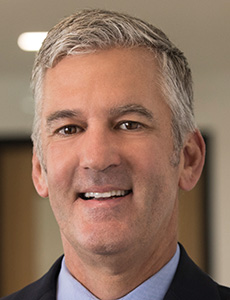
Colin MacNab, Risk Management Consultant, MJ Insurance
“When the captive was formed, it was a Bermuda-domiciled single parent captive. A captive class is offered one semester each year and students enrolled in the captive class serve in various leadership positions,” said Tom Faulconer, Clinical Professor, Risk Management and Insurance, Butler University.
“They performed various routine and extraordinary tasks within the captive such as valuing property and completing value statements. They also worked directly with the captive manager and actuary in Bermuda to secure required filings, etc. They also went to Bermuda during the semester to witness and participate in the required annual meeting.”
Initially, the captive provided some limited property and liability coverages. It insured some of the school’s fine arts collection, provided general liability coverage for small businesses developed by students in an entrepreneurial class, and provided a manuscripted animal mortality policy to cover Blue, Butler’s bulldog mascot.
“That would have provided money for the university to purchase a replacement for the live mascot if he died or was killed while serving as the mascot,” Faulconer said. This coverage eventually expanded to cover all the working animals on campus, including “Bear,” the Butler police K-9 and the university’s therapy dog.
Students gain direct experience learning the ins and outs of the insurance process and are exposed to various roles within the industry across risk assessment, underwriting, claims management and loss control.
“The experience provided exposure to the insurance industry that extends far beyond what can be learned from a textbook. By working with real loss data and developing recommendations for university leadership, I gained firsthand insight into risk financing, captive insurance operations, governance, and the regulatory environments in which captives operate,” said Steven Rokosh, a former student and co-CEO of the captive.
Brady Preston, also a former student co-CEO, added, “It was real world experience that was much needed for us to succeed. Not many students can say they implemented a General Liability policy into their university’s captive insurance company, but we Butler students can. Being able to take tools your professor taught you and implement them into a real problem in the world is more educational than any exam, project, or essay ever could be.”
Making the Move to Vermont
Eventually, students and faculty leadership decided to re-domicile, recognizing that Vermont’s business and regulatory environment was a better fit for the captive’s mission and function as an educational tool.
“At that time, our Masters in Risk and Insurance students cohort completed a feasibility study and made recommendations to redomesticate to Vermont. The captive was moved and reformed as a cell captive with the idea that other universities might want to participate in the future using the captive as a teaching tool as Butler does,” Faulconer said.
“We switched our captive management team as well to Hylant as they have a local team that includes a graduate from the Risk Management program that took the captive class. They agreed the move would make more sense. Vermont is the oldest US captive domicile and there are great people there in the state to work with. They are very collaborative and supportive,” said Colin MacNab, Risk Management Consultant with MJ Insurance.
Claire Richardson, a senior captive consultant with Hylant, helped the students evaluate their domicile options and select the best fit. As a Butler graduate and former student CEO of the captive herself, she understood the company’s needs and goals.
“Vermont has a very engaged regulatory body. They took the time to help students learn the finer details of the insurance process and understand the purpose that captives serve,” Richardson said. “It’s not a ‘set it and forget it’ scenario in Vermont. They’re great at understanding risk philosophies and making changes if needed.”
“Butler wanted students to have a meaningful, intentional relationship with regulators in the domicile. We were excited to have them be in Vermont. We saw an opportunity to help build connections with local educational institutions,” Nevins said.
There are 32 regulators in Vermont solely dedicated to captive insurance. Regulators are accessible, communicative, and willing to work with captives to understand their challenges. The state is also well-resourced and well-funded, thanks in part to the work of the VCIA. The move has opened up more opportunities for student officers of the Butler captive to be more directly involved in decision making and operations.
“Since the redomestication, pretty much all of the work on the captive has been done by undergraduate students. I teach the captive class now and appoint CEOs and student-VPs for various positions such as claims, operations, and financial/investments. Each semester, the class does a very deep dive into a potential coverage to include in the captive for the following year. They end the semester with a trip to Vermont for our annual meeting and present their findings to the leadership of the university,” Faulconer said.
Going forward, the captive’s goals include increasing premium writings, potentially taking on more of Butler University’s risks, and hopefully getting other local schools involved, now possible with the switch to a cell structure. And, of course, it will continue to equip students with the practical skills they need to thrive in a captive insurance career. &