Newsletters
 Risk Central
 Digital Edition
Brilliance in Focus: Workers’ Comp Power Broker Monica Adwani
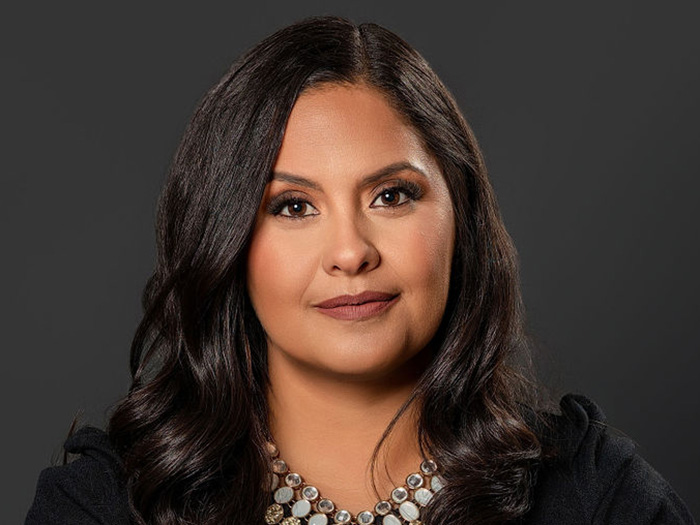

As part of covering the best brokers in the commercial insurance space, Risk & Insurance®, with the sponsorship of Philadelphia Insurance Companies, is expanding its coverage of Power Broker® winners and finalists with its Brilliance in Focus series.
Look for these expanded profiles on the Risk & Insurance website and in your social media feeds throughout the year.
Here, we talk with Breezy Seguros CEO Monica Adwani, a 2025 Workers’ Compensation Power Broker.
Risk & Insurance: How did you find yourself working in insurance, and then workers’ compensation?
Monica Adwani: My journey into insurance wasn’t something I had planned — it was something I grew into through a deep desire to help people navigate moments of uncertainty. I immigrated to the United States at 19, and like many in our community, I had to quickly learn how to advocate for myself in systems that weren’t built for me. That experience made me empathetic to others facing the same barriers.
When I entered insurance nearly two decades ago, I gravitated toward commercial lines because I loved helping entrepreneurs protect their livelihoods. Workers’ compensation became a natural focus because it sits at the intersection of business protection and human care. An injured worker is not just a claim number — they are a person whose life has been disrupted, and my role as a broker is to bridge the gap between the employer’s responsibilities and the worker’s dignity, making sure both are supported.
R&I: What is your strategy behind helping injured workers?
MA: At Breezy Seguros, we operate on the belief that accessibility is non-negotiable. Our entire team is multilingual — not just Spanish and English, but also Portuguese — and together with my partners Tiago, Rodolpho, and Eucimar, we’ve built an organization that prioritizes communication in the worker’s preferred language from day one.
Our claims and workers’ comp processes are centered on proactive communication, cultural sensitivity, and advocacy. We also focus on educating employers about cultural nuances and best practices so they can support their teams more effectively.
Beyond translation, we walk alongside injured workers, ensuring they clearly understand every step of the process, from the initial report to medical follow-ups and return-to-work plans. The strategy is simple but powerful: When you remove the language barrier — with the right partners and systems in place — you also remove one of the greatest sources of stress and delay.
R&I: Could you share a time in your brokering journey that was challenging? What drove success in the face of potential adversity?
MA: One of my most challenging moments came early in my career when I was working with a construction company whose injured employee spoke only Portuguese.
The employer was frustrated, the adjuster was struggling to get accurate medical updates, and the worker felt isolated and mistrustful … I stepped in as a translator and cultural liaison — not just relaying words but making sure both sides understood intent and expectations. I coordinated directly with medical providers, explained treatment plans in plain language, and educated the employer about cultural factors that could influence communication.
That experience reinforced my belief that a broker is not just a transaction facilitator — we are a bridge-builder. The claim was resolved successfully, with the worker returning to work sooner than expected, and the employer later became one of my strongest referral sources.
R&I: What advice would you give to other insurance professionals who might be looking at the workers’ comp system and thinking to themselves, there are ways to improve this journey for injured workers?
MA: Start by seeing the injured worker as a person first, not as a claim file. Listen without rushing. Ask about their fears, their family, and their life outside of work — because those factors often determine recovery more than the injury itself.
Then, advocate for systemic empathy. Push carriers, employers, and service providers to prioritize clear communication, cultural sensitivity, and language access.
And don’t underestimate the value of educating employers — when they understand the human side of workers’ comp, they become partners in recovery instead of just stakeholders in cost control. The workers’ comp journey can be transformed when brokers lead with compassion and persistence. It’s not just about closing a claim — it’s about restoring dignity and stability. &