Newsletters
 Risk Central
 Digital Edition
A Look at How Real Estate Insurers Are Responding to Climate Change

Only one named storm made landfall in the U.S. during the 2025 Atlantic hurricane season. Still there were 23 individual weather and climate disasters with at least $1 billion in damages, according to the independent scientific organization Climate Central. The total, direct cost of those 23 events in 2025 was about $115 billion, with 276 direct and indirect fatalities.
As climate change accelerates, owners of residential and commercial real estate are under increasing pressure to invest in risk engineering, regardless of whether property insurance rates are rising or falling — as they currently are. Real estate insurance is helping insureds manage climate change in all its manifestations.
“No matter what the politics, climate change is real, the science is real, and we are responding accordingly,” said Ed Leibrock, executive vice president of U.S. corporate property at Munich Re Facultative & Corporate North America.
“Hail, tornado, and wildfire sublimit deductibles used to be called secondary CAT perils, [but] now I think of them as frequency [as compared to severity] CAT perils.”
Engineering Risk Management, Models and Data Collection
Stressing the importance of engineering risk management along with actual loss data and models, Leibrock noted that “models are wonderful tools, but they are just tools. They are not fully going to predict risk.” He cited an example of a large chain of theaters across the Southeast, particularly CAT-exposed regions. “Their loss history is essentially nil, even though the model says it could be bad. Their actual risk performance is much better than the model would indicate.”
Munich Re has engineering risk management in-house as part of its Hartford Steam Boiler organization. The firm also has a system called Location Risk Intelligence, developed in-house, that assesses an asset’s performance against projected climate variables out to 30 years. Clients can get a snapshot as an included service; it is also available to any owner or broker as a service for a fee.
“Everyone pays attention to big single events,” said Jimmy Clark, executive director of the real estate and hospitality practice of Gallagher, “but what we are seeing [is] the growing impact of Midwest hailstorms and straight-line winds. That is where we are spending a lot of our time. Across the industry some carriers are shifting risk from their balance sheets to clients’, which makes them more thoughtful.”
Recalling “the days when statements of values had 10 to 12 columns of data,” Clark contrasted that, saying “today the statement is 131 columns of data. We’re gathering data down to roof nails and glass with or without film. Every storm we can see how construction methods and materials were affected. Using that data, we can guide clients not just on insurance but on capital spending to improve their risk profile, and guide our own sub-layer buying.”
Vast amounts of data are of limited use without deeper comprehension. Clark cited the insight that “something could be 1% of the total insured value, in the CAT premium, but driving 9% of the average loss in the model.”
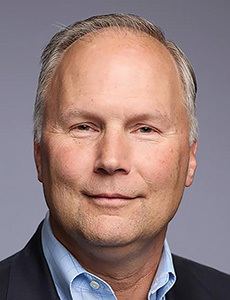
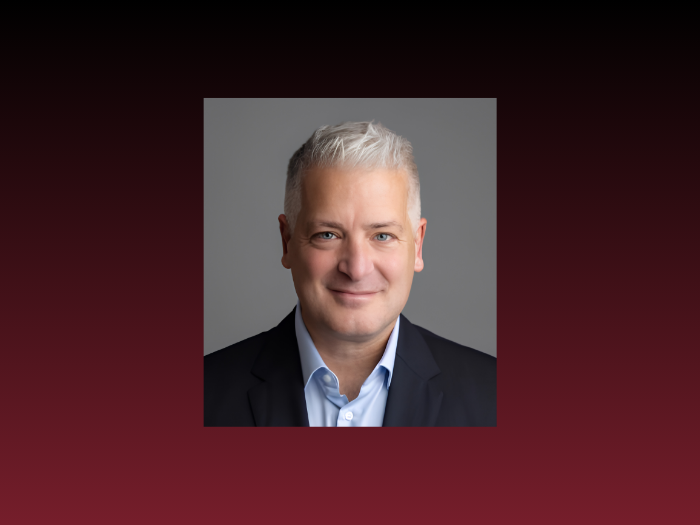
Ed Leibrock, executive vice president of U.S. corporate property at Munich Re Facultative & Corporate North America
Two years ago, sister company Gallagher Re formed a partnership with Colorado State University to study the changing nature of tropical cyclones. The Rams were the first academic entity to join Gallagher Re’s Tropical Cyclone Consortium.
The Future of Climate and Disasters
Industry, academic, and independent data are all the more important because, as of 2025, the U.S. National Oceanic and Atmospheric Administration’s National Centers for Environmental Information no longer updates its Billion Dollar Weather and Climate Disasters “in alignment with evolving priorities, statutory mandates, and staffing changes.”
Insureds tend to think in terms of the present, but “we are trying to get clients to envision how the climate might be in 10 or 20 years,” said Craig Tuokkola, director for property in the risk control team of Liberty Mutual. “Things are changing. Boards of directors are starting to think about wildfire and flooding.”
That applies not just to existing properties, but to strategic planning. “What is the best location for a new office or facility,” Tuokkola asked. “Maybe not Florida or California. Maybe build in Minneapolis, which has a relatively benign climate,” at least in terms of natural catastrophes.
That level of collaboration beyond the policy is relatively new thinking, said Shaun Guinan, who leads the large property segment for Liberty Mutual. “When business owners developed growth plans, they never considered consulting with their insurance carrier. We can give real-time advice on hardening assets, also on supply chain vulnerabilities and on-site selection.”
As an example, Guinan noted that while flood modeling is well-established and getting much better, wildfire modeling is in its infancy. “The Pacific Palisades [site of the January 2025 wildfire that killed 12 people and caused $25 billion in losses] were rated low-risk. The models looked at brush and hills but did not take into account building materials.”
Nationwide recently surveyed commercial property owners and found that two-thirds are very or extremely concerned about severe weather and natural disasters, while only few feel fully prepared for weather-related risks. Many are taking measures to build resilience, but about six in 10 say they would consider reducing insurance coverage to save money on premiums.
“The survey really highlights the gap between awareness and preparedness and reinforces the importance of a comprehensive approach that includes risk mitigation, continuity planning and insurance coverage,” said Matthew Ondrusek, AVP with Nationwide Middle Market Real Estate.
“The insurance industry, including Nationwide, funds organizations whose research would assist with addressing major-storm vulnerabilities,” said Ondrusek. “For example, we’re heavily involved with the Insurance Institute for Business & Home Safety, which tests the performance of building materials and/or designs to weather risks including hail, wildfires and hurricane force winds. We’ve also advocated strengthening building codes across the country to help improve communities’ resiliency to natural catastrophes.”
Nationwide has a Business Continuity Management Interactive Program available at no additional cost for insureds, also available to non-members for free on the insurer’s our risk-management website.
Later this year, AXA-XL will be launching a digital platform called Predict & Prevent “that will enable clients to make their own determination of which models they would like to use,” said Sheri Wilbanks, head of sustainability metrics & solutions at AXA GUO.
“For our insureds, there is a basic version that is included with their coverage. They can also upgrade to a subscription service, which is also available to non-clients. Many of clients’ details will already be in the platform, as well as other data from public sources such as a property’s footprint. That is very important for large properties and facilities. We will be adding a climate element next.”
AXA-XL works with Kayrros, an energy-analytics and satellite-data company that was recently acquired by Energy Aspects, a market-data and intelligence company based in London.
The new platform works in conjunction with the risk engineering team for the Americas led by Scott Ewing. “We conduct several hundred roof reviews every year, as well as assessing glazing and doors,” he said. “The focus on hardening facilities is a first step, but it does not eliminate the need for contingency and recovery planning. After the storm materials and labor get gobbled up. You want to be at the front of the line.”
The State of the Market
Several sources describe the market as soft. One called it “fragile.” Another said “we’re almost in uncharted waters. A lot of new capacity is coming in, driving things down. But where will that capacity be in five years?”
“We approach pricing and risk management through the lens of long-term relationships,” said Brett Hoopingarner, national sales director, Direct Writer and Life & Annuity at mutual insurer Sentry.
“It’s not just about premium, it’s about aligning risk, structure, and resilience over time. Customers who actively invest in mitigating risk, whether through property hardening or operational improvements, can see that reflected in their overall program.”
That may include more favorable pricing, he added, “but just as importantly, it often creates more flexibility in how risk is shared through deductibles and retentions. Those decisions directly influence a customer’s exposure to loss and help align coverage with their risk appetite. We work closely with customers to evaluate those tradeoffs, helping them make informed decisions about how much risk to retain versus transfer based on their operations, financial position, and long-term goals.” &