Newsletters
 Risk Central
 Digital Edition
2026 Theo Award Winner: State Farm
 Carpal tunnel syndrome tends to sneak up on people. Numbness in the fingers. Tingling that comes and goes. Weakness that gets dismissed as fatigue. By the time someone decides to seek medical attention, the condition has often been progressing for months — and the window for simple, low-cost intervention has passed.
For a company the size of State Farm, with more than 61,000 employees doing computer work across offices and in remote environments, that pattern has real consequences. It shows up in human impact, claims frequency, in lost workdays, and recovery timelines.
“Getting to the employee sooner, with the information they need, can help employees address their concerns earlier” says Jeff Abel, Senior Program Administrator in Corporate Insurance & Risk Management.
Getting to the employee sooner is exactly what State Farm has built a program to do.
The Moment They’re Engaged
The foundation of the program is a custom-built Incident Accident Report system — designed in-house by State Farm’s Business Automation Services team and Jacob Reeder, Certified Safety Professional in Workplace Protection.
“The system is flexible and can be updated quickly” Reeder says. The tool captures bodily injuries, vehicle incidents, property damage, and more — but for purposes of the CTS initiative, its most important function is speed and routing. The moment an employee completes an incident accident report indicating a repetitive motion concern, an automated notification is sent to the appropriate teams so employees can receive timely support.
That instant notification triggers members of the Human Resources & Development Team, like Monica Sutton, to spring into action.
“The incident accident report is my first notification from the employee” Sutton explains. When she sees a report indicating cumulative trauma or repetitive motion, she immediately sends the employee a custom Carpal Tunnel Syndrome Educational Guide — developed in partnership with TPA Sedgwick, and tailored specifically to State Farm’s work environment, equipment, and ergonomic resources.
The guide covers wrist positioning, micro-breaks, stretching, proper equipment usage, and symptom awareness. It also opens a door.
“It not only provides valuable information — it initiates conversations,” Sutton says. “It gives employees an opportunity to speak to somebody if they have concerns or questions. Just this morning, an employee came back with follow-up questions after receiving the flyer.”
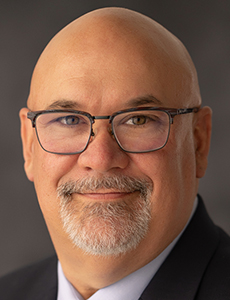
Jeff Abel, Senior Program Administrator in Corporate Insurance & Risk Management, State Farm
At the bottom of every Incident Accident Report follow up email, a phone number is available to connect employees directly to Sedgwick’s clinical nurse consultation line — it is available 24/7/365. Employees who call, will receive medical attention from a Registered Nurse. In addition, the nurse will offer a warm handoff directly to a Sedgwick claim examiner. “We’re trying to empower the employee and advocate for them — to respond quickly and help them get better,” Abel says.
The Ergonomics Lab
Beneath the clinical intake process is a rigorous, continuously evolving ergonomics program.
Alyssa Bushue, Certified Safety Professional in Workplace Protection, runs the ergonomic assessment side — and she’s evolved it substantially over the past several years. An intake form that once took employees up to 30 minutes to complete has been streamlined to roughly five minutes. Questions are now context-specific: an employee working at a desk doesn’t answer questions about vehicle ergonomics, and vice versa.
After an assessment, ergonomic equipment is recommended and ordered. But State Farm doesn’t just hand someone a mouse and call it done. Forty-five days after the assessment closes, every employee receives an automated follow-up survey: Did you get the equipment? Is it working? What’s changed?
“I see a lot of things saying that this has solved my pain — my discomfort has gone away, I can work a full shift when I couldn’t before,” Bushue says. She reviews every survey submission regularly, looking for patterns, flagging delivery gaps, and tracking whether recommended equipment is being used. Over 80% of recommended items, she notes, are still in continuous use — a benchmark she’s genuinely proud of.
“Ergonomics is complicated and people are complicated,” she says. “Getting the right equipment in somebody’s hands the very first try can be hard. So, the fact that it’s at over an 80% success rate makes me very pleased.”
The reason for the 45-day window — not 30, not 60 — reflects a specific logic. Too soon, and the employee may still be in the learning curve of new equipment. Too late, and the feedback loses its usefulness. Jacob Reeder compares it to a familiar human tendency.
“We didn’t want to have it done so quickly that they were like, ‘this new mouse is great,’ and then three weeks later, ‘I’m going back to my old one,'” he says. “We wanted to give time to let them really use it.”
Behind the scenes, Reeder maintains what amounts to an internal ergonomics testing lab — a storage room stocked with equipment the team has purchased and evaluated before it ever reaches an employee. Fifteen mouse options. Twenty-four keyboard options. Sit-stand desks, chairs, and accessories — all vetted, all tested.
“If we don’t go test some of this stuff out ourselves, we know people are going to get it on their own,” Reeder says. “And some of it is really bad.”
Meeting Employees Where They Are
The program extends well beyond the traditional office environment. With roughly 15% of State Farm’s workforce fully remote and many others in hybrid arrangements, the ergonomics team has made a deliberate commitment to equity, regardless of location.
“It doesn’t matter if you’re in the office or working from home — the same type of ergonomics hardware and software are available,” Bushue says. In 2025 alone, the team recommended hundreds of sit-stand accommodations for remote employees — recognizing that a dining room table or a couch is no substitute for a properly configured workstation.
The program also interfaces with State Farm’s Assistive Technology team, which supports employees with vision, hearing, or mobility needs — ensuring that complex ergonomic cases receive specialized expertise when needed.
Throughout it all, the program’s results have been meaningful. Claims involving repetitive motion injuries have been addressed earlier. Recovery timelines have shortened. Nurse consultation satisfaction scores have been consistently exceptional.
But for Jeff Abel, the most important outcome isn’t captured in any metric.
“It’s about teamwork, communication, and the early intervention with the employee — to help and support,” he says. “We’re constantly evolving processes and reviewing the technology that’s available. That’s what this award is about too: sharing what we can with the industry so we can all learn from one another.”
Monica Sutton puts it simply: “We’re all so focused on our employees. We’re working to help them get through what is usually a tough time.” &

 The Theo Award celebrates its sophomore year, honoring 28 workers’ compensation programs for their excellence and service to workers across the nation. To learn more about the award and amazing qualities each winner possesses, visit here.