Newsletters
 Risk Central
 Digital Edition
Organized Crime Reshapes Cargo Theft as Impersonation Tactics Mature Into Scalable Threat

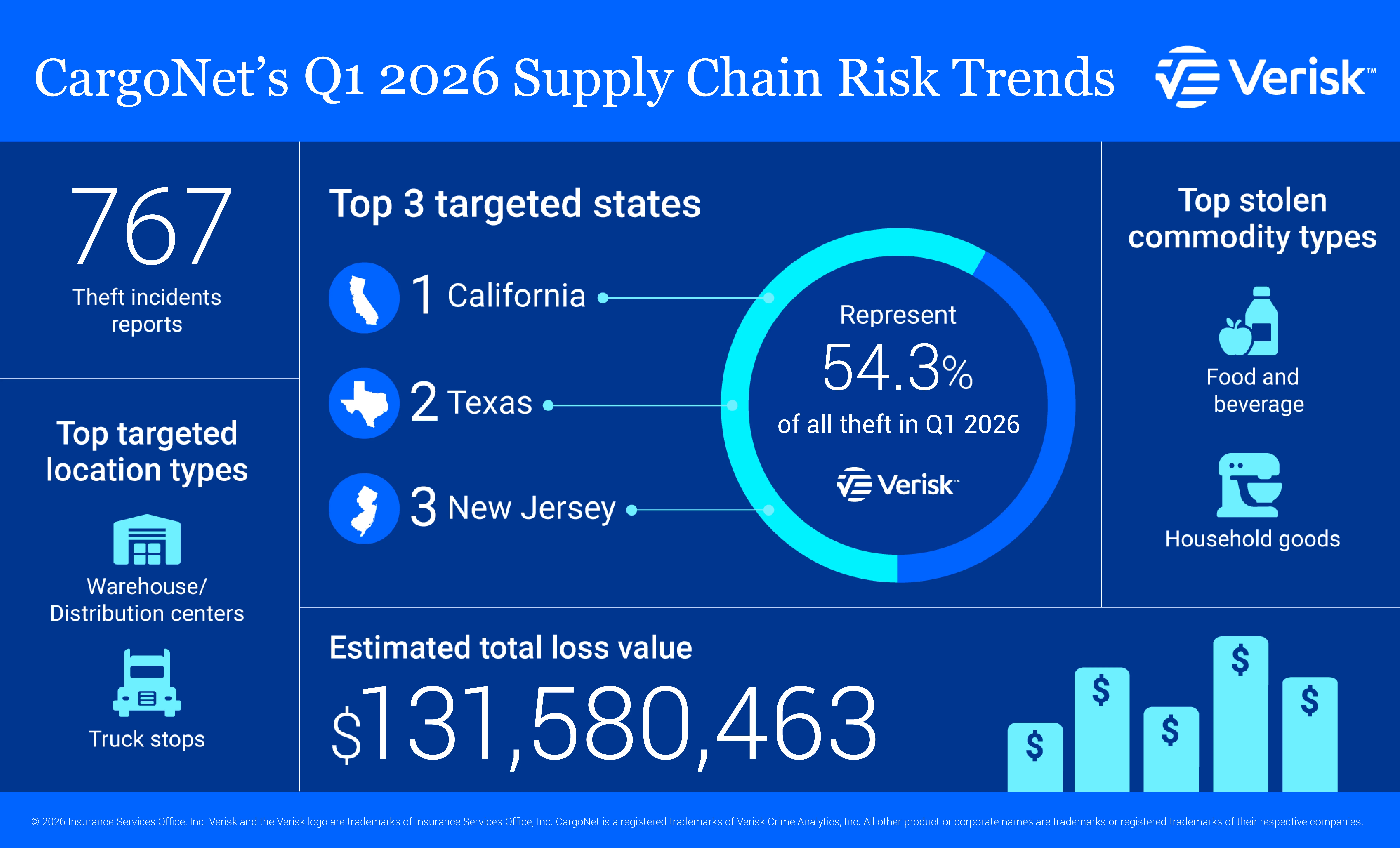
There were 767 supply chain crime events across the U.S. and Canada in the first quarter of 2026, down 5.3% from the same period a year earlier and 12.2% lower than the fourth quarter of 2025, according to Verisk CargoNet’s quarterly analysis released April 23.
But the declining count masked a more concerning trend: confirmed cargo theft reports rose by 41 incidents to 596 of the 767 total events, and estimated total value of losses of $131.58 million was essentially unchanged from the first quarter of 2025. The data points to a cargo theft landscape increasingly shaped by organized crime groups that favor high-value, easily resold commodities and sophisticated impersonation schemes, the report said.
A Geographic Concentration Around Major Logistics Hubs
The quarterly cargo crime data revealed a sharp geographic realignment. Among the top eight states for cargo theft, most posted year-over-year declines — with two significant exceptions. California rose to 277 from from 255 incidents, and New Jersey surged to 59 from 27, a 119% jump continuing a trend first identified in Verisk CargoNet’s third-quarter 2025 analysis. Both states offer dense logistics infrastructure and proximity to major consumer markets, making them primary operating environments for organized crime networks, the report said.
Meanwhile, Texas fell to 80 from 102 incidents, a 22% decline. The types of opportunistic theft historically common in the Dallas–Fort Worth and Houston logistics corridors appear to be giving way to more targeted operations elsewhere, according to the analysis.
The shift in what is being stolen reinforced this picture. Personal care and beauty products saw a 178% spike — from 18 events to 50 — driven largely by theft of cosmetics and fragrances in the Northeast. Food and beverage remained the top category at 144 events, but the mix changed as seafood targeting climbed sharply and beverage theft declined. Categories such as building materials, apparel and vehicle-related shipments fell year over year, as these goods are bulkier, less standardized or harder to resell at scale, the report noted.
“We’re watching transnational organized crime groups become the dominant force in the cargo theft landscape, with a clear preference for goods that move easily through online resale channels,” said Keith Lewis, vice president of operations at Verisk CargoNet. “The geography is following the criminals.”
Carrier Impersonation Emerges as the Dominant Tactic
The most significant tactical development in the quarter was the maturation of impersonation-based theft into what the report described as a systematic, scalable criminal methodology. Anti-fraud tools deployed across the industry have been effective, the analysis said, and that success is now driving criminal networks to innovate around those controls.
Criminal groups have largely converged on two methods for impersonating legitimate motor carriers and logistics brokers, according to the report. The first is credential harvesting — using advanced phishing campaigns and remote access trojans to compromise business email accounts, internet-based phone systems and the industry applications carriers and brokers use to find shipments and verify identity. With stolen credentials, a criminal network can accept tenders, communicate with brokers and redirect loads under a trusted identity.
The second method is outright acquisition of motor carrier businesses through social media, peer-to-peer marketplaces and specialized brokerage services. Despite warnings from regulators, these sales remain frequent and largely unregulated, the report said. Verisk CargoNet warned that motor carriers selling an operating authority to a criminal network — knowingly or unknowingly — may face civil and criminal liability.
“The shift toward credential theft and carrier impersonation means the industry needs to think beyond tender-phase controls,” Lewis said. “We need robust identity verification throughout the lifecycle of a shipment, from booking to delivery.”
View the full report here. &