Newsletters
 Risk Central
 Digital Edition
2026 Theo Award Winner: Benchmark Senior Living
 Working in senior living is physically demanding in ways that outsiders rarely appreciate. Caregivers assist residents with transfers, toileting, bathing, and mobility — often multiple times a shift, with residents who may be uncooperative, frightened, or unpredictable. Even with the best techniques and equipment, the body takes a toll.
“Our teams are doing a very hands-on physical job every single day,” said Alexandria Kolodziej, Director of Claims at Benchmark Senior Living, which operates 70 communities across ten states and employs nearly 7,500 associates. “Injuries aren’t something we can completely eliminate. But we can work on the safety component — and on how we respond to those injuries when they do happen.”
That response, at Benchmark, is shaped by a philosophy that runs through everything the organization does: human connection. “Injured workers are not just a problem to solve,” Kolodziej said. “They’re people who are part of our community. They take care of our residents every day. When they’re injured, it’s our responsibility to take care of them.”
“Lift” Is a Four-Letter Word
Resident handling — transfers, repositioning, assisting residents who need full support — is Benchmark’s most significant injury exposure. And it’s an area where the organization has invested deliberately and practically.
“In our safety training, ‘lift’ is a four-letter word,” said Rachel Thuerk, who leads risk management at Benchmark. “We don’t physically lift people by ou
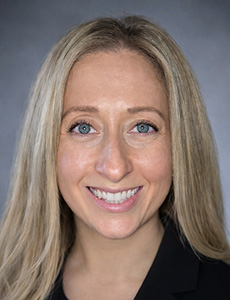
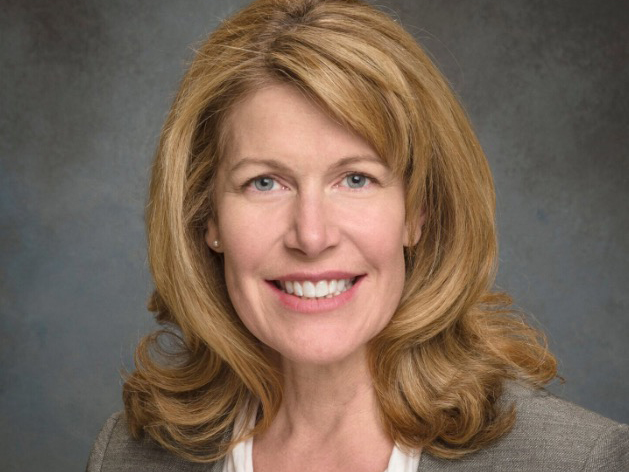
Alexandria Kolodziej, Director of Claims at Benchmark Senior Living
rselves. We transfer, we prompt, we aid, we assist. And if we ever have to lift somebody, we are going to use a mechanical assist device that we have provided.”
That’s a meaningful commitment. In the past, communities often worked with whatever equipment hospice or insurance provided — rental gear that was chosen for cost efficiency rather than suitability. Benchmark changed that, equipping every community with vetted, best-in-class mechanical assist devices: hydraulic lifts, sit-to-stands, full-support transfer equipment.
On top of the equipment investment, Benchmark runs a comprehensive back safety program — now more accurately described as a strain-and-sprain prevention program — delivered through a train-the-trainer model. Every community department head is a certified trainer. Twice a year, trained observers watch associates work from a distance, offering coaching conversations after the fact.
“It’s not a gotcha,” said Mike, Benchmark’s senior safety director. “It’s not something that goes in your file. It’s a conversation with somebody trained to observe these things and say: here’s a couple of pointers for next time.”
The observations also capture something important about senior living caregivers that shapes the whole safety culture: when they’re with residents, they stop thinking about themselves entirely.
“When people are providing care for residents, all thought of themselves goes out the window,” Rachel notes. “So, you get the benefit of saying, you did a great job with that resident — but you didn’t move your feet. Your back was bowed. Please be thinking about this the next time.”
The safety message Thuerk finds most resonant with frontline staff reframes the relationship between associate safety and resident safety. “Safe employees are safe residents,” she said. “I try to communicate that because employees will often do more for the safety of residents than for themselves. If they think of those things as intertwined, we get better adherence.”
The Modified Duty Philosophy — and the Gym Analogy
When injuries do occur, Benchmark’s modified duty program is built around a simple conviction: accommodate almost anything.
“Our mindset is that we can accommodate almost any restriction,” Kolodziej said. “Throw anything at us and we can work closely with community leadership to find some need to fill within the building.” When a physician issues restrictions without knowing what Benchmark can offer, the team sends a standard sheet of modified-duty options to the provider directly — prompting reconsideration of what’s possible.
“Often the doctors will just see that this person has a physical job and assume they can’t do anything,” Kolodziej explains. “They’re not going to realize what we can offer.”
In a senior living community, that offer turns out to be substantial. A caregiver who can’t transfer residents can sit with memory care residents and read to them, play mahjong, help with dining room setup, or simply be a present, familiar face.
“Just being company to residents is a value-added service in our world,” Thuerk said. “There’s really a lot we can accommodate to get people back.”
Thuerk has a personal framework for why this matters so much. “I equate it to going to the gym,” she said. “When you’re in the habit of going and it’s part of your routine, you go. When you get out of it, that first time back is the hardest one to get to. If we can keep associates from getting into the habit of not coming, that first time back won’t be so hard. Get them in. Get them in the habit of coming back day after day, seeing the residents, seeing their fellow associates. That connects them back to work and to the community.”
“Benchmark’s people-first philosophy is what makes this achievement so meaningful,” said Brad Wilson, vice president of sales for Lodestar Claims & Risk Services – a key partner of Benchmark.
“By combining their commitment to associate care with Lodestar’s claims expertise, injury management strategies, and return-to-work guidance, we’ve helped create a program that delivers exceptional outcomes while keeping employees connected to the work and communities they serve.”
The One Company Fund
No discussion of Benchmark’s commitment to its associates is complete without the One Company Fund.
Founded by CEO Tom Grape as a 501(c)(3) nonprofit, the OCF provides emergency grants to Benchmark associates facing personal crises — a significant medical event, a family emergency, a natural disaster. Last year alone, the fund distributed grants to more than 550 associates. Its annual funding goal exceeds $750K.
“It’s a resource for benchmark associates in crisis,” Thuerk explains. “We’ve paid the mortgage of an associate’s daughter while her daughter was undergoing chemo. When there was a significant hurricane in Jamaica, a substantial portion of that year’s grants went to families of our associates there for relief.”
Grants are not contingent on contributing to the fund. Any associate can apply. And the fund is supported by a broad base of contributors — payroll deductions from employees who choose to participate, donations from leadership and board members, and proceeds from fundraising events throughout the year.
“I’ve never heard of anything like it anywhere else,” Thuerk said.
It’s not technically a workers’ compensation initiative. But it is, unmistakably, part of the same philosophy — a signal to every Benchmark associate that the organization’s commitment to them doesn’t start and stop at the workers’ comp claim.
“Our purpose is transforming lives through human connection,” Thuerk said. “We view that for residents, for associates, and for all the lives touched by Benchmark as an organization. That’s how OCF fits into the bigger picture.”
The results across the program reflect all of it. Even as Benchmark’s headcount has grown substantially — adding more than 500 associates in less than a year, with plans to expand from 70 to 80 communities— claim frequency has held steady. Costs are trending well. The infrastructure being built today is designed to scale without sacrificing what matters most.
Rachel Thuerk, who asked to review the workers’ compensation loss runs before accepting her role, found her answer in the numbers. “Those look really good,” she recalls thinking. “That’s a lot of employees for those numbers.”
Behind those numbers is a team, and a culture, that has been building something worth noticing. &

 The Theo Award celebrates its sophomore year, honoring 28 workers’ compensation programs for their excellence and service to workers across the nation. To learn more about the award and amazing qualities each winner possesses, visit here.