Newsletters
 Risk Central
 Digital Edition
Vermont’s Deep Leadership Bench: Why Depth of Expertise Gives Captive Owners Confidence

If the Vermont Department of Financial Regulation’s captive insurance division could be compared to a professional sports franchise, you might think of the Los Angeles Dodgers, located nearly 2,400 miles away.
Both organizations field what insiders consider to be the deepest benches of talent relative to competitors in their respective areas of expertise. They feature a lineup of professionals who helped establish and maintain a standard of excellence.
The captive insurance division’s 32-member staff boasts more than 300 years of combined regulatory experience and north of 500 years of combined industry experience. That includes seven certified public accountants and 13 accredited or certified financial examiners.
Every member of the leadership team – deputy commissioner Christine Brown, assistant director Jim DeVoe-Talluto, director of examinations Dan Petterson and chief examiner Heidi Rabtoy – has nearly or more than 20 years of experience in the department.
While each of the three previous leaders – Len Crouse, David Provost, and most recently, Sandy Bigglestone – had their own style, the division’s culture has been maintained, even strengthened.
Unpacking Teamwork
It is at once collaborative and team-oriented, according to Rabtoy, who said that also happens to be the nature of captives themselves. As captive operations become more innovative and complex, she said there’s a pressing need for the division to work closely as a team to address market challenges and determine how best to regulate alternative risk transfer arrangements.
“What we’re recognizing is there’s a lot of institutional knowledge that needs to get passed down to staff,” she notes, “but that there’s also a lot of great knowledge being brought from our newer staff in regards on how can we do things better, innovate, be more efficient, and add value to our stakeholders and department as a whole.”
What sets the division apart from captive regulators in other states who are trying to emulate Vermont is simple, Brown explains. It’s about deploying a deep bench of staffers who are willing to understand and scrutinize the companies they regulate on a granular level from the very beginning. That thorough vetting includes an annual analysis and a larger examination every five years to address various touch points.
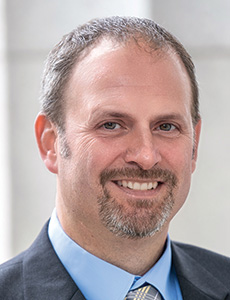
Dan Petterson, director of examinations, captive insurance division, Vermont Department of Financial Regulation
The division does about 100 examinations a year. “When you do that many examinations, you tend to build up quite a library of information,” Petterson said. Rabtoy said exams are valuable not only because they help the division understand how operations are going and ensure that best practices are followed, but also provide value to the captives.
“We’re all aspiring for the same goal, which is to make sure that the captive is successful, and we feel the best way to do that is being able to talk to companies not only about how well they’re doing, but if things aren’t going so great as well,” Brown said. “It’s helpful to know so that we can try to help steer them out of whatever trouble they might be heading towards.”
A multi-talented roster of professionals with expertise and longevity are credited with offering the kind of stability and continuity across 45 years that gives captives owners confidence in choosing to domicile their captive in Vermont. Many staffers have worked alongside or under each of the three leaders who served before Brown took charge.
Brown is fully aware of the delicate balance between regulating the captive industry and attracting business to her state, but it’s also a symbiotic relationship. Rabtoy believes that as regulators, the Vermont team is firm but fair.
“We want to make sure that we’re modeling regulation that we think is prudent and responsible,” she said. “It’s a little tricky as a regulator having this competition that you have to think about in addition to regulation. Usually those things don’t mesh, but in the captive industry they do. That’s why we’re always mindful about what’s setting us apart, what value are we adding and where should we be deploying our resources to make sure that we’re still staying on top of people’s minds.”
The division arranges meetings with service providers as well, serving as a helpful resource to add more value where all parties benefit from an open dialogue.
When Brown and her colleagues engage with captive owners and managers, the mission is to help them achieve the best possible outcome. “We are here to provide the support and oversight for the best chance of success, and I think that concept extends to how we engage with state government and our legislative partners,” DeVoe-Talluto said, noting the importance of consensus-building.
Petterson considers all of the relationships the division builds with companies and service providers to be the backbone of what has turned the Green Mountain State into the nation’s most popular domicile for captives.
The same is true internally. Any time there are board meetings or new-license meetings, the goal is to have at least a few of the division’s leaders involved to ensure good succession planning, Brown said. In fact, Rabtoy notes that this issue has been a significant part of her own role almost on a daily basis and top priority under Brown’s leadership.
Developing Fresh Eyes
The synergy of experienced leaders with institutional memory working alongside newer hires with a fresh perspective allows the division to move forward without getting stuck.
“We’re always trying to look for improvement and make sure that what we do makes sense for us and outside stakeholders as well,” Brown said.
Staff standouts include Jenn Kerner, assistant chief examiner who has been with the division for about 20 years, as well as Richie Wells and Brianne Orisko, both of whom share that same title but are newer to the department, and Amber Walsh, a captive insurance analyst for the past 15 years. Others include insurance examiners Peter Wernhoff, Dylan Moss and Catherine Reimer.
DeVoe-Talluto lauds Wells and Orisko for public accounting, auditing and captive expertise that brings a high-level perspective and bolsters the integrity of financial statements.
“While many of us have certain degrees of experience in management and CPA work, they really bring an incredible depth of experience that has enabled us to fine-tune our scope based on the valuable feedback they provide,” he said.
One of several unique aspects to this teamwork is there are through lines of leadership, education, training, internal learning and growth.
“We’re working with phenomenal young individuals who are bringing us diverse skill sets,” DeVoe-Talluto notes. Most of them have worked under the previous leadership, which spanned nearly 30 years, and he’s confident that they’ll carry forth a long history of innovation.
Brown said the division values professional development, and as such, builds in enough time to help staffers pursue various industry designations. “It is something we take very seriously because we know that it pays in the long run to have staff contribute in ways that they might not otherwise contribute,” she adds.
Seeding Innovation
When Vermont’s then-governor Richard Snelling signed the Special Insurer Act of 1981, DeVoe-Talluto said it laid the groundwork for a commitment to understanding why captives were being formed and offering those operators an opportunity to adapt and grow their programs.
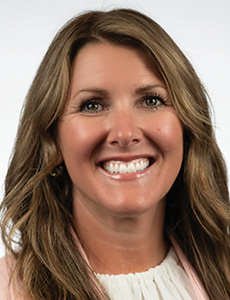
Heidi Rabtoy, chief examiner, captive insurance division, Vermont Department of Financial Regulation
“We’ve seen companies develop much more complex captive programs over the years,” he observes, “and at each step along the way, we will understand and respond to their needs.”
That led Vermont to become one of the first U.S. states to establish a domestic domicile for captive insurance companies. He describes the post-911 landscape as the division’s largest growth years because companies knew that their captive could help with the co-participation and deductible access to the Terrorism Risk Insurance Act program.
Vermont now has more than 704 active captive licenses, and when factoring in cell structures, that number swells to more than 1,000. “It was really only in the last several years that we became the global leader in terms of premium volume and number of captive entities,” he adds.
One of Vermont’s key advantages is its responsiveness. “People feel like they can pick up the phone and call us, whether it be a new license application or business plan change, or even just a question that they have for us, that we’re timely and do things at the speed of business and not hold things up with bureaucracy,” Brown notes.
She said that effort is coming into a clearer focus updates to the division’s IT systems. Petterson is leading the charge in attaining greater operational efficiencies.
Streamlining Workflow
Acknowledging that being part of a governmental entity can saddle processes, he cites some workflows in development to explore different technologies that that would make internal processes more efficient and interactions with business partners more integrated.
Plans are in the works to streamline exam deliverables, including making more efficient use of time devoted to more risk-focused examinations. In homing in on the needs of companies, Rabtoy said her team plans to back away from areas that are less helpful.
“What we were hearing from captive managers is that there’s value on both sides of the fence here in making improvements,” she said.
Not surprisingly, the use of artificial intelligence is also on the agenda in the form of a pilot program. “It was really cool to see how it worked,” Petterson said, “but it also shined a light on redeveloping our processes so that these tools can actually integrate much more seamlessly and provide more efficiencies, while maintaining confidentiality.”
In recent years, there has been some re-domestication activity from offshore to onshore for various reasons, according to Brown. Vermont is updating its processes to make re-domestication easier for companies.
“The landscape is certainly changing when we look at Europe and the proliferation of captive jurisdictions over there,” she observes. “It feels similar to the U.S. and growth in domiciles here.”
Extended-Cabinet Meetings
From a governmental point of view, it has been eye-opening for Brown to step into the deputy commissioner role. “I have been so impressed by the fact that we’re invited to meetings where we’re able to sit with the governor as part of what he calls his extended cabinet to hear about his initiatives,” she said. “We all give a report to the governor weekly on how our work is contributing to his mission and our own mission. So, there’s a lot of collaboration, even at that level.”
Vermont is unique in that anyone can walk into the state house, tour the building and not need an appointment, she explains. In a small state of roughly 650,000 residents, she considers that an advantage because it allows her team to accomplish statuatory updates quickly. There is also a broad awareness about the value that the captive industry brings to the state.
State lawmakers grasp that value and work willingly with Brown and her team. When division leaders testify before the legislature, DeVoe-Talluto said “they have the confidence that what we’re bringing to them matters, makes sense and is going to be good for all state constituencies in terms of economic development.”
Cementing Ambitions
Looking ahead, Rabtoy is focused on nurturing the division’s deep bench of talented individuals who will serve as the next generation of regulatory leaders and continue to build partnerships that ensure success for the companies they regulate.
The division needs to double down on its commitment to the kind of continuous improvement that’s required to meet the future needs of captive owners, notes DeVoe-Talluto.
“Captives serve a critical role in meaningful corporate governance and risk management,” he explains, “and I think what we provide as regulators is that framework that allows companies to succeed. I hope that even in the face of broadening global competition, which I would characterize as a somewhat friendly competition, each jurisdiction brings a little different perspective.”
Attracting and retaining qualified experts to the department is a top priority in its ability to maintain a standard of excellence for regulating captives, according to Brown.
Another goal is to ensure that her team is educating people more broadly. One such example is Vermont’s involvement with the National Association of Insurance Commissioners.
“The more people learn about captives, the more interested or skeptical they may be, and we need to make sure that we’re educating people about the fact that these are well-regulated insurance companies,”
she said. &