Newsletters
 Risk Central
 Digital Edition
US Construction Firms Face Gap Between Booming Property Insurance and Punishing Casualty Rates
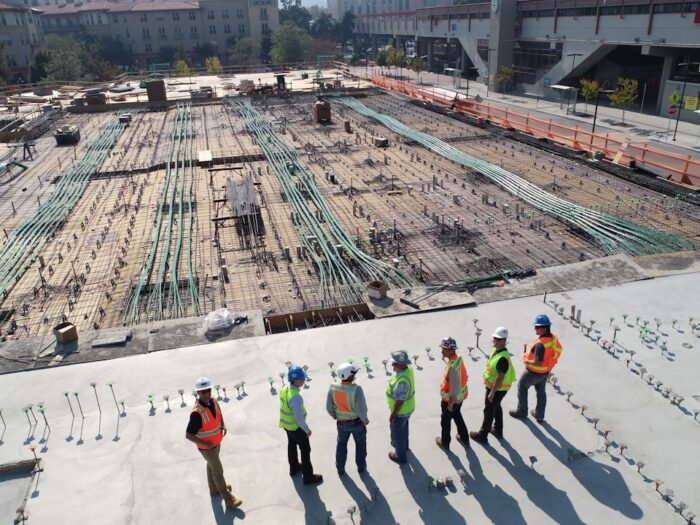
Despite increased U.S. constructing spending in early 2026, the outlook for growth remains uneven depending on the type of construction project, according to Gallagher’s mid-year 2026 industry update.
Total U.S. construction spending reached an annualized rate of $2.17 trillion in April 2026, up from a revised $2.16 trillion in March 2026, according to the U.S. Census Bureau. While public infrastructure, data centers and advanced manufacturing saw increased activity, office, hospitality and single-family residential construction lagged, Gallagrer said.
Federal infrastructure funding under the Infrastructure Investment and Jobs Act is nearing its Sept. 30 expiration, prompting agencies to accelerate project awards and creating what Gallagher described as a compressed procurement environment marked by heightened competition and schedule-related disputes. Meanwhile, permitting for single-family construction declined across all geographies in the first quarter of 2026 amid rising interest rates, higher material costs and labor shortages, according to the National Association of Home Builders, while multifamily construction expanded across most markets.
Labor Shortage Deepens as Claims Grow More Severe
More than 80% of contractors reported difficulty filling hourly craft positions, according to the Associated General Contractors of America’s 2026 Hiring & Business Outlook. Nearly 1 in 5 construction workers are age 55 or older, according to CIC Construction, contributing to a wave of retirements.
The Associated Builders and Contractors estimates the industry will need 349,000 new workers in 2026 and 456,000 more in 2027, and construction job openings rose to 259,000 in April, up from 234,000 in March and 207,000 in April of the prior year, according to ABC analysis. The data center boom has intensified competition for skilled trades: data center job postings surged 64% in recent years, and more than 40% of roles overlap with the energy and utilities sectors, according to Deloitte Insights.
Median annual pay for construction workers rose 15% over six years to $66,400 in June 2025, according to ADP, about 10% above the average across all other industries.
Rising severity for construction claims
Brian Cooper, Gallagher’s senior managing director for U.S. Construction, said that competition for skilled trades means that electrical subcontractors must complete work quickly and often hire only top-tier electricians who are then allocated to high-priority projects, which “can result in a shortage of qualified workers for other jobs, especially depending on project location and urgency.”
That shortage is feeding a rise in construction defect claims, Cooper said, noting a 10-year statute of repose for defect claims in most states means “problems can exist that aren’t discovered for eight or nine years and turn into general liability claims.”
Claim severity is driving losses across the sector, Gallagher found. Construction defect claims that once totaled around $500,000 have risen to $1.5 million to $3 million, according to Gallagher.
Eric Michna, Gallagher’s senior construction claims advocate, said water loss remains the leading driver of claims and referred to such claims as a “severity multiplier,” noting that “every meaningful claim has two to three competing theories of loss and coverage.”
Cooper attributed part of the trend to third-party litigation funding from private equity, saying law firms no longer need to provide upfront funding because “these firms don’t have to front the costs to receive large payouts at the end,” which he said has exacerbated social inflation and contributed to nuclear verdicts affecting commercial auto liability.
Jack Nelson, Gallagher’s property claims advocacy manager, said increased engagement of coverage counsel “has led to a longer claims process and the unwillingness of adjusters to find a solution to even the most logical issues,” with engineer reports now regularly taking more than six weeks compared with three to four weeks in past years.
Insurance Market Splits Between Soft Property and Hard Casualty Lines
Property and builder’s risk insurance markets have become more competitive, with best-in-class, non-catastrophe-exposed property risks seeing rate decreases of 15% to 20% or more, according to Gallagher, while builder’s risk programs in similar regions saw single-layer rate decreases of 5% to 7%. Cyber and inland marine lines were also largely buyer-friendly, with flat to modestly reduced renewals.
By contrast, excess liability premiums rose 5% to 30%, with steeper increases for higher-hazard contractors, as carriers demanded higher attachment points and layered placements. General liability renewals ranged from low to mid-single-digit increases, with steeper hikes for contractors in street and road work or residential for-sale construction. Workers’ compensation remained largely stable, with many accounts renewing flat to up 3%.
Construction costs remained 15% to 20% above 2019 levels, according to Gallagher, heightening underwriter scrutiny of replacement-cost valuations. Input prices for materials rose more in the first four months of 2026 than over the prior three years, driven by a 11.3% month-over-month jump in crude petroleum prices and a 9.2% rise in unprocessed energy material costs in April, according to ABC analysis.
Obtain the full report here. &