Newsletters
 Risk Central
 Digital Edition
Uncovered Medical Services Are Driving Up Workers’ Comp Costs, WCRI Finds
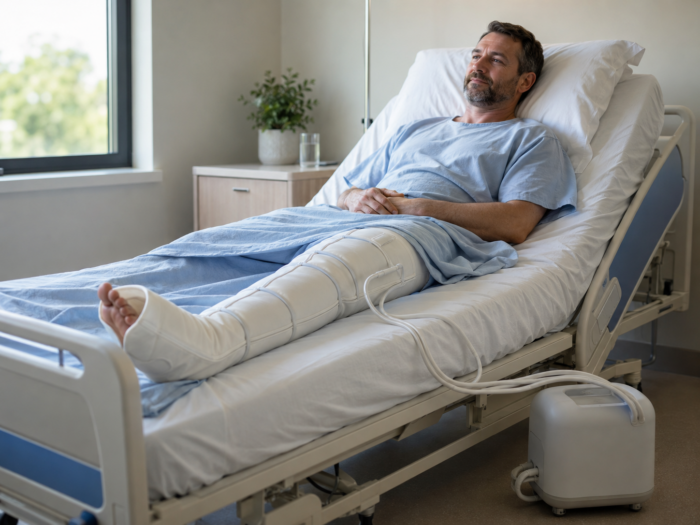
Half of durable medical equipment services billed in workers’ compensation had no assigned fee schedule rate in 2025, yet those services accounted for 62% of total DME payments, according to a report from the Workers Compensation Research Institute.
The research organization said the imbalance between utilization and expenditure shows that services falling outside fee schedule coverage tend to cost more than the average covered service. WCRI examined 43 jurisdictions with workers’ compensation fee schedules, analyzing billing data from January 2019 through June 2025, and found that a small number of billing codes drove most of the uncovered spending. Two codes alone, the catch-all miscellaneous DME code E1399 and the intermittent limb compression device code E0676, accounted for half of all DME payments without fee schedule rates in 2025.
DME Gaps Widen Over Time
The expenditure share for DME without fee schedule rates in the median fee schedule state rose from 58% in 2019 to 63% in 2025, WCRI found, while the utilization share climbed from 41% to 48% over the same period.
More than half of jurisdictions saw growth in payment shares for these uncovered DME services, ranging from 4-percentage-point increases in Connecticut, Illinois, Oregon and Pennsylvania to a 29-percentage-point jump in Rhode Island. Thirteen states, including Alaska, California, Delaware and Washington, saw increases of more than 10 percentage points between 2019 and 2025.
State-level variation was wide: the expenditure share for uncovered DME ranged from 36% in Arizona to 92% in Connecticut in 2025, and in 10 states, including Arkansas, Georgia and Idaho, the share reached 100%, meaning no DME services carried fee schedule rates at all. By contrast, Massachusetts, New York and Ohio had shares between 17% and 27%.
WCRI attributed much of the overall growth to the miscellaneous DME code E1399, which represented 26% of the median state’s expenditure for uncovered DME in 2025, up from 18% in 2019. In 2025, the average rental price for E1399 devices was about $300 per day, while the the intermittent limb compression device E0676 averaged $1,862 per day for new devices and E0221, an infrared heating pad system, averaged nearly $2,620 per day for new devices.
Professional Services Gaps Smaller But Growing
Among eight common nonhospital professional service categories, services without assigned fee schedule rates made up 4.8% of total payments in 2025 despite representing just 1.7% of services, WCRI found. Neurological and neuromuscular testing had the highest uncovered payment share among the service types, at 29.4% of payments in 2025, followed by pain management injections at 11.7%, physical medicine at 7.6% and major surgery at 3.5%.
The WCRI said 12 jurisdictions, including California, Louisiana, Massachusetts, Michigan, Oregon and the District of Columbia, had between 5% and 38% of overall payments tied to services without established fee schedule rates in 2025, while most other states kept that share below 5%. Louisiana, Maryland and North Carolina each saw expenditure shares rise more than 5 percentage points since 2019, driven largely by evaluation and management, physical medicine and major surgery services.
Medicare Gaps Are the Root Cause
WCRI identified the lack of Medicare reimbursement as a key reason many services lack workers’ compensation fee schedule rates, since numerous state fee schedules are built on Medicare’s relative value scale.
Common reasons include codes that are unlisted or poorly defined, services bundled into other fees, and devices Medicare doesn’t consider medically necessary. Some services, such as work-hardening and conditioning codes, are unique to workers’ compensation and have no Medicare analog at all.
Obtain the report here. &