Newsletters
 Risk Central
 Digital Edition
U.S. Property Claim Volume Falls as Severity Poised to Climb, Verisk Q1 2026 Report Shows
U.S. property claim volume fell 8.9% year-over-year in the first quarter of 2026 and ran 13.13% below the five-year average, according to Verisk Property and Restoration Solutions’ Q1 2026 Quarterly Property Report.
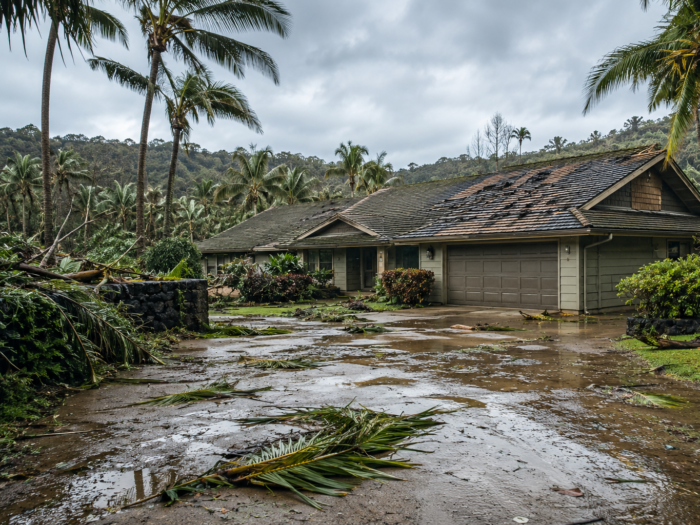
That decline came despite significant winter storm activity across the eastern U.S. and a historic catastrophe event in Hawaii, and it extended a downward trend in claim assignments that has been in place since Q1 2025.
Yet current severity figures tell a more complicated story: At $16,079, average U.S. replacement cost value appears low relative to prior years but applying a maturation rate consistent with recent quarters puts the likely final figure near $17,687, which would rank as the second-highest year on record, Verrisk said.
Catastrophe Activity and Regional Patterns
Winter storms Fern and Hernando shaped the quarter’s catastrophe narrative, together generating more than 46,000 ice, snow, and collapse claims totaling over $478 million in estimated replacement cost value, with roughly 83% of those claims completed at the time of reporting.
A March wind event across the central U.S. exposed more than 1.5 million residential properties to wind gusts of at least 60 mph over two days, driving Ohio to become the second-highest state by claim volume.
Hawaii posted the most dramatic CAT-claim surge, with a jump of more than 1,900% year-over-year driven by a March Kona low that produced more than 2,000 claims claims designated as wind, water, or flood on the island of Oahu and an estimated $14 million in replacement cost value.
Texas led all states in Q1 claim volume, followed by Ohio and California, with those three states accounting for nearly a quarter of all claims. At the other end, Florida recorded a 65.7% decline, falling 13 places in state rankings, largely because Q1 2025 had carried a heavy load of late-reported Hurricane Milton claims.
The 2025 Palisades and Eaton fires similarly distort year-over-year comparisons: Excluding California fire and smoke claims, U.S. severity in Q1 2026 runs 12.11% below the adjusted 2025 figure and just 3.42% below the adjusted five-year average.
Water claims led all loss types at 31.1% of U.S. volume, while ice and snow grew 188.7% year-over-year on the strength of the winter storms. Hail claims fell 23.6%, consistent with Verisk Respond data showing a 10% decrease in residential roofs hit by 1- to 1.99-inch hail and a 59% decrease in roofs struck by hail of 2 inches or larger.
Cost and Labor Pressures Persist Against Moderating Inflation
Total U.S. reconstruction costs rose 3.4% year-over-year through March 2026, down from 5.3% the prior year, with Canada up 2.5% in Q1 vs. 4.9% a year earlier. Combined labor and materials costs rose 1.21% in the U.S. and 0.96% in Canada for the quarter, with January accounting for the largest monthly share of the gain in both countries.
Concrete masons led all major trades on an annual basis, with labor costs up 15.39% in the U.S. and 14.72% in Canada, though the quarterly pace has moderated to roughly 2%. Lumber moved in the opposite direction, posting the largest material decline in both countries: down 2.32% annually in the U.S. and 12.42% in Canada, driven by persistent oversupply in panel capacity and softening demand from residential builders.
Fuel costs represented the sharpest reversal of the quarter, rising 42.70% in the U.S. and 39.69% in Canada, with the bulk of the increase concentrated in March. The report tied the spike to escalation of the Iran conflict and disruptions to shipping through the Strait of Hormuz, which handles roughly one-quarter of seaborne oil trade. Because fuel is a leading indicator for construction costs, the report noted, direct impacts on equipment and trucking appear quickly while effects on material prices and contractor labor rates typically follow with a lag, the report said. &