Newsletters
 Risk Central
 Digital Edition
The Human Cost of Insurance Claim Fraud

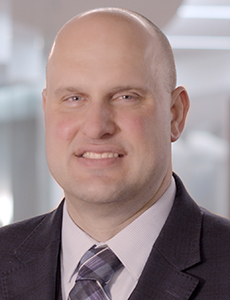
Pranay Mittal leads Travelers Investigative Services, one of the largest specialized investigative units in the property-casualty industry. His team of more than 300 investigators, data analysts and forensic specialists investigates more than 35,000 suspicious claims annually.
Picture someone injured in an accident that wasn’t their fault: a slip and fall, a car crash, an incident on someone else’s property. The injury is real, the pain is real, and their need for care is real. But, when seeking medical treatment, they encounter a medical provider who intentionally recommends unnecessary surgery to inflate the value of the claim. Months later, the person — now a “claimant” in the system — hasn’t recovered and may be worse off, both physically and financially.
Insurance fraud is usually framed in terms of numbers — inflated claims, fraudulent billing, dollars lost. But behind those numbers, there are real victims, and in this case the fraud costs a person their recovery.
So how do we stop this? Insurance carriers can be a key line of defense between a fraudulent provider and the claimant they’re targeting.
Fraud’s Ripple Effects on Real People
The Coalition Against Insurance Fraud estimates that insurance fraud costs the United States more than $308 billion annually. This figure is usually cited as an insurance industry expense. In reality, the impact shows up in places that are far more personal: household budgets, business overhead and culture, and trust in the institutions people depend on when something goes wrong.
Consider a few scenarios:
- Employees drawn into staged incidents. Organized fraud rings recruit real employees into staged fall schemes or accidents to generate fraudulent claims. An employee might be told, “Everyone does this,” or promised quick cash. When people are pressured or incentivized to participate, the damage extends beyond any single claim. It can follow them in the form of higher premiums, employment consequences, and a lingering sense that they were complicit in doing something wrong.
- Patients treated like revenue, not people. Within the medical system, a durable medical equipment provider who bills claimants for supplies they don’t need is not just misusing insurance dollars. They are consuming limited resources and potentially derailing a patient’s recovery. Time, trust and health are all on the line.
- Families already under stress, facing dishonest contractors. Insurance fraud isn’t limited to businesses. Homeowners can face the same dynamic after a severe weather event. When families are displaced and eager to return to normal, fraudulent contractors move quickly, using high-pressure tactics and promises of fast repairs to inflate claims. This can lead to financial loss, improperly repaired properties, delayed recovery and skepticism of legitimate contractors long after the storm has passed.
Taken together, these examples make the case that fraud of any kind is not a victimless crime against a faceless industry. It takes a toll on employees, patients, and families.
Protecting Employees is Protecting People
In a business setting, the human cost of fraud can be easy to overlook. Claims are coded, tracked and reported, and it is tempting to see fraud purely as a matter of loss control.
For a risk manager, though, fraud prevention can and should be viewed as part of your employee care structure. That means approaching it with the same rigor as any other safety program. The goal is the same: to protect people when something goes wrong.
While risk managers depend on their insurers to detect suspicious claim activity quickly, there are practical steps they can take to make a meaningful difference:
- Train and educate employees. Ongoing training helps employees recognize and report suspicious activity, such as an unusually aggressive treatment recommendation, an unfamiliar recruiter approaching them about “easy money,” or a provider relationship that doesn’t feel right.
- Establish strong post-incident practices. Quick, factual documentation – what happened, who was present, what was observed, what changed afterward – protects a legitimate claim just as effectively as it defends against fraud.
- Know what your carrier can see that you can’t. A carrier managing claims across an entire portfolio spanning industries, geographies, and lines of coverage can see patterns that are invisible from any single vantage point. At scale, it makes it possible to identify patterns across claims and distinguish between a legitimate claimant who needs care and a network systematically steering patients toward unnecessary treatment. That perspective is not abstract data. It is a way to keep people from being harmed by repeat offenders.
- Engage your carrier early and share what you observe. The combination of your on-the-ground context and your carrier’s analytical capabilities is more powerful than either of you working alone. A concern that seems anecdotal to you may confirm a pattern already forming in the data. Raising these concerns early can prevent others from being hurt.
The Most Important Question
Remember the injured claimant we met at the start? Now imagine a different outcome. This time, when they seek care, they are guided to appropriate treatment. They recover without unnecessary procedures, because the system worked the way it was supposed to. The suspicious activity was caught by the insurance carrier before it happened.
That’s why an insurer’s early claim fraud detection capabilities matter. Not merely to catch wrongdoing after the fact, but to interrupt harm before it reaches the person the system exists to protect. Each claim resolved correctly is more than a clean outcome on a spreadsheet; it is a person’s life and livelihood back on track.
The claimant’s recovery isn’t just a personal outcome. It’s a small proof point for a larger assertion: that fighting fraud protects the integrity of a system.
The next time your organization reviews its fraud prevention practices, it is worth asking one additional question alongside the usual ones about controls and loss ratios: Are these practices designed only to protect our financial results, or are they also designed to protect our employees from becoming victims of fraud?
The strongest programs are built to do both. When they are, fraud prevention becomes not just a cost-saving measure, but a tangible expression of how an organization cares for its people.
Pranay Mittal leads Travelers Investigative Services, one of the largest specialized investigative units in the property-casualty industry. His team of more than 300 investigators, data analysts and forensic specialists investigates more than 35,000 suspicious claims annually. &