The 2022 Marine Power Brokers
The complete list of Power Broker® winners can be found here.

Finalist:

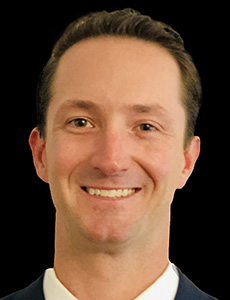
Taylor Knott
VP, Unit Manager
Lockton Companies, Houston

The complete list of Power Broker® winners can be found here.
Finalist:

Taylor Knott
VP, Unit Manager
Lockton Companies, Houston

Musculoskeletal disorders remain one of the most significant occupational health challenges facing American businesses. These injuries — from back strains to repetitive stress conditions — don’t just impact workers; they create substantial financial consequences for employers through medical costs, lost productivity, and workforce disruption. Yet many organizations struggle to identify ergonomic risks before they manifest as actual injuries.
For decades, ergonomic assessments have relied primarily on in-person expert evaluation, a resource-intensive approach that may not be feasible for companies with limited safety budgets or those operating across multiple locations. As workplace safety leaders search for more accessible, data-driven methods to evaluate job tasks and implement preventive measures, new technologies are emerging to bridge this gap.
“Our mission is to help our customers thrive as businesses,” said Dan Campany, Head of Risk Services at The Hartford. “While risk transfer and insurance is an important financial backstop and safety net, we’re going to help prevent bad things from happening whenever possible by working with the customer.”

Dan Campany, Head of Risk Services, The Hartford
When organizations think about the cost of workplace injuries, they typically focus on direct medical expenses and workers’ compensation claims. However, the true financial impact extends far beyond these obvious line items.
“If someone gets injured, who’s going to do that job now, and are they able, trained, and skilled, or do we need to rehire?” Campany said. “Will the person in that role be as productive? Is there another job that’s not going to get done because we had to shift somebody over to do this job? Will production slow down? And how about morale?”
These indirect costs — administrative burden, productivity losses, retraining needs, and morale impacts — can dwarf the direct medical expenses. Additionally, the human element cannot be overlooked. Employees are a company’s most valuable asset, and preventing injury helps protect both worker wellbeing and organizational performance.
The challenge is that many ergonomic risks remain invisible without proper assessment tools. A worker may be repeatedly performing a task with problematic body mechanics, gradually increasing injury risk without generating any visible warning signs until an incident occurs. This is where diagnostic technology becomes valuable.
Recent advances in artificial intelligence and computer vision have created new possibilities for ergonomic assessment. These technologies can analyze video recordings of workers performing job tasks, calculating strain on specific body parts and quantifying injury risk in ways that are easy to understand and act upon.
“How it works is we take a short video — a minute or two — of an individual employee performing a job function,” Campany explained. “The AI analyzes the video using principles from biology and physics. It evaluates the position of the body, the motion of the body, and the force exerted on the body.”
This analysis generates a numerical risk score along with a visual representation that brings risk to life for organizational leaders. “The system generates a numerical score from one to ten to indicate the degree of risk, which is also converted into a color-coded system of red, yellow, and green,” Campany said. “When you view the video, we superimpose an avatar, and the various parts of the body on that avatar appear in red, yellow, or green depending on the degree of strain exerted during the process of performing that job function.”
The visual nature of this output makes ergonomic risk tangible and actionable. Rather than abstract discussions about ergonomic principles, safety leaders can see exactly which body parts face elevated strain during specific tasks.
However, it’s important to understand what this technology does and does not do. Video analysis and AI are diagnostic tools — they identify where risks exist, but they are not replacements for expert guidance on solutions.
“The computer vision technology is really a diagnostic tool, and it has some advantages in terms of how we facilitate productive conversations with customers,” Campany said. “However, it does not replace the expertise of the ergonomist in determining what to do about an identified risk of injury. Ergonomists are still essential for developing solutions and recommendations that can be put in place to make improvements. It’s purely a diagnostic tool.”
One of the barriers to ergonomic improvements has historically been access — specialized ergonomists are expensive resources that may not be feasible for smaller organizations or for lower-priority job tasks. A one-size-fits-all approach to ergonomic services doesn’t serve diverse business needs.
Recognizing this, organizations are now offering tiered service models that match the complexity of the risk to the appropriate level of expertise and service delivery.
“We have different models we can deploy,” Campany said. “We have a computer vision capability that is available to customers on a self-serve basis. They can download the application, shoot the video themselves, upload it to us, and our ergonomists can virtually analyze it and engage with the customer to make recommendations.”
For organizations with minimal ergonomic complexity or a small number of jobs to assess, self-service video analysis provides an accessible entry point — and importantly, at no additional cost to insured customers. This democratizes access to ergonomic diagnostics.
For more complex situations, organizations can draw on generalist risk consultants who have been trained and coached by specialist ergonomists. And for the most sophisticated operations with multiple complex exposures, specialist ergonomists can be deployed directly.
“We look at the potential severity of the risk, the complexity and volume of jobs to be assessed, and the complexity of the solutions or risk mitigation mechanisms,” Campany said. “Based on these factors, we mix and match these various models.”
The real value of any risk management approach emerges when it produces tangible improvements. Consider a recent manufacturing facility case where ergonomic risks were driving substantial claims costs.
“We had a manufacturing facility recently where half of their annual claims were related to ergonomics,” Campany said. “Based on the diagnostics with our computer vision tool, our recommendation was that they implement a mechanical lift system.”
This mechanical lift — augmenting a task that had been performed manually — delivered remarkable results. “We took something that was physically challenging and introduced a mechanical lift for assistance. This improved efficiency and lowered the time of that part of the process, resulting in a significant return for the customer,” Campany explained.
But the financial benefits extended well beyond this direct operational improvement. By engineering out the exposure that was causing half of the facility’s claims, the organization achieved remarkable improvement in cost of risk. Additional savings from reduced lost time and retraining exposure added more benefits. Total return on investment exceeded the investment in the mechanical lift system.
“It also improved morale and reduced the risk of injury to a human being in that situation down to close to zero,” Campany added.
This example illustrates a critical principle: ergonomic improvements are not just safety initiatives — they are operational improvements that enhance efficiency, reduce costs, and improve employee satisfaction simultaneously.
Organizations that approach ergonomic risk systematically see compounding benefits. Rather than addressing all potential risks simultaneously, strategic prioritization allows organizations to focus on high-impact improvements first, then move sequentially through subsequent priorities.
“We may have four, five, or six jobs with a customer that we want to work on, but we start with the one that’s the biggest risk, the highest priority,” Campany said. “We diagnose, recommend, and implement a solution, then remeasure the task to show the delta between before and after the improvement. Then we move on to the next priority.”
While engineering controls — like the mechanical lift example — can permanently eliminate certain ergonomic risks, not all risks can be fully engineered out. In these situations, behavioral change and sustained reinforcement become essential.
“In situations where we can’t totally engineer out the risk — we can’t eliminate the risk down to zero — the solution is more about behavioral changes, coaching, or training,” Campany said. “In those situations, there is a need to monitor over a period of time to ensure we don’t regress to old behaviors and that we’re continuously reinforcing the right behaviors.”
Regression in behavioral change is well-documented. Just as drivers tend to gradually revert to previous habits after receiving feedback about their driving scores, workers naturally drift back to familiar patterns unless exposed to consistent reinforcement.
Emerging approaches in behavioral economics are beginning to address this challenge more effectively. “Behavioral economics is just starting to make its way into our conversations with customers,” Campany said. “It’s the idea of not just measuring, monitoring, and coaching, but incentivizing and rewarding behaviors. This is an emerging part of our value proposition and toolkit in this space.”
When diagnostic tools identify risks, and organizational systems are in place to implement solutions and sustain behavioral change, the intersection of technology and expertise produces meaningful outcomes: safer workers, reduced claims, improved productivity, and stronger organizational performance.
To learn more, visit IoT Capabilities for Risk Management | The Hartford.
The information provided in these materials is intended to be general and advisory in nature. It shall not be considered legal advice. The Hartford does not warrant that the implementation of any view or recommendation contained herein will: (i) result in the elimination of any unsafe conditions at your business locations or with respect to your business operations; or (ii) be an appropriate legal or business practice. The Hartford assumes no responsibility for the control or correction of hazards or legal compliance with respect to your business practices, and the views and recommendations contained herein shall not constitute our undertaking, on your behalf or for the benefit of others, to determine or warrant that your business premises, locations or operations are safe or healthful, or are in compliance with any law, rule or regulation. Readers seeking to resolve specific safety, legal or business issues or concerns related to the information provided in these materials should consult their safety consultant, attorney or business advisors. All information and representations contained herein are as of April 2026.
The Hartford Insurance Group, Inc., (NYSE: HIG) operates through its subsidiaries, including the underwriting company Hartford Fire insurance Company, under the brand name, The Hartford®, and is headquartered in Hartford, CT. For additional details, please read The Hartford’s legal notice at www.thehartford.com.
![]()
This article was produced by the R&I Brand Studio, a unit of the advertising department of Risk & Insurance, in collaboration with The Hartford. The editorial staff of Risk & Insurance had no role in its preparation.