Newsletters
 Risk Central
 Digital Edition
RISKWORLD 2026: Munich Re’s Clifton Chan
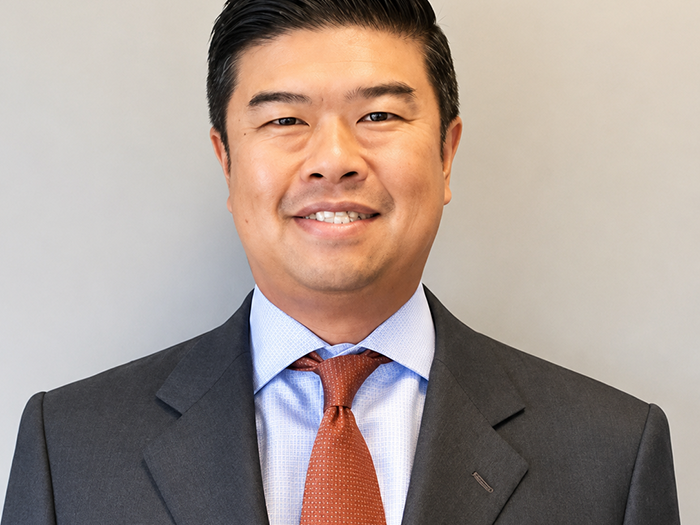
At RISKWORLD 2026 in Philadelphia, Risk & Insurance caught up with Clifton Chan, property engineering underwriter at Munich Re: What follows is a transcript of that discussion, edited for length and clarity.
Risk & Insurance: Thanks for meeting with us Clifton. In the context of aging power infrastructure, what specific engineering red flags indicate that a facility is no longer insurable at standard rates?
Clifton Chan: It’s really about the engineering and making sure that they’re maintaining the facilities, the equipment, and they’re staying on top of the schedule maintenance. We’re a very technical- focused company. We take a look at all of the engineering, and ask for updated engineering. We ask for the test results. There are many indicative bits of information that can tell us whether or not a failure is going to occur. Right now there’s a huge demand for power and a lot of these machines, they just just keep running, which means that the facilities might defer scheduled maintenance.
R&I: How are underwriters distinguishing between climate resilient engineering designs and traditional builds when calculating premiums for coastal renewable projects?
CC: After Hurricane Sandy, especially in the Northeast, a lot of the major utilities put time and money into storm hardening and working with the local governments. That entails lifting critical equipment in flood zones, and putting protective walls and doors on facilities. It’s now not only the insurance companies but the states saying that companies need to harden their assets because they can’t be out for a week anymore after a big storm.
R&I: As the industry shifts towards battery energy storage systems, what are the primary unknowns from an engineering perspective that keep underwriters up at night?
CC: The unknown is that it’s an indoor installation, typically, where they take an empty warehouse and just put batteries in it. So if there’s a failure, the whole facility could potentially go. What we like to see is a containerized unit such as a shipping cargo container, that has the proper separation between each unit.
R&I: What is the one engineering innovation you believe will have the greatest positive impact on lowering insurance risk in the next five years?
CC: Staying on top of scheduled maintenance — that’s the biggest thing. I hate to say it, but a lot of losses we see are due to the human element where someone misses something or presses the wrong button by accident. We’d like to see insureds pay attention to best practices and lessons learned, and share this information across multiple locations.
R&I: How are ESG mandates within insurance firms specifically changing the underwriting criteria for traditional fossil fuel power plants compared to five years ago?
CC: Munich Re, like many other insurers, has a carbon drawdown, and a tiered approach to reduce our exposure over time and increasingly focus on natural gas or renewable energies.
R&I: When a project is rejected for coverage, is it typically due to the geography, the technology being used or the financial stability of the contractor?
CC: It’s all of the above. There’s a whole gamut of things we take into consideration in the underwriting process: the client, the stakeholders, loss history, engineering, the historic willingness to work with insurers. Like anything else, it should tell a good story and if it doesn’t, it’ll raise a flag.
R&I: What is the most common misconception that energy developers have about what an underwriter actually does during a site survey?
I’m not an engineer by trade. I rely on the engineers I work with to identify their own issues. The things I really focus on are the staff at the plant, housekeeping. Are there cigarette butts right outside the door? I was just telling someone yesterday that some of these plants have the potential for a big loss if the cars in the lot are not parked the right way. Because if something happens at the plant, people run to their cars and they need to be able to leave immediately.
R&I: What do you see on the horizon for your space?
CC: I think it’ll be interesting to see over the next five, ten, 15, 20 years how the nuclear shift is evolving because there are some repowering and new plants with small modular reactors (SMRs) being built in the US and Canada. Many people in the industry believe that’s the future in reliable power sources. &