Newsletters
 Risk Central
 Digital Edition
Product Recalls Drop in Frequency but Surge in Scale, With Units Reaching Four-Year High
Despite a decline in total product recall events in the first quarter of 2026, the number of units affected surged 27% over the previous quarter to 492.31 million — a four-year high and the third-largest quarterly total in more than 14 years — signaling that concentrated, large-scale recalls are redefining product liability exposure across industries, according to Sedgwick’s Product Safety and Recall Index.
The overall count of U.S. recall events dropped from 877 in Q4 2025 to 785 in Q1 2026, yet four of the five sectors tracked by Sedgwick saw unit volumes climb, which underscores the outsized impact of single, large-scale recalls, according to the report.
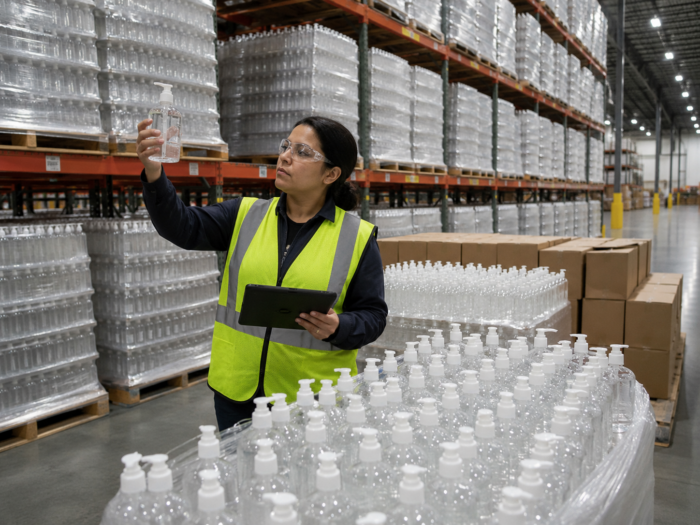
- Pharmaceuticals illustrated the trend most dramatically. While events fell 16% to 68, units skyrocketed more than 2,400% to 218.83 million — a four-year high — almost entirely driven by one recall of antiseptic towelettes, hand sanitizer and other benzalkonium chloride-containing products that alone accounted for 212.61 million units.
- Consumer products bucked the trend on both fronts, posting more events and far more units. The Consumer Product Safety Commission (CPSC) recalls climbed 14.5% to 142 — the highest quarterly count since Q4 2007 — while units jumped 347% to 20.17 million. Two grill brush recalls accounted for 13.40 million units, making yard and garden products the top category by volume. Ingestion was the leading consumer hazard, linked to 22 events and 13.63 million units, the latter driven primarily by products containing button cell and coin batteries.
- Automotive recall events fell to 210 — their lowest level in more than two years — but units climbed 71.7% to 12.19 million, a two-year high. Electrical system defects were the top cause, including a single recall covering 4.38 million vehicles.
- In the food sector, FDA recall events fell 10.3% to 140, but units nearly doubled to 57.40 million, driven in part by a prepared food recall involving glass contamination that affected more than 19 million units. Undeclared allergens remained the most frequent cause of FDA food recalls, rising to 57 events. USDA recalls dropped to just six — a 12-year low — but a single recall of chicken fried rice products contaminated with glass sent volume surging to 37.09 million pounds.
- Medical devices were the lone exception to the Q1 recall trends: both events and units declined quarter-over-quarter, the report said.
Navigating Regulatory and Geopolitical Headwinds
The Q1 data arrived alongside significant regulatory activity and macroeconomic turbulence, creating a more complex operating environment across all five sectors analyzed.
Geopolitical disruption played a notable role. Conflict involving Iran that erupted Feb. 28 impacted oil shipments through the Strait of Hormuz and threatened to constrain other shipping channels, driving up energy costs and disrupting supply chains — including access to fertilizer, which could have long-term implications for food prices.
Tariff volatility added further pressure. The U.S. Supreme Court struck down the administration’s reciprocal tariffs imposed under the International Emergency Economic Powers Act, but a new worldwide tariff of at least 10% was quickly introduced.
The automotive industry, still subject to Section 232 tariffs unaffected by the court ruling, has absorbed at least $35.4 billion in tariff costs since 2025. Pharmaceutical companies face a separate and looming threat: 100% tariffs on branded drugs and active ingredients for companies that have not negotiated pricing agreements with the White House. Large companies face a July 31 deadline, while smaller firms have until Sept. 29. As of early April, 17 drugmakers had reached exemption agreements.
Enforcement actions from major regulatory agencies also intensified. The CPSC levied an $11.5 million civil penalty against a bicycle parts manufacturer for failing to promptly report defective cranksets that posed serious injury risk.
The FTC issued new warning letters to auto dealers over transparency concerns about advertised prices and hidden fees, with several lawsuits still pending. Both the USDA and FTC moved to tighten oversight of country-of-origin claims for products marketed as U.S.-made, reinforced by a new executive order directing agencies to assess whether additional regulations are needed.
The FDA also advanced several significant regulatory updates. A new quality management system regulation for medical devices took effect in February — the first major overhaul in roughly 30 years — shifting toward a risk-based inspection approach aligned with global standards. Separately, the agency expanded its general wellness product category, potentially reducing premarket review requirements for wearable devices such as sleep and activity trackers.
Strengthening Preparedness in a Volatile Landscape
The concentration of recall volume into single events has real implications for how companies — and the risk management and insurance professionals who support them — quantify exposure. A small number of large-scale recalls can dramatically alter a sector’s risk profile within a single quarter, as both the pharmaceutical and USDA food data illustrate.
For food manufacturers, undeclared allergens remain the most persistent cause of FDA recalls, while foreign material contamination is the largest driver by volume. Pharmaceutical companies should focus on the FDA Current Good Manufacturing Practice (cGMP) compliance and sterility controls, which together accounted for the bulk of units recalled this quarter.
Consumer goods manufacturers operating in an increasingly aggressive CPSC enforcement environment should note that the agency’s penalty against the bicycle parts maker was tied directly to delayed defect reporting — a signal that timely disclosure carries real financial consequences.
Several pending regulatory changes warrant ongoing monitoring. Congress is considering federal standards for automated driving systems. The FDA is advancing its food traceability rule and evaluating reform of Generally Recognized as Safe designations for food additives, which could create new compliance obligations for food manufacturers.
Companies across sectors that invest in advance planning — robust recall response protocols, internal compliance audits and proactive supply chain risk monitoring — will be better positioned to protect consumers and limit financial exposure when product safety incidents arise, according to Sedgwick.
Obtain the full report here. &