Newsletters
 Risk Central
 Digital Edition
Nuclear Verdicts and Emerging Contaminants Are Expanding Environmental Liability
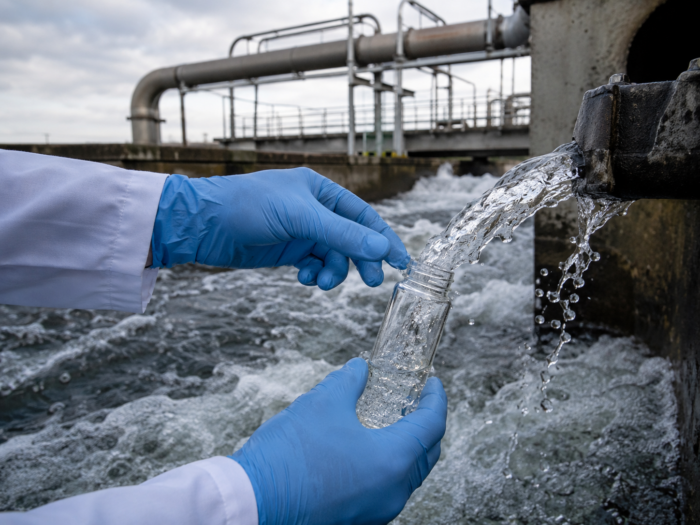
A landmark 2023 settlement in which 3M agreed to pay up to $12.5 billion to resolve lawsuits over per- and polyfluoroalkyl substances (PFAS) contamination in U.S. water systems set a new benchmark for environmental pollution tort, reshaping corporate risk profiles across a widening range of industries, according to analysis by Gallagher.
Billion-dollar settlements have followed, prompting comparisons to asbestos and tobacco litigation, and the ripple effects are expected to spread well beyond the original manufacturers at the center of early claims.
PFAS Liability: A Decades-Long Tail With No Clear Endpoint
PFAS — synthetic chemicals used in nonstick cookware, water-resistant apparel and firefighting foams — have been the subject of multi-billion-dollar claims arising from exposure that began in the 1940s, but scientific consensus on their health and environmental impacts has only solidified in the past decade.
Researchers have detected the substances in polar bears, deep-ocean fish, drinking water, soil and air. Their association with various cancers has made them the dominant focus in today’s environmental liability market.
“PFAS are the perfect example of tail liability — decades of use, limited early awareness and now multi-billion-dollar claims emerging from exposure that began in the 1940s,” said Shawn Alavi, senior vice president and environmental national practice leader at Gallagher Canada.
One of the most consequential technical dimensions is remediation cost. PFAS cleanup standards are set at parts per trillion — a threshold so strict that, as Anthony Lehnen, managing director of environmental at Gallagher, explains, a tablespoon of PFAS in an Olympic-size swimming pool would exceed drinkable limits. Even minor releases can trigger regulatory action and protracted litigation, the report noted.
Liability is expected to extend beyond original manufacturers to water treatment facilities, companies that used but did not produce PFAS, and property owners required to remediate contaminated land regardless of fault, the report said.
Insurers are responding by starting from full exclusions on PFAS-related coverage and only reconsidering after detailed site reviews. Industries under particular scrutiny include construction, airports, manufacturing and water treatment and courts are increasingly accepting economic-injury theories in product and packaging cases, broadening the plaintiff base further.
Microplastics and Mold Add to a Growing Exposure Landscape
PFAS is not the only contaminant driving environmental liability. Microplastics — fragments or fibers of plastic measuring 5 millimeters or less — are emerging as a parallel risk, Gallagher said.
Found in the human placenta and breast milk, and shown by research to be capable of entering the food chain, microplastics have already generated class action lawsuits against drink manufacturers and makers of BPA-free baby bottles in both the U.S. and Europe. Swiss Re’s 2025 SONAR report noted that insurers may see rising demand for pollution-related coverage as microplastics regulation tightens.
Although the science linking microplastics to specific health outcomes remains inconclusive, two factors elevate the corporate exposure: their persistence and mobility in the environment, which mirrors PFAS behavior, and improving detection methods that make it easier for plaintiffs and regulators to build evidentiary cases.
Legal and academic experts have identified microplastics as a potential next major wave of environmental litigation, according to the Gallagher analysis.
Toxic mold represents a third high-frequency environmental exposure, particularly in buildings with aging or complex HVAC systems. Climate-related events — floods, hurricanes and water intrusion — are accelerating mold growth in structures, while modern energy-efficient building design can trap conditions that allow it to spread undetected.
A 2024 verdict in Austin, Texas, awarded a family $1.06 million after toxic mold exposure in a rental home, and a 2025 Nevada case resulted in a $6.6 million award linked to chronic mold exposure in an apartment with long-ignored leaks. Health care, education, multifamily housing and commercial real estate face the most acute exposure, particularly where vulnerable populations are affected.
“Even if a claim is made against you that’s totally groundless, you might not end up being responsible for cleanup, but there’s going to be defense costs that only an environmental or pollution liability policy would cover,” said John Wasilchuk, vice president and director of environmental casualty practice at Gallagher.
Read the full report here. &