Newsletters
 Risk Central
 Digital Edition
Risk Scenario
Nipped in the Bud
Disclaimer: The events depicted in this scenario are fictitious. Any similarity to any corporation or person, living or dead, is merely coincidental.
PART ONE: GROWING ASPIRATIONS
When Wendy Packard got laid off during the COVID-19 downturn, she took a few weeks to meditate on where she wanted her life to go. It didn’t take long for her to pivot and manifest her longtime dream of owning a floral and gift shop. The location, in one of her state’s quainter river towns, seemed like a dream.
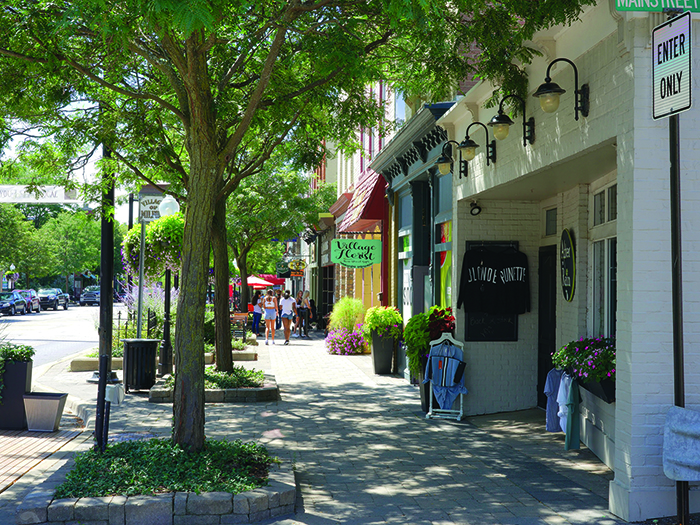
Wendy had a bankroll from her days as a high-end restaurant manager in New York, and she used it to set herself up properly. Milled soaps from France, exquisite flower cuttings from Upstate organic farmers and clever, water-color greeting cards from her one of her brightest and longest running friends were just part of a well-curated inventory.
Wendy had taste and so did her customers. With her easy manner and well-educated business sense, she had a hit on her hands in the space of a couple of years.
Part of the not-so-secret sauce was the fact that the business was housed in an old, stone millhouse. Original hand-hewed oak beams supported the wooden rafters that had been there since the early 1900’s.
When she bought the building, Wendy directed her architect to bring the building up to code with renovations but to retain as much of the building’s character as possible.
“I’m thinking charm, but charm with a mind to an airy, updated retail space that will make today’s shopper feel comfortable,” she told the architect. Knowing he was dealing with no fool, the architect complied.
As the business grew and attracted more admirers, customers couldn’t be blamed if they scanned the remarkable woodwork as much as they did the gifts and flowers on offer.
As 2025 rolled into 2026, the business was bustling, with new initiatives underway. A promising development was that Wendy’s youngest daughter Vanessa, had pitched in as a partner. Her passion was sustainable, pollinator-friendly shrubs and other perennials.
“Mom, enough with this ornamental stuff that doesn’t serve nature,” she told her mother.
“I’m talking about plants that will feed the birds and the bees … and be beautiful!” she emphasized.
Vanessa’s passion was infectious. Wendy wasn’t sure where her daughter’s dream was headed, but she wanted to support it as much as she could.
Now behind the old millhouse there was a small, makeshift greenhouse, overseen by Vanessa, where young chokeberries, heliopsis and joe-pye-weed grew in a seeming jumble of earthenware pots. Both women also used the little greenhouse to store tools and as a workspace.
Less formal, (and far less organized) than the original shop, the blooms and the airy feel of the greenhouse had an almost mesmerizing effect on younger men and women who dreamed of lives and livelihoods closer to the land.
They would lobby their older friends and relatives to see things the way Vanessa saw things, (nature first), with mixed results.
Vanessa had patched together a rudimentary heating and cooling system in the greenhouse, networked by a tangle of extension cords.
Wendy thought little of the arrangement, though when she had time to reflect, she made a mental note that the heating and cooling system should probably be arranged with more professional oversight.
“Probably a code violation of some kind there,” she said to herself on one of her afternoon walks by the river, which she used to clear her mind.
PART TWO: A DEVASTATING INFERNO
In early March, with her April insurance renewals looming, Wendy gets a call from her insurance broker. The gist of the call is that the broker suggests he and Wendy should do a business owner’s policy review.

“I think it’s been at least two years, Wendy,” he says.
“I know Joe, but I am just up my ears here. I’ve got Easter, Mother’s Day, graduations, you name it,” she said. “I’ve never had more inventory in this place.”
That inventory comment might sound exciting to some, but to the broker it can be read in three words …. likely coverage gaps.
Almost everyone likes Wendy, and so does Joe, but as an experienced broker, he’s been through this more times than he can count. Busy entrepreneurs, too busy to dig into the details of insurance, a dynamic that can have painful consequences.
Wendy suggests having a look at the policies later in the year, after the rush of spring festivities.
“Wendy okay, good luck with your busy season and I’ll get back in touch with you in June,” he says. He sighs after he hangs up.

Risk Scenario Partner
She’s too busy to assess it at the time of her March call with her broker, but Wendy is sitting on something of an insurance coverage time bomb. Escalating reconstruction costs and a burgeoning inventory aimed at the spring season mean that she is effectively underinsured to the tune of some $250,000, split about 50-50 between property and inventory values.
Then, fate delivers its cruel blow. One night, a week before Easter, Vanessa’s jerry-rigged electrical arrangement short circuits. An intense arc of sparks from one of her aging extension cords finds willing fuel in the millhouse’s well-oiled oak flooring.
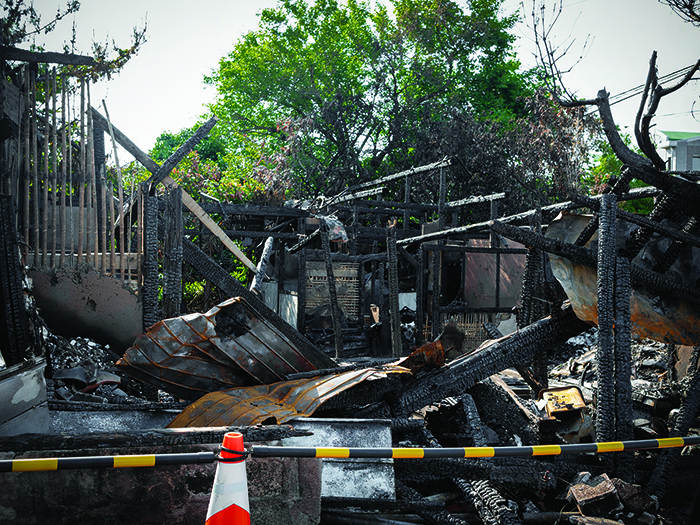
The millhouse, stacked to the gills with Wendy’s spring holiday inventory, goes up in flames. All that is recognizable when Wendy arrives at 5:30 the next morning are the two blackened stone walls of the original millhouse.
“What on God’s green earth?” Wendy exclaims, as gutted by the loss, she leans back against the driver’s side door of her car, tears erupting from her eyes in hot streams.
Her vision blurred by tears, Wendy looks out to the tranquil beauty of the river and then back to the smoldering ruins of her beloved business. The smell of charred oak is in her nostrils.
The images of the river and the burned building are so contrasting that they feel almost dystopian.
PART THREE: A DREAM DIES
Wendy was busy running a business that had every right to succeed. She had the passion, she had the energy, she had the taste, and initially at least, she had the resources.
Wendy, not one to balk at risk, had poured everything she had into the business. The harsh reality, that the business was underinsured by at least $250,000, is something Wendy can’t escape.
“You mean….” Wendy says as her broker outlines the coverage gap to her.
“I’m afraid so,” he says.
“This is all my fault, you told me we should review the policies and I blew you off,” she says.
“You didn’t blow me off. You were busy doing something you loved and it got past you,” he says.
Vanessa is devastated. She’d been thrilled to be a part of her mother’s dream and in the same opportunity act on her passion for sustainable agriculture. She blames herself when the cause of the fire is determined to be her greenhouse electrical set up.
“I did this! I’m such an idiot,” she says, her youthful joy and exuberance now turning to grief.
“I had no business putting the shop at risk like this,” she says.
“Look at me,” Wendy says as she embraces her daughter, Vanessa’s tears on her shirt.
“This is not your fault. It was an oversight on my part that left us underinsured.”
The location Wendy chose was well-selected, but the option of rebuilding is out of reach. She collects on her insurance policies and sells the property, albeit for a fraction of what she bought it for.
With its original oak fixtures now incinerated, the millhouse that so transfixed Wendy and her customers just won’t be the same, even if someone else rebuilds it as part of their ownership dream.
“What are you going to do now Mom?” asks Vanessa, as they take a long walk by the river to process their emotions and (hopefully) get clarity.
“I don’t know honey,” Wendy says to Vanessa. “You never know where things might lead.”
As the mother, she needs to keep a stiff upper lip, but she really has no idea yet what she will do.
Wendy is tough. She will move on.
But this is one of her dreams that no longer has life. &

Risk & Insurance® partnered with AmTrust to produce this scenario. Below are AmTrust’s recommendations on how to help mitigate the losses presented in the scenario. This perspective is not an editorial opinion of Risk & Insurance®.
A growing and successful business can be exciting, but achieving that success isn’t easy. Rising construction costs, supply chain delays, economic inflation, rapidly evolving customer preferences, changes in weather and catastrophe patterns, budding new technologies, new competitors, and many other factors are requiring business owners to adapt at a record pace – and in the face of all those challenges, insurance may be the last thing on their minds. That growth can often lead to changes in the business, and coverage that was needed five years ago (or even just last year) may not be the same coverage needed today.
Regular valuation reviews are critical for growing businesses.
Rapidly changing inventory levels, seasonal stock increases, and rising reconstruction costs can quickly render property and business personal property limits inadequate if policies are not reviewed and updated at least annually.
Business environment and customer expectations can change fast, leading business owners to implement creative solutions to meet real-time demands.
Outbuildings, improvised storage, makeshift workspaces, electrical modifications, DIY installations, or adding new services and products can significantly increase fire and other exposures. Partnering with your broker and risk control can help reduce or eliminate many unforeseen exposures and make sure the business has the coverage needed for all property and services provided.
Character-rich and customized properties require special attention.
Older, retrofitted, or customized structures may feature combustible materials and unique construction methods that increase both loss severity and reconstruction cost volatility, making accurate replacement cost assessments essential.
Broker–insured-carrier engagement is a shared responsibility.
Missed coverage reviews often occur during periods of business success and growth; proactive carrier and broker outreach—paired with insured education—can help prevent avoidable coverage gaps and devastating financial outcomes.
Even the busiest, most successful business owners need to pause for coverage check‑ins.
Periods of growth and peak demand often leave owners focused on operations, inventory, and customers—but that is precisely when insurance limits can fall out of sync with reality, and choosing a carrier and coverage that can grow with your business is extremely important. Coverage enhancements like peak season inventory adjustment coverage and automatic building limit increases can be great options to ensure you are protected year-round while inventory or costs fluctuate.