Newsletters
 Risk Central
 Digital Edition
How Marine Insurers Are Navigating a New Era of Geopolitical Volatility
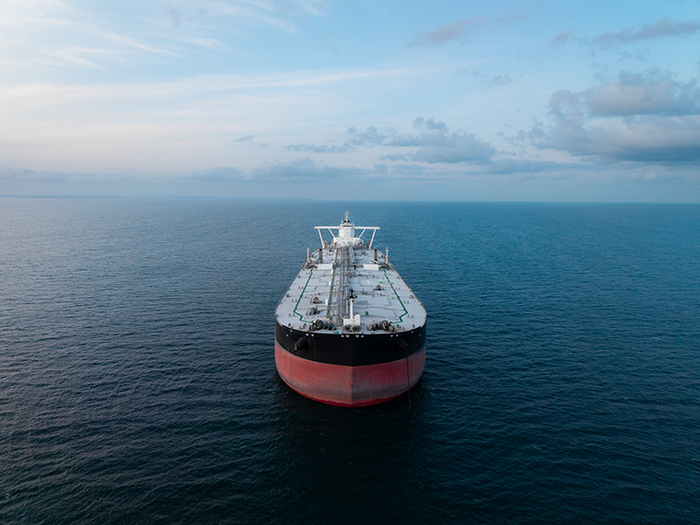
Global trade routes are under pressure.
Ongoing conflict in the Red Sea, persistent tensions in the Strait of Hormuz, and the years-long Russia-Ukraine war in the Black Sea have combined to create a volatile environment for marine insurers. Add sanctions, tariffs, and inflation to the mix, and the calculus for underwriting cargo and war risk exposures has grown much more complex.
For companies moving goods, especially energy commodities, through these contested waters, insurance pricing is no longer a predictable line item. It’s a moving target that can shift, sometimes from day to day, even hour to hour.
“The situation from February was extremely volatile and uncertain. Nothing was moving. Ships were stuck, and more importantly, crews were stuck on all these ships,” said Dennis Marvin, Head of Marine at MSIG USA.
“At one point, there were a thousand vessels sitting in the Persian Gulf.”
A Global Map of Volatility Driving Pricing Pressure

Dennis Marvin, Head of Marine, MSIG USA
The world’s chokepoints have become flashpoints. In the Strait of Hormuz, through which roughly 20 to 25 percent of the world’s oil passes, uncertainty has upended the pricing of war risk insurance.
In the Red Sea, Houthi activity has forced many operators to reroute vessels around the Cape of Good Hope, adding weeks to voyages. And in the Black Sea, grain shipments out of the vital port of Odessa in the Ukraine continue to be impacted by the four-year-old war instigated by Russia.
While the market never experienced an insurance crisis, prices have moved dramatically.
“Pricing has spiraled out of control relative to where it was pre-February. We’re hearing ranges anywhere from 2 cents to 2 percent in the market,” Marvin said. That rate applies to the value of the cargo aboard. That means a fully loaded crude tanker priced at recent market highs can generate a substantial premium in a single voyage.
Marvin noted that the pricing pressure has been concentrated primarily in the energy segment. Tankers carrying LNG, crude oil, refined products, and bulk cargo have drawn the most attention from attackers, while many general cargo and container operators have either continued transiting or chosen to reroute entirely.
Alternative routes have their own complications. Saudi Arabia’s pipeline to the Red Sea, once viewed as a workaround to the Hormuz chokepoint, has been affected by regional conflict.
From an insurance standpoint, it’s important to remember that pipelines fall outside typical marine cargo coverage.
“Marine insurers do not insure oil in a pipeline. Typically, insurance in a pipeline is covered under an onshore energy package,” Marvin said.
The volatility isn’t confined to the Middle East. Marvin pointed to the Gaza violence and periodic outbreaks of conflict in Lebanon.
But the aforementioned Russia-Ukraine war, and lower-intensity concerns involving Taiwan, China, and North Korea are factors that marine and war risk underwriters have to keep on their radar.
“Insurers are being cautious, pricing risks on a day-by-day or vessel-by-vessel basis because of the uncertainty and volatility,” he said.
Risk-Based Assessment in Real Time
For most lines of insurance, underwriters have decades of data and sophisticated models to draw on. Hurricanes, earthquakes and auto losses are all modeled extensively. War risk is a different animal altogether.
“As an insurer, we like certainty. We have modeling capabilities for most other lines of business,” Marvin said.
“But when it comes to underwriting war risk exposure, which we’re defining relative to geopolitical events, carriers don’t have perfect visibility. When the U.S. and Israel began military action against Iran, the market did not have advance notice.
Without predictive models, underwriters must rely on risk-based assessment. That means mapping exposures geographically, gathering client data where available, and pricing each vessel and cargo movement individually based on the day the shipment leaves.
In the U.S., that coverage is written across two separate but complementary policies: marine and war. Both respond in different ways, and both require careful coordination when a client’s cargo is transiting a high-risk area. Meanwhile, at Lloyd’s, specialty syndicates that write only war coverage have thrived in periods of volatility, providing capacity that helps keep the global market functioning.
The scale of exposure is significant. “The loss of a fully loaded tanker of crude oil can represent an exposure of roughly $80 million at today’s values,” Marvin said.
Despite some misleading headlines, capacity has held up for War Risk Insurance. “There has been ample supply of capacity, albeit at a much higher price. Coverage doesn’t change, but the price does, and that’s just how the market works,” Marvin said.
How MSIG USA Works with Brokers and Insureds to Price Risk with Clarity
Given the complexity of geopolitical risk, clear communication is as important as capacity. MSIG USA’s approach centers on working closely with brokers and, where appropriate, directly with sophisticated clients to understand exposures in real time.
“The closer we can be to that broker and, in some cases, the client, the better,” Marvin said. ” Many businesses in the energy space are sophisticated companies. They have sophisticated risk managers who understand risk.”
Even so, Marvin has found that war risk insurance is a line many risk managers and insurers don’t focus on until a crisis erupts.
“In times of peace and calm, you don’t think about it. In a similar way, risk managers don’t talk about war insurance until a crisis happens,” he said.
“By talking to their broker and then to experts, we can explain how the policy works or doesn’t work and what it covers or doesn’t cover. We always strive to have our clients understand the coverage we are providing to them.”
That educational role is especially valuable in the energy space, where large operators have the internal resources to track vessel movements and quantify exposures rapidly.
“If I’m talking with the risk manager of a large energy company, one of my first questions would be: How many vessels do you have in the Persian Gulf today that are waiting to load or expected to leave in the next five to ten days?” Marvin said.
“We need to understand that concentration of exposure because the situation can change quickly, and the potential financial impact can be significant.” The result is a partnership-driven model. MSIG USA conducts risk-based assessments across its portfolio, works with brokers and clients to gather the most current information, and prices coverage transparently based on the risk on the day the shipment moves. When conditions shift, so does the price — but coverage remains available.
“Our role is to understand how the exposure has changed and price it appropriately,” Marvin said. “The risk may look different today than it did a week ago, but that doesn’t mean the answer has to be no.” After 50 years in the business, Marvin still has his eyes opened daily. “It is so fascinating and fast-paced. To this day, I learn something new every day,” he said.
In a world where geopolitical shocks can arrive without warning, that continuous learning, paired with clear communication between insurer, broker, and insured can be the backbone of resilience. &