Newsletters
 Risk Central
 Digital Edition
How Broker Lance Williams Helped One Client’s Pilot Solution Soar

One of aviation’s toughest challenges lies in talent. Research from Oliver Wyman and Boeing suggests a peak global shortfall of approximately 24,000 pilots in 2026. Couple that with an FAA-mandated retirement age of 65, and roughly 3,000 more pilots will be exiting the industry by year’s end.
For businesses that rely on internal aircraft fleets for distribution and other air travel needs, finding and keeping qualified pilots becomes more than another employee on payroll; it’s an operations necessity that requires creative solutions to fill the gap.
“We have in business aviation … a paucity of pilots. It’s critical. There’s not enough of them, so it costs a lot of money to train, to get pilots to where you need them to be,” said Greg Woods, senior director, corporate aviation, Qualcomm.
Unlike commercial airlines, where many are creating in-house training initiatives to combat the pilot shortage, smaller, corporate entities do not have the same resources to bring in new talent and train them on the ins and outs of flying.
Unless, of course, there happens to be a “unique situation, where you have an inside person who has a [private] pilot license and was regularly flying,” said Woods.
Creatively Filling the Gap
Qualcomm is a global, 24/7 operation, bringing the latest in advanced technologies worldwide. “We fly internationally. But we’re not like an airline with dispatch, controllers and the full team. We’re tasked to manage the logistics within our enterprise,” explained Woods.
To keep things on track, the team understood it needed to up its pilot count — for the sake of both productivity and safety.
Woods knew there was a crack mechanic on staff who had dreams of flying beyond a hobby. Not only that, but Woods also knew this employee had the right attitude about learning how to fly larger planes for the company.
“This was somebody within our group who had proven to be very intelligent, to be a very hard worker, was the go-to person in a lot of ways. The gentleman is a polymath, essentially, and has high ability to learn,” said Woods.
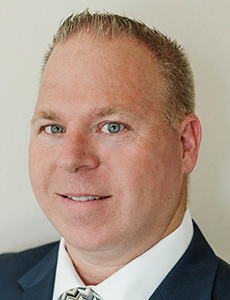
Lance Williams
Senior Vice President
Aon, Irvine, Calif.
If this mechanic could fly with Qualcomm’s existing pilots, learn the ropes, and get the necessary education for certification, it could be a win-win for everyone involved. Qualcomm could spend a fraction of the cost to train an-already on-staff pilot versus hiring someone outright, and their mechanic could gain the flying power he’d already aimed to earn.
There was just one thing left; that pesky little nuisance called insurance.
The First Advocate
Lance Williams, senior vice president at Aon, has been flying since he was 16. He earned his private pilot license at 18 and even worked as a flight instructor after college. As he trained pilots, he found he was answering more underwriting questions.
“I was hired to teach a ground school at Berkley Aviation, an insurance underwriting carrier … they were asking me, ‘would you be comfortable underwriting this pilot in this type of aircraft?’ and other things,” he said.
That led him into insurance, spending more than a decade as an underwriter focused on general aviation. Six years ago, he joined Aon as a broker, specializing in aviation in the transportation and logistics division.
His love of flight continues to take his career to new heights. When Qualcomm came knocking, Williams answered: “They reached out to me with this dilemma, saying that they had this mechanic that had the potential to go far in aviation, and he was someone they wanted to develop internally.”
However, as Williams quickly learned, the mechanic had lower flight hours than what is traditionally desired for a new pilot coming into the aircraft.
“Granted,” Williams said, “he’d been a mechanic for more than a decade, and he probably knew the aircraft in and out better than the pilots [already on staff], because he’s the one taking the parts off it.”
Still, it presented an underwriting challenge: This was a complex aircraft with higher liability limits. To put a lower hours-experienced pilot at the helm would almost certainly be balked at by insurers.
Still, 2026 Transportation Power Broker winner Williams wanted to see where they could take it.
‘Cruise Pilot’ Takes Off
Williams, Woods and the Qualcomm team spent countless hours dissecting the potential and merits of this training program. They called it “Cruise Pilot,” and when it came time to find an underwriter, Williams as the broker took charge.
“I really wanted the underwriter to hear Qualcomm’s story directly, of why they’d picked this particular individual, what they planned to accomplish,” he said.
Sitting Qualcomm and the underwriter down together proved positive; Qualcomm’s mechanic began training almost soon after.
Like any new program, there were certain obstacles and insurance stipulations to abide by. For Cruise Pilot, that meant having some parameters around what the newest pilot could and could not do.
Williams said one example was in takeoffs and landings. “In operating an aircraft, the highest frequency of losses typically come around takeoff and landing,” he explained. “What we were able to get approved was for this pilot to operate the aircraft at cruise flight.”
Woods explained that, because these internal flights are long, company policy has two fully licensed pilots on board. They would be in charge of getting the aircraft to altitude. Then, the mechanic-turned-pilot could step in.
“This is particularly important on international flights,” added Williams. “It allows one of those two primary pilots to get a little bit of rest and [the mechanic] was able to gain some flight experience.”
Over time, Williams has been able to expand the trainee pilot’s flight profile with the underwriter, all with the final goal of making him a vital member of the Qualcomm flight team. For example, the next phase was to allow the pilot to conduct takeoffs and landings while no passengers are on board, because it poses a lower liability profile for the underwriter.
Essentially, the plan has been developed to keep the Cruise Pilot soaring.
Partnership in Action
The broker-client relationship is more than a few signatures on the renewal line; it’s something that should be extending and expanding throughout the year. For Williams and Qualcomm, communication and understanding enabled both to find a solution to the pilot problem.
“We couldn’t have done it without Lance,” Woods said, though he gave credit to the other players as well, including their internal mechanic, the underwriters, and the pilots who were willing to help teach. But at its core, “Lance was a vital part of it, and take him out, then we couldn’t have done it.
When clients present a challenge, Williams said it’s so important for the broker to “understand the client. Have that conversation and get to the depth, or the root, of their problem. Oftentimes, clients will present to us with a particular approach, but really the broker needs to be driving into what is their ultimate goal.”
Williams gets a lot of value out of solving problems for his clients. Trust and transparency are key elements of his brokering philosophy, especially when he’s working to keep operations moving: “The broker relationship is not just a commodity; there’s real value in an authentic relationship and personal communication. It’s critical in building long-term collaboration.” &