 Newsletters
 Risk Central
 Digital Edition
From Risk Transfer to Risk Prevention: Rethinking the Value of Insurance
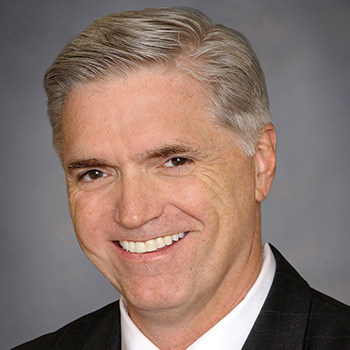
Peter L. Miller, CPCU, MS, MBA, is chief executive officer of The Institutes and a member of its Senior Management Team.
For most of its history, insurance has been defined by a simple transaction: a client transfers risk, and the insurer pays when a loss occurs. But as risks grow larger, more frequent, and more interconnected, that model is carrying weight it was never designed to bear.
I recently explored this tension on the Predict & Prevent podcast with Rose Hall, founder and CEO of RH Business Ventures, who brings experience as a risk engineer and as an innovation leader at AXA XL.
Hall describes risk management as three buckets: what an organization retains, what it transfers to an insurer, and what it assigns contractually to others. Sophisticated risk managers are responding by retaining more risk and managing it aggressively through loss prevention.
At AXA XL, Hall helped launch a construction risk ecosystem that initially led with technology. The idea was to combine claims data with clients’ operational data for better insights on risk and pricing of insurance.
It struggled at first, because clients hesitated to share data they hadn’t fully examined themselves. As Hall asked, would you leave a telematics device in the car knowing your 16-year-old might take it for a spin? No company wants its insurer to be the first to find problems in its own data.
The breakthrough came when AXA XL stopped presenting a finished product and invited clients to help shape it. That help build trust in new approaches and is a reminder that technology is the enabler, not the strategy.
Hall also explained why so much job-site technology failed to stick. Vendors demanded all-or-nothing adoption. Some tools inadvertently documented potential liability rather than preventing harm in real time. Others added work for overloaded project managers and ended up in boxes on desks. The best loss prevention technology, she said, “slips right into your everyday use and doesn’t cause any friction.”
That echoes a lesson I heard on the podcast from Dorothy Doyle of Liberty Mutual. She described exoskeletons that went underused partly because they were stored 50 yards from where workers needed them. Prevention only works when it fits how people actually work.
Looking ahead, Hall believes the carriers and brokers that stay most relevant will be those that act less like transaction processors and more like risk advisors. They will help clients decide what to retain, what to transfer, and how to reduce exposure through prevention.
The current structure, where brokers and carriers each advise clients but with different financial incentives pulling in different directions, creates gaps. Hall compared it to a fragmented medical system where specialists treat individual systems but nobody looks at the whole patient. That will require changes to business models, not just technology stacks. But as Hall observed, “we did not get to inventing the light bulb by iterating on the candle.” Incremental improvements to existing structures will not be enough.
I agree. Predict & Prevent isn’t about adding sensors to an old model. It’s about redefining the value insurance delivers, so that insurers become partners in reducing risk rather than just payers after the fact.
Listen to my full conversation with Rose Hall on the Predict & Prevent podcast. &