Newsletters
 Risk Central
 Digital Edition
Frequent Smaller Events Drive $152 Billion in Annual Catastrophe Losses Globally
Global insurers should prepare for average annual property losses from natural catastrophes of $152 billion, a 25% jump from last year, with frequent smaller events like severe thunderstorms now driving twice as much financial impact as major disasters like hurricanes and earthquakes, according to Verisk’s 2025 Global Modeled Catastrophe Losses Report.
“This year’s modeled losses reflect a fundamental shift in the risk landscape. Frequency perils are driving sustained, high-impact losses across geographies, and insurers must evolve their strategies to meet this challenge head-on,” said Rob Newbold, president of Verisk Extreme Event Solutions. “Natural catastrophe losses are no longer statistical anomalies—they are the new normal.”
Frequency Perils Reshape Risk Landscape
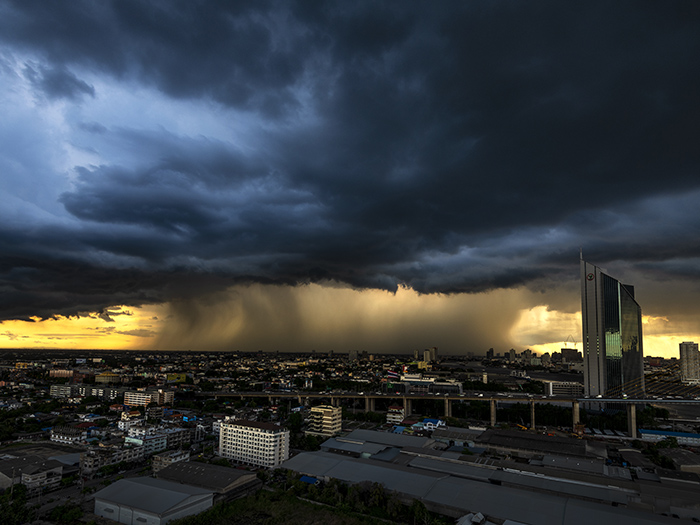
The insurance industry faces a fundamental shift in how natural catastrophe losses accumulate. Rather than sporadic mega-disasters defining annual losses, recurring events such as severe thunderstorms, winter storms, wildfires and inland floods now generate $98 billion of the total $152 billion in modeled average annual losses, Verisk’s report said. This marks a dramatic change from traditional catastrophe modeling that focused primarily on major events like tropical cyclones and earthquakes.
The escalation reflects broader trends in the market. Over the past five years, actual insured losses averaged $132 billion annually, compared to $104 billion in the preceding five-year period, the report said.
Property exposure in countries covered by Verisk’s models expanded at 7% annually between 2020 and 2024, fueled by inflation and continued construction in high-risk areas. While climate change contributes approximately 1% to year-over-year increases in average annual losses, the combination of exposure growth and event frequency creates compounding challenges, according to Verisk.
Protection Gaps Expose Regional Vulnerabilities
Geographic disparities in insurance coverage create vastly different risk profiles across global markets, Verisk said. North America maintains relatively robust coverage, with insured losses accounting for 48% of economic losses. However, significant protection gaps persist elsewhere, with insured losses covering only 12% of economic losses in Asia and 32% in Latin America.
These gaps become particularly problematic as urbanization accelerates in high-hazard areas. Europe and Oceania experience annual exposure growth rates exceeding 8% in some regions, driven by inflation and urban expansion, the report noted.
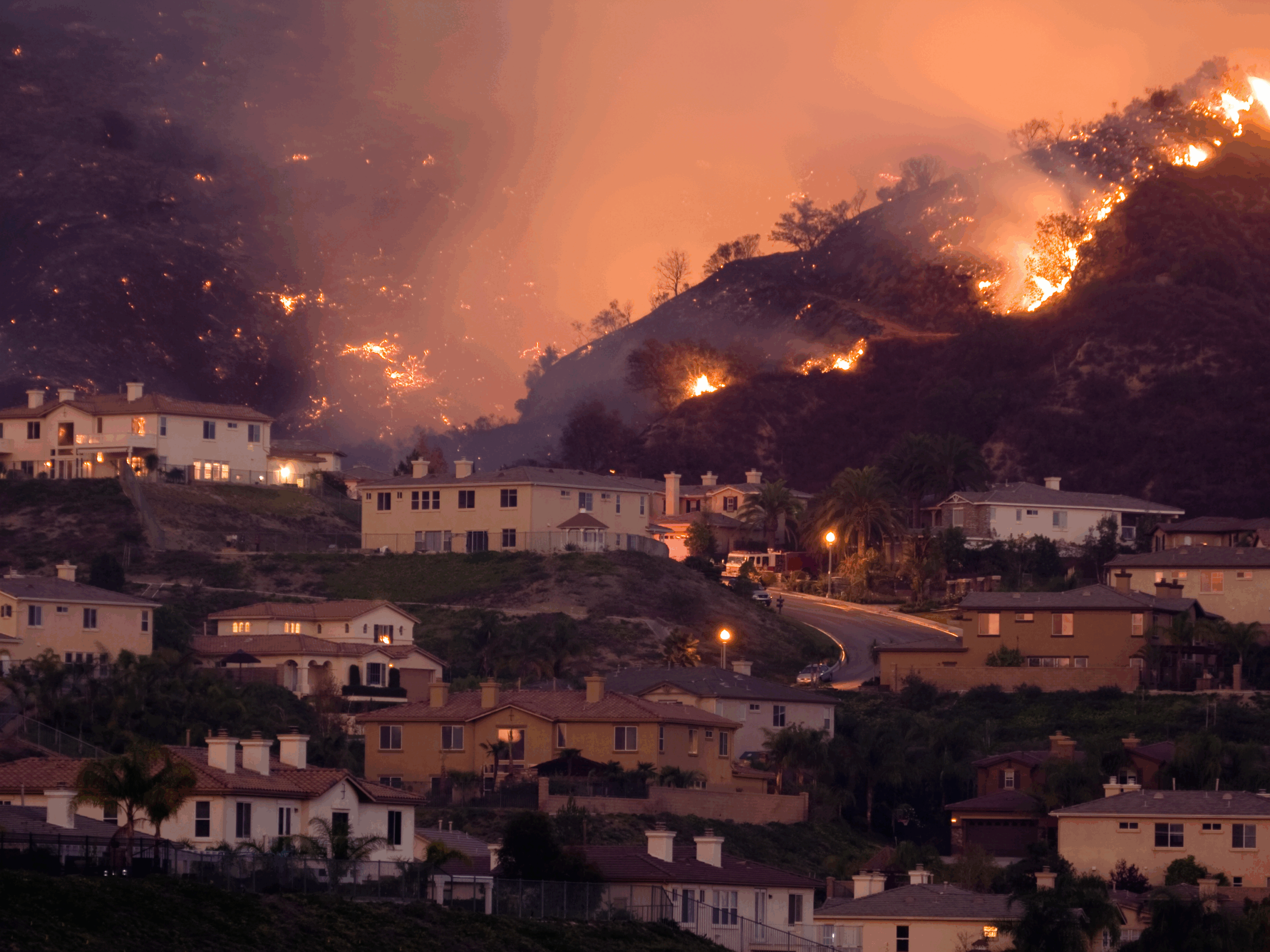
Meanwhile, wildfire risk continues escalating in North America, where the 2025 Palisades and Eaton fires alone caused up to $65 billion in economic losses, with 60-70% insured.
The insurance sector must adapt its risk management strategies to address this evolving landscape. Traditional approaches that emphasize preparing for rare, catastrophic events need recalibration to account for the cumulative impact of frequent smaller disasters, Verisk said.
View the report here. &