Newsletters
 Risk Central
 Digital Edition
Brilliance in Focus: Marsh Risk’s Philippe Dion
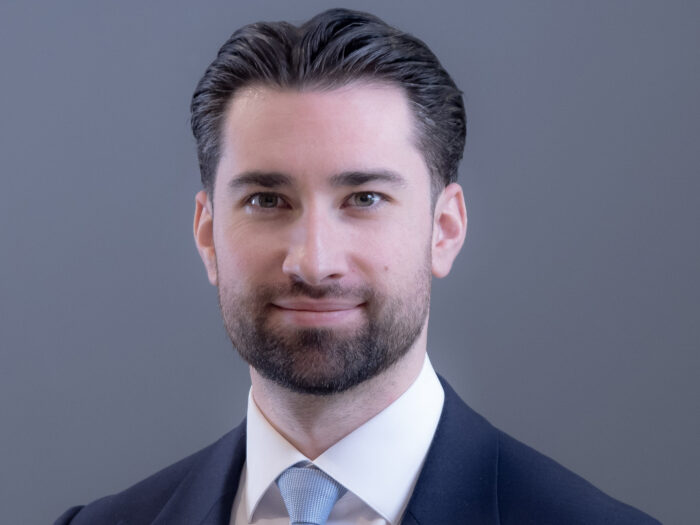

As part of covering the best brokers in the commercial insurance space, Risk & Insurance®, with the sponsorship of Philadelphia Insurance Companies, is expanding its coverage of Power Broker® winners and finalists with its Brilliance in Focus series.
Look for these expanded profiles on the Risk & Insurance website and in your social media feeds throughout the year.
Here we speak to Marsh Risk’s Philippe Dion, a 2025 Power Broker in the Construction category.
Risk & Insurance: Which geographies are proving most difficult for owners and contractors seeking coverage in Canada?
Philippe Dion: The Canadian construction insurance market remains broadly competitive with ample domestic capacity, although there are significant variations by region and project type. Several areas stand out as difficult:
British Columbia
BC continues to be one of the most challenging provinces, driven by a combination of wildfire exposure, seismic risk in Metro Vancouver, and a history of construction defect litigation in the condo/residential sector. Builders risk capacity for wood-frame multi-family projects in wildfire-prone zones is increasingly restricted, with higher deductibles and sublimits becoming standard.
Alberta
The 2024 Calgary hailstorm alone generated billions in insured losses, the largest single insured event in Canadian history at the time. This prompted underwriters to apply much stricter scrutiny to Alberta projects. Flood-prone areas around Calgary and Edmonton are also drawing mandatory minimum deductibles and tighter terms.
Quebec
Quebec’s 2024 flooding events resulted in $2.7 billion in insured losses, pushing insurers to reassess flood exposure across the province. Projects in floodplains or low-lying urban areas face increasing difficulty obtaining full-limit coverage, and insurers are leaning heavily on provincial flood mapping tools to set deductibles and terms. Under Quebec’s Civil Code, insurers are legally required to pay defence costs over and above the policy’s indemnity limit creating an open-ended financial exposure that standard actuarial models struggle to price. Historically, this has caused many domestic and international markets to avoid writing professional liability in Quebec altogether or charge significant premium surcharges. The practical result for owners and contractors is a thinner market, compressed excess capacity, and harder-to-assemble coverage towers for large projects. Brokers may at times address this through alternative risk transfer solutions.
Ontario
Ontario is not uniformly difficult, but specific exposures draw scrutiny, including high-rise residential construction in Toronto (fire, crane, and liability exposure), infrastructure projects with significant auto/fleet components, and projects in flood-prone areas around Toronto.
R&I: How are materials costs impacting the ability to price and underwrite risk in Canada?
PD: This is arguably the most structurally complex challenge facing Canadian owners, contractors, and their risk management partners right now. Several converging forces are at play:
The pandemic baseline never fully reset
Construction materials spiked 20% to 40% in 2021 to 2022 in Canada. Lumber peaked at over US$1,600 per 1,000 board feet (from ~US$550 pre-pandemic). While some stabilization has occurred, costs have not retracted, continuing to increase year-over-year from an already elevated base.
Tariffs are acting as a cost multiplier
The US-Canada trade war has had a direct and measurable impact on Canadian construction costs:
- 25% US tariffs on Canadian steel and aluminum in March 2025, subsequently raised to 50%
- 35% US tariffs on Canadian softwood lumber
- Canada’s retaliatory tariffs increasing costs on imported building materials and equipment
The result: tariffs alone have contributed an estimated 8% to 12% increase in total project costs over a six-month period, depending on material mix. For example, a hospital expansion requiring 8,000 tonnes of steel would see an additional US$20 million in material costs under current tariff conditions.
The underinsurance problem
All of the above converge on a single, critical risk management failure: chronic underinsurance. For example, a multi-use commercial retail strip mall in Regina was quoted at $12.5 million CAD to build in 2024. After putting the project on pause for a year the same project was quoted at $14.3 million CAD in 2025.
For underwriters, the challenges include:
- Valuation accuracy: Project values submitted at inception are often outdated by the time a loss occurs.
- Mid-project cost escalation: Builders risk policies need inflation protection provisions, but most standard policies cap automatic increases at 5% to 10%, which can be insufficient in the current environment. This is where brokers can ensure their client’s projects are insured with the proper limits.
- Soft costs exposure: Delays caused by material shortages or supply chain disruptions trigger soft costs (financing, carrying costs, and lost revenue) that are chronically underinsured.
Practical implications for risk management partners:
- Valuations must be refreshed at least annually, and ideally at each project milestone.
- Builders risk policies on projects over 18 months should include explicit inflation escalation clauses beyond the standard 5% to 10% cap.
- Soft costs coverage should be treated as essential, not optional.
- Tariff and material cost volatility should be flagged as a schedule of values risk at every renewal.
R&I: What do you see as your key responsibilities as an insurance broker and risk consultant?
PD: My responsibilities go well beyond placing coverage. I see them in three interconnected layers:
Trusted adviser and educator
My first responsibility is to ensure my clients, whether owners, general contractors, subcontractors or engineering firms, truly understand the risks they’re carrying and the coverage they have.
As artificial intelligence and advanced data analytics reshape the way risk is identified, quantified, and managed, we hold ourselves to a higher standard: delivering insights that are evidence-based, program-specific, and grounded in real data. In an environment where the cost of being underinsured or misinformed has never been greater, our clients deserve nothing less.
Market advocate and navigator
In a market where underwriting appetite varies dramatically by geography, project type, and loss history, my job is to know which markets will respond, and how to present a risk to get the best outcome. That means building relationships with underwriters, understanding their appetite in real time, and structuring submissions that tell the right story. For a challenging risk in a natural catastrophe-exposed zone or a high-hazard project class, the difference between a well-structured and a poorly structured submission can be millions of dollars in premium and materially different coverage terms.
Long-term risk partner
Finally, I see my responsibility as longitudinal, not transactional. That means staying engaged through the project lifecycle, flagging when values need updating, monitoring claims trends, and helping clients build safety and risk management cultures that reduce losses in the first place. The best outcome for a client is never having to use their insurance.
R&I: What gives you the greatest sense of satisfaction from the work that you do?
PD: The construction industry is itself in a constant state of evolution, with new delivery models, new regulatory pressures and new technologies, and that means the advice we give must evolve with it. What I find particularly valuable in my practice is the breadth of perspective I have built by working alongside Owners, General Contractors, Engineers and Subcontractors. Having sat across the table from every party involved in a construction project, I understand not just the risks each one carries, but how those risks interact, overlap and sometimes conflict. That holistic view, combined with a genuine desire to keep learning and innovating, makes me a better advisor to each of them individually, and in a field that is changing as fast as ours, that sense of endless possibility is not a challenge. It is the greatest privilege of the work. &