Newsletters
 Risk Central
 Digital Edition
BHSI’s Chris Frick on Marine Claims
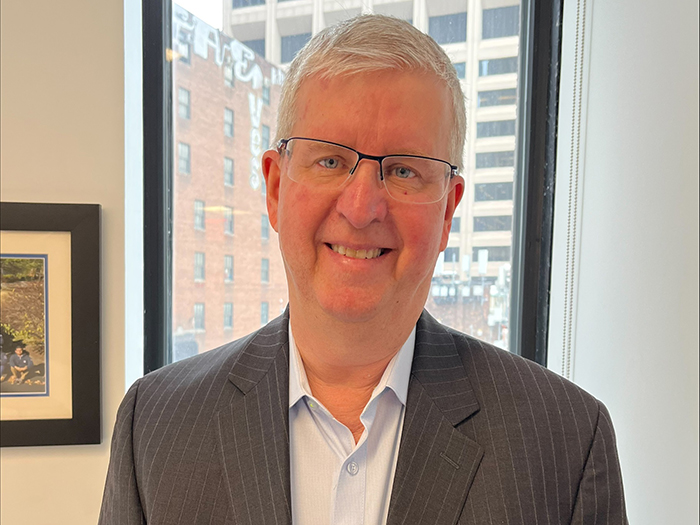
As part of our expanded coverage of our 2026 Marine Power Broker® winners and finalists, Risk & Insurance® recently spoke with Chris Frick, head of marine claims for Berkshire Hathaway Specialty Insurance. What follows is a transcript of that discussion edited for length and clarity.
Risk & Insurance: What are the most significant claims trends you’re seeing in this space, and what’s driving them?
Chris Frick: We have a smaller book relative to some of the market, so it’s difficult to say what is trending globally. However, I would say a big trend right now is cargo theft involving computerized trucking systems and shipping systems such as ride boards, where criminals hack into those systems and create fake shipping details.
The cargo thieves are getting very sophisticated in how they set up and carry out these thefts. It is a known problem in the marine claims world, and trying to fix it jointly with our insureds is a challenge with the sophistication of the criminals and all the technology involved.
We’re going to see where that one goes, but we’re seeing a remarkable uptick in that space.
Historically, the biggest losses in the marine space are major maritime disasters that involve every kind of marine coverage. The causes of those losses might be fires, sinkings, groundings or collisions and allisions. Examples include the Baltimore Bridge Collision and the Costa Concordia, the cruise ship that sank in Italy. Both insured market losses are excess of $1 billion.
These events bring different areas of marine coverage into play. There is Hull coverage up to the value of the vessel itself. The Dali, the vessel that struck the bridge in Baltimore, had an insured value of $90 million. Consider the Titanic, which in today’s dollars would be worth approximately $450 million. Beyond the hull claim, there are P&I and other liability claims. If you then add it all up, projections for the Baltimore incident add up to a $2 to $4 billion insurance claim.
R&I: What role do brokers play in the claims process, and how can they better support it?
CF: There are a few things brokers can do, and a lot of it is common sense. First, they can help the insured understand their coverage before a loss occurs. If the broker understands the policy and helps the insured fully understand it, expectations are clearer when a loss happens.
Obviously, brokers are helpful in explaining coverage throughout the claims process, but it’s better that they know and explain it beforehand. We encourage them to do that when we do business with them.
Second, get us the notice on time with as much information as possible. We can’t help them until we have a claim. BHSI is very focused on turnaround times, as I think many insurers are, so the earlier we can get important information, the better.
However, I don’t want brokers to gather up all the information and try to deliver it all at once. Instead, let us know something happened and tell us what you have so we can start working on the investigation.
Finally, facilitate the communications between us and the customer. This is a bit of an art — savvy brokers know how to do it. It’s knowing when to step in and be part of the conversation and when to stay out of it.
A lot of the brokers I know really well, because we’ve handled a number of claims together, understand when we need them to participate. They also know when we would prefer for them to step back and let us do our work and help the insured. These are the foundational things that brokers can do, and I think they apply to all claims as opposed to being a specialized marine thing.
When it comes to knowing the coverage, it’s a little trickier because there are a lot of agents out there—not the sophisticated brokers, but some agents selling or helping market marine products—who don’t really understand what the product is. That’s something a bit more peculiar to the marine market.
R&I: Is there variability in how quickly brokers notify you of claims, and does this present challenges?
CF: Our best chance to mitigate the loss and help the insured is if we know as soon as something happens.
For example, if we have a warehouse loss where we know there was a fire, don’t wait two days until you’ve gathered up all the documents to tell us. Give us a call and say, “Hey, this is something that’s happened, and we know there’s going to be a claim coming.” We’ll send along what we need to know, they give us the contact information for the insured, and we start the process.
Some brokers will think, “Well, I don’t want to just send them a blank notice without any kind of documentary support.” That’s okay. As long as we ultimately get the paperwork, we’re fine with it.
R&I: How often does litigation come into play when resolving or settling marine claims?
CF: There are different kinds of marine products to consider. Marine coverages that handle bodily injuries include P&I coverage, which involves not only bodily injury to third parties from the operation of a vessel but can also involve crew claims, as well as marine liability policies for ports, terminals and marine operators. These policies produce the bulk of litigated claims in the marine space.
When I started in this business two decades ago, it was somewhat rare for crew claims to be litigated compared to normal population bodily injury claims. That has changed over time. The level of injury claims being litigated that involve crew is now similar to what you see in the normal population.
Those billboards that run along Interstate 10 in Louisiana and the Katy Freeway in Houston are being impactful because a lot of crew members are going directly to lawyers instead of trying to get early resolution with their employers.
Cargo is another product in the marine suite, and it’s a first-party coverage. We try to work with our insureds to make sure they’re satisfied with the claim service and with what they’re getting from the policy so that there isn’t litigation.
However, there are times when the parties can’t come to agreement on what the coverage applies or the value of the cargo, and those claims can sometimes be litigated. It doesn’t happen that often.
The more common litigation you see in the cargo space is subrogation. We have paid our cargo claim, and we’re going back against the trucker who dropped the cargo or the vessel owner who turned the refrigeration off, something like that.
R&I: What does marine liability insurance cover, and what makes this space unique?
CF: Marine liability insurance generally covers facilities and businesses that operate on or adjacent to water but it is not coverage for their vessel operations. BHSI is not currently a U.S. market for marine liability coverage.
For example, if you were walking on property owned by the Port of Los Angeles and tripped and fell, there’s a potential claim there. Marine liability insurance exists to cover that type of exposure.
There is a higher level of litigation in this space because you’re dealing more with unrelated third parties making claims.
R&I: What educational background or personality traits make someone more inclined to be a claims person versus, say, an underwriter?
CF: I put a lot of thought into this question. When I interview people for claims roles, I interview a variety of different backgrounds. You might interview somebody who practiced law for a liability role, someone who worked at a shipyard for a hull and P&I role, or someone with a logistics background for cargo. But you don’t need to have that level of experience to be a claims person.
What you need for a claims role is to be naturally inquisitive and analytical in the way you approach a claim. You need to look at things from a very process-forward analytical state.
You also need to be empathetic. The best claims people can put themselves in the shoes of their insured or the claimant and say to themselves, “If I was here, what would be my expectation from this process?” You need to put yourself in that mindset.
You also need to be open to changing your mind. My adjusters have always been trained to find coverage first. Most of the public thinks the big bad claims people are trained to find reasons to deny claims. Most of the people in claims roles that I know, their job is to find coverage—to affirmatively find coverage.
In order to do that, you need to be open-minded. You can come to a preliminary conclusion, but you need to do a full investigation and be open to the concept that you might need to change your mind.
I ask a lot of questions when I interview candidates about what makes them change their mind, how they come to the process of changing their mind, and how difficult that is for them.
It’s a two-edged sword on the claims side because you don’t want somebody that’s going to cave every time they see something and say, “Oh, yeah. I agree with your position.” You want them to be firm in their position, but you want them to be open to the idea that they might be wrong or there might be facts out there that they need to continue to investigate.
R&I: What inspired your “find coverage first” approach to claims handling?
CF: I practiced law for a while, and left to work in claims with one of my former insurance clients. I had a friend in the industry that I had met through my work as a lawyer.
When I decided to come over to the insurance side, I asked him what the most important thing I should know as a claims person. He said, “As a coverage lawyer, you’re kind of looking to find reasons to deny a claim. As a claims person, you should always be looking to find coverage.”
That just stuck with me. I’ve since heard it from some of my mentors in the business — people I respect very much — saying the same thing. So I’ve carried on that message. And it’s been great to be at BHSI as our claims approach is to find coverage first.
R&I: What do you find most personally fulfilling about this work?
CF: There’s something different every day, which is a plus. No two claims are exactly alike. I also enjoy the gratitude — whether it’s a small thank you from an insured I’ve helped or someone giving me respect for my intellectual position on something.
The biggest fulfillment does not come on a day-to-day basis, though. It’s when I’ve gone through a challenging claim with an insured and they renew their policy with us. That’s when I think, “Okay, this is great.”
We may not have agreed all the way across the board, and maybe neither of us is entirely happy with the result—who knows? But there are a lot of challenging claims out there, and I’ve had the great pleasure of having a number of insureds go through that process with me & my teammates, and then renew their policy after the claim’s conclusion.
That hits where it should because it means BHSI claims teammates are doing the right thing and BHSI underwriters are too. The team is working. Even when we have a challenging claim, they still renew with us — we can be certain that we’ve done a good job. &