Newsletters
 Risk Central
 Digital Edition
Beyond Catastrophes: The Untapped Potential of Predict & Prevent

Peter L. Miller, CPCU, MS, MBA, is president and chief executive officer of The Institutes Risk & Insurance Knowledge Group and a member of its Senior Management Team.
Loss prevention strategies in insurance naturally gravitate toward efforts to avoid or mitigate catastrophic property losses. And for good reason — with insurers paying more than $100 billion globally for natural disaster losses in each of the past five years, the urgency is undeniable.
Technologies like IoT sensors preventing electrical fires, FORTIFIED building standards reducing hurricane damage, and AI-powered flood and wildfire detection systems represent critical innovations that can preserve both properties and insurance market stability.
I strongly believe, however, that as important as those property-focused innovations are, we’ve only scratched the surface of where predict and prevent principles can add value.
Consider the cold chain — a supply chain of temperature-sensitive goods like vaccines, medicines, and perishable food designed to ensure a product maintains its integrity from manufacturers to consumers. It’s not dramatic. It rarely makes headlines. Yet mistakes in this system create enormous losses while potentially endangering lives.
I recently hosted Technova Industries, a company focused on this sector, on the Predict & Prevent podcast. Technova Industries’ founders, Aymen Azim and Jenna Faville-Azim, told me they discovered the cold chain opportunity almost by accident.
Technova developed technology to modernize legacy security cameras, initially thinking about traditional security applications. Then the founders visited a major grocery chain’s warehouse, where a thousand trucks moved in and out daily, with security guards manually checking temperatures and trailer numbers in snowstorms with pencil and paper.
They quickly identified several problems with this approach: Drivers routinely picked up wrong trailers, transported goods at incorrect temperatures, and drove hundreds of miles only to deliver spoiled products, sometimes to the wrong stores.
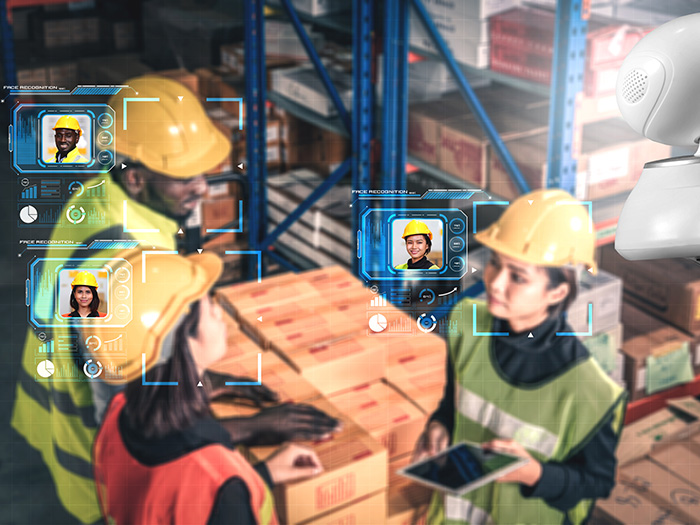
Technova’s solution exemplifies the creative thinking that underscores predict and prevent. Rather than replacing existing infrastructure, they applied their solution to connect legacy security cameras at distribution centers and warehouses to AI systems that could visually read temperature displays on refrigerated trailers.
One camera now monitors 200 to 300 trailers daily, automatically verifying driver IDs, trailer numbers, temperatures, and fuel levels before departure. The system creates verification checkpoints throughout the supply chain, catching errors before vehicles leave facilities.
From an insurance perspective, Technova’s approach delivers multiple benefits. Fewer claims for lost or spoiled goods occur because errors are caught proactively. When problems do arise, timestamped images create clear documentation of liability. And customers implementing the technology demonstrate reduced risk profiles that should translate to lower premiums.
I mention Technova’s example to inspire insurance and risk management professionals to look beyond the obvious and find new opportunities within their areas of expertise. Where else are manual processes creating preventable losses? What other legacy systems could be modernized with AI or IoT? What verification gaps exist in industries we haven’t fully considered?
The predict and prevent model isn’t confined to preventing hurricanes from destroying homes or wildfires from consuming communities. It applies anywhere risk can be measured, monitored, and mitigated before losses occur. Workplace injuries. Equipment failures. Cyber breaches. Professional errors. Supply chain disruptions.
The catastrophic property losses grabbing headlines make predict and prevent urgent. But the creative application of these principles across diverse risk categories may prove even more transformative. The question isn’t whether predict and prevent works; it’s where we’ll apply it next. &