Newsletters
 Risk Central
 Digital Edition
Arrowhead Intermediaries Is on the Move

In early 2026, Dan Reynolds, the editor in chief of Risk & Insurance, caught up with Steve Boyd, the CEO of Arrowhead Intermediaries, and Chris Walker, the firm’s chairman. What follows is a transcript of that discussion, edited for length and clarity.
Risk & Insurance: Thanks for meeting with us gentlemen. My first question had to do with some recent acquisitions your firm was engaged in, including NBS Insurance Agency, Tim Parkman Inc., One80 Intermediaries, and Poulton Associates. Can you fill me in on those and what they were intended to accomplish?
Steve Boyd: In 2025 we placed in excess of $20 billion of written premium across Arrowhead Intermediaries three divisions; Programs, Specialty & Wholesale. These acquisitions support our growth in those numbers but represent a whole lot more than size for the sake of size.
It’s truly been a transformative journey for us. Each acquisition brought a great culture and brought incredible talent across a myriad of specialty niche segments.
These acquisitions significantly diversified and expanded our overall portfolio. They enhanced our capabilities in areas like transportation, marine, cannabis, workers’ comp, and professional lines, but they also expanded us into new segments, like captive underwriting, affinity, warranty, employee benefits, and reinsurance underwriting.
For example, we acquired NBS Insurance Agency, which we rebranded as Local Edge, and it helped Bridge Specialty Group, our wholesale division, expand its national footprint. And near the end of the year, Wright Flood acquired assets of Poulton Associates, allowing us to further enhance our position as a leading provider of flood insurance in the U.S.
All of this leads to a compelling value proposition for our distribution partners. We’re becoming a one-stop platform for their specialty needs, and we’re a platform built for long-term partnerships, not short-term cycles.
R&I: That’s great. Was this a particularly active year for you in acquisitions, would you say?
SB: It felt like we did ten years’ worth of acquisitions in one year. So it’s a pretty big elephant to swallow.
R&I: What factors does Arrowhead Intermediaries prioritize when evaluating potential acquisitions?
Chris Walker: Our position in the market gives us insight into virtually every opportunity in this space, which allows us to be highly disciplined and selective. We evaluate many opportunities but move forward with only a very small number.
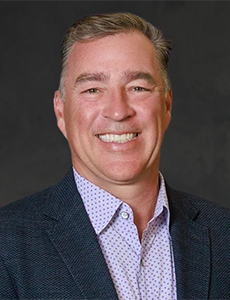
Steve Boyd
CEO
Arrowhead Intermediaries
When we are interested, we go pretty hard at it and try to be as responsive and quick as possible, especially if it fits our ideal criteria. For us, that means niche businesses led by people with a deep understanding and standing in the marketplace — people who are really good at their specialization.
We also look at how an acquisition fits into our portfolio. In some of our recent transactions, the diversification aspect was really strong and drove our decision-making. We also consider who the carrier partners are, whether they’re making money, and what their standing is with these potential acquisitions.
All those things are important as we do the due diligence, but it really does come down to the people, the function of the business, and especially the niche focus.
R&I: How would you characterize the capabilities of a startup MGA compared to a more mature MGA?
CW: As Steve mentioned, our collective enterprise placed a significant amount of premium last year. That scale gives us a very different position than most startups. When we bring forward a new concept or a new specialty niche, we do so with the trust of carrier partners who have already vetted our organization. So, then it becomes a question for us: Does the idea make sense? Does this specialty niche make sense to enter?
We move fast to market and fast to a yes or no. Our relationships enable that speed.
In the end, what we hear is that carriers want stability. They want partners who are disciplined and long-term, they don’t want to chase cycles.
As a mature organization, we’re not in and out of things — we’re consistent in what we do. We’re long-term players. We’re going to hold course and do it right.
Really, it’s all the data we have, all that knowledge and experience we have in those specialty niches. That’s where, as a mature organization, we can really move fast and take advantage of opportunities in the market.
R&I: What distinguishes a mature MGA in a delegated authority environment?
SB: In a delegated environment where the risk bearer is handing the pen over to another organization, experience matters. A mature MGA will deliver stability, credibility, execution speed, and consistency that’s really difficult to replicate if you’re new to the space.
It’s all about trust. We’ve got businesses that have been in the delegated space for well over fifty years, and they’ve got a long-standing track record to go with that.
R&I: How does your portfolio diversification position you in the current market?
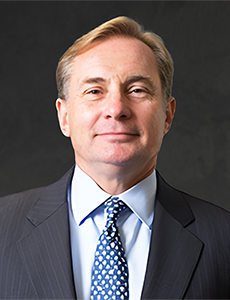
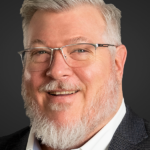
Chris Walker
Chairman
Arrowhead Intermediaries
CW: Our US portfolio is roughly fifty-fifty admitted and non-admitted. This balance allows us to respond to different market cycles and capitalize on different market opportunities.
The other important thing to remember is that if you talk to carrier partners—large carrier partners, fronting companies, whatever it is—our sector is still viewed as their growth engine. This is where they are getting their growth. You’ve seen the numbers about how much is now in the delegated authority piece of the industry; it’s grown way faster than the standard market.
We’re seen as that growth engine, and that gives us a lot of opportunity in the market, especially because of our balance of admitted and non-admitted business.
R&I: What defines an entrepreneurial culture, and what distinguishes it from other organizational cultures?
SB: We’re a large organization, but fundamentally, we try not to act like one. We have a very entrepreneurial culture where local leaders truly run their business.
My job is to get obstacles out of our leaders’ way, not introduce new ones. Collectively, we want to provide global scale and support, which could include capacity, data, technology, modeling, and other support services.
The other fundamental difference is that we have a strong ownership culture. The majority of our teammates—not just our leaders—own shares in our company.
That creates alignment, accountability, and long-term thinking. It encourages leaders to act like owners, not like employees.
R&I: What defines your entrepreneurial approach to managing specialized divisions?
CW: In its simplest form, we have groups of people who are top specialists in their particular fields—think about wind, commercial earthquake, residential earthquake, or cyber.
These are the type of people who could potentially leave tomorrow and start their own firms. They’re that good, but they stay.
We make their job as easy as possible by removing obstacles and letting them reap the benefits of their skills and specialization in their particular division. There’s no reason for them to leave because they’re doing what they love to do and they’re getting rewarded for it. That’s entrepreneurial.
R&I: What traits do you look for when attracting and retaining talent at your organization?
SB: I’d say we’re looking for problem solvers, first and foremost. If you think across our platform — whether it’s a wholesale brokerage placement, an MGU underwriting platform, or a distribution role — there’s some connective tissue that brings all those people together. Our leaders are not managers; they’re builders.
They’re building their businesses, helping build Arrowhead Intermediaries, helping to solve problems for our distribution partners, and being innovative along the way. The nature of risk is ever-changing, and our value proposition is bringing a solution to our distribution partner in whatever way it looks.
It could be an underwriting placement through a delegated facility, a wholesale placement, or a combination of the two. But that level of collaboration to solve that problem for that distribution partner—that’s what we’re here for.
R&I: What key points would you like to emphasize about Arrowhead Intermediaries before we close?
CW: Let me hammer home a couple of key points. We place $20 billion in premium, so we have tremendous size, which matters when introducing a new program. We also have a huge presence with people, and that’s important to us.
We’re very conscious of our partners — our distribution network, carrier partners, and others. Over time and across the portfolio, it’s important to us that all of our partners are in a profitable situation long-term.
We’re always trying to attract the best talent in the industry, and we’re always looking for new opportunities. We seek out specialty niches where we can capitalize on what’s happening in the marketplace. There are a lot of exciting things going on within our group at Arrowhead Intermediaries and within the entire organization.
We’re getting a lot of phone calls from people, and that’s good news. We want that activity. &