 Newsletters
 Risk Central
 Digital Edition
A Fraud Prevention Discussion with Rich Ives and Todd Mattiello of Travelers

At National Comp in Las Vegas in late September, Dan Reynolds, the editor-in-chief of Risk & Insurance, caught up with Rich Ives, senior vice president of Business Insurance Claim at Travelers, and Todd Mattiello, vice president of National Accounts Client Services Group at Travelers and leader of its TPA, Constitution State Services. What follows is a transcript of that discussion, edited for length and clarity.
Risk & Insurance: Thanks for meeting with us, gentlemen. For starters, can you help our readers understand the relationship between Travelers and Constitution State Services?
Rich Ives: Travelers is one of the leading property casualty insurers across the country. We’re a major player in workers compensation, which is obviously relevant to the National Workers Comp conference. We’re also a leader in fraud detection and prevention, which is the topic that brings us to this conversation today.
Todd Mattiello: Constitution State Services is a third-party administrator for casualty and property claims, and we are a wholly owned subsidiary of Travelers. From a workers compensation perspective, Constitution State Services partners closely with our customers to help their injured employees receive the care and support they need to return to work as soon as medically appropriate.

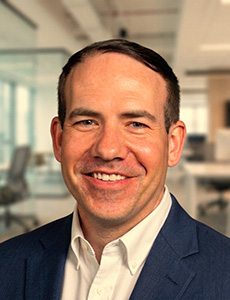
Rich Ives, Senior Vice President of Business Insurance Claims, Travelers
R&I: What is Travelers Investigative Services, and what makes this anti-fraud capability distinctive?
RI: Travelers Investigative Services, or TIS, is our in-house fraud detection and investigative unit. It is a team of around 300 investigators dedicated to fraud prevention, day in and day out. TIS investigators are solely focused on and passionate about fraud detection, and they’re good at their jobs.
Our investigators come from law enforcement, fire sciences, claim and underwriting backgrounds. They specialize in specific geographies, fraud types and lines of business. As you may know, fraud patterns and emerging schemes can vary based on geography. TIS covers every major business insurance exposure, including workers compensation, general liability, auto and property.
What makes our approach distinctive is the combination of three things. First, our team’s deep expertise and experience. Second, the team’s use of advanced technology. And third, our partnerships with organizations across the anti-fraud community, such as the National Insurance Crime Bureau and the Coalition Against Insurance Fraud.
Our scale and robust data provide a foundational capability for fraud fighting. Our advanced analytics identify outliers and patterns, enabling us to go deep and identify fraud on the right claims at the right time, which is key in this space.
For example, we maintain real-time in-house monitoring across all 1.8 million claims reported annually. That’s not just at first notice of loss. It’s continual detection that runs from first notice of loss right through resolution.
Our advanced analytics can detect some types of fraud earlier than conventional methods, often within hours of notice of loss, which we think is game changing. It helps our claim professionals and investigators engage quickly.
We also have an organized fraud detection model that uncovers sophisticated networks. Here, it’s not about the individual claim. It’s about looking across the scope for bad actors or patterns that evade traditional manual detection that’s more common in the industry.
We also have medical fraud detection capabilities that flag suspicious billing patterns and alert claim professionals before payments are made.
This is key because two of our core objectives are avoidance and deterrence. Avoidance means not paying for something that is not owed rather than chasing bad actors after the fact.
Second is deterrence. We want to deter bad actors from making claims that involve Travelers and CSS. For us, that looks like success.
R&I: Do you collaborate with law enforcement agencies, such as local police departments or federal agencies?
RI: We absolutely do work with law enforcement. That includes agencies at the local, state and federal levels, as well as state fraud bureaus. We also refer cases for prosecution when the evidence supports it.
R&I: What challenges is the workers compensation industry facing today, particularly regarding fraud?
RI: Insurance fraud costs the U.S. economy more than $308 billion every year, with 40% of that coming from the property and casualty sector, including workers compensation. That statistic comes from the Coalition Against Insurance Fraud.
Fraud drives up costs for policyholders and businesses. Even as consumers, we pay more for the goods and services we buy every day because of it. The broader economy pays that price when fraudulent claims go unchallenged.
Workers compensation represents a significant exposure within that broader fraud problem. According to industry experts, it’s believed that workers compensation fraud costs insurers between $35 billion and $44 billion annually. That problem is getting more sophisticated, not less.
A couple of proof points: Suspicious workers compensation claims rose 24% over a two-year period, according to NICB. Even broader than just workers compensation, suspicious slip, trip, and fall claims—which fall more in a general liability context—are up 10% year over year, and in some metropolitan areas as much as 40%.
The types of fraud that we typically see in workers compensation can be broken down into three main categories. The first is premium fraud, which means employers or businesses using deceptive practices to avoid paying higher premiums, such as misclassification of the type of work that they’re in. The second would be medical provider fraud. And the third would be fraudulent claims perpetrated by bad actors, and those bad actors could be medical providers or even attorneys.
R&I: How sophisticated does billing fraud become in workers’ compensation and medical insurance?
RI: It gets quite complex and sophisticated. That’s why we developed our medical bill fraud detection capabilities.
R&I: Is A.I. advancing the sophistication of your capabilities in areas like parsing bills?
RI: The technology we use continues to evolve rapidly, and that’s reflected in our capabilities – whether it’s identifying billing anomalies, detecting organized fraud networks or flagging suspicious patterns across millions of claims. The speed and precision of what we can do today compared to even a few years ago is significant.
R&I: What are the more common types of workers’ compensation fraud schemes?
RI: There are two different types of fraud in this space: opportunistic and organized fraud. Opportunistic fraud is the old traditional example of somebody who does have an injury, but it didn’t come from work. It may have come from something they did the night before. Now they’re trying to say it happened at work. There are lots of other examples of opportunistic fraud as well, such as overbilling or exaggeration of an injury.
Then there’s the other type, which involves bad actors. We call that organized fraud. Organized fraud is more deliberate and coordinated. It was a central theme of our keynote at the conference.
These are coordinated schemes involving networks of bad actors, which could include medical professionals, vendors delivering durable medical goods or equipment that were never needed or necessary, or treatment that was never rendered. Unfortunately, we’ve seen that attorneys can participate in some of that as well with those partnerships.
Regarding medical billing, a couple of practical examples include ’upcoding’, which is billing for a higher level of service than was actually provided, or billing for a service that was never provided. These are just examples of charging more than what is owed.
R&I: Are there instances in workers compensation similar to pharmacy fraud, where someone might be billed for a brand-name drug when they received a generic?
RI: Not so much in that specific scenario. However, we do see numerous examples of fraud involving durable medical equipment.
In fact, we’ve encountered some major schemes involving millions and millions of dollars related to durable medical equipment.
How Employers Can Help Fight Fraud
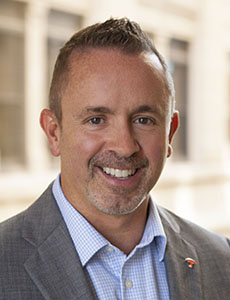
Todd Mattiello, Vice President, National Account Client Services, Travelers, and head of Constitution State Services (CSS)
R&I: What do clients find most valuable to understand about where their fraud exposure is actually living?
TM: One of the things we share with customers is how sophisticated these schemes have become, especially with coordinated networks deliberately designed to look like routine claim activity.
For example, you could have a cluster of injured employees from the same worksite treated by the same providers and following the same treatment path. It’s the pattern that’s the signal, not any one claim unto itself.
What we try to help customers understand is that the earlier suspicious activity is reported, the better and more effective job we can do in partnering and leveraging the greater resources we have available to us.
R&I: Beyond early reporting, what else should employers be doing to take more ownership of fraud prevention and investigation rather than simply handing cases off to their TPA or carrier?
TM: I have a few recommendations. First, train employees, especially frontline managers, in recognizing and reporting suspicious activity. Building awareness internally is one of the most effective things employers can do.
Second, enhance monitoring in high-risk areas, whether it’s cameras, surveillance in job sites, loading docks, or other common areas. That in itself is a deterrent.
Third, establish clear protocols when incidents do occur. Frontline managers should document exactly what transpired, gather facts from witnesses, and file a police report if necessary. We like to talk about it as freezing the facts—do it early so that those facts don’t become old or cold over time.
Lastly, share information with your TPA or carrier promptly. Timing allows us to be the most effective partner we can be.
R&I: What are the primary ways Constitution State Services helps clients see the picture more clearly when it comes to fraud prevention?
TM: Our customers have access to their loss information through e-CARMA®, our risk management information system, or RMIS. It has broad data and analytic capabilities that let them identify trends, assess their loss costs, and monitor activities easily.
Through our relationship with Travelers and TIS in particular, our customers also have access to even more advanced analytics and the advanced technology that Rich mentioned. They benefit from experienced investigators who work on their behalf, monitoring claims from first notice of loss throughout the life cycle of the claim.
This means our customers are getting a team of experts actively looking for those anomalies and patterns we mentioned to help them, in addition to just claims management.
R&I: Thanks for your time today, gentlemen. What are the key takeaways about fraud that employers and payers should keep in mind?
RI: Fraud is not a background problem. It is growing, active, and becoming more sophisticated, especially with the introduction of digital tools that allow fraud to happen faster and go undetected.
It’s not victimless either. We’ve talked about the impact and the cost that we all pay. We invest significant time and resources into fighting fraud to help make sure we are only paying for what our customers are ultimately responsible for.
Our continuous innovation in detection methods keeps us ahead. As an industry, we need to continue to do that because bad actors are becoming more sophisticated. They are using these tools to up their game and to do things more readily at scale, so we need to be one step ahead in that space.
TM: I would add one thing. We tell our Constitution State Services customers that they’re not alone. Through our parent, Travelers, and TIS, we have the infrastructure, the intelligence, and the expertise to partner with their programs. &