Newsletters
 Risk Central
 Digital Edition
7 Questions for Safety National’s Gus Aivaliotis
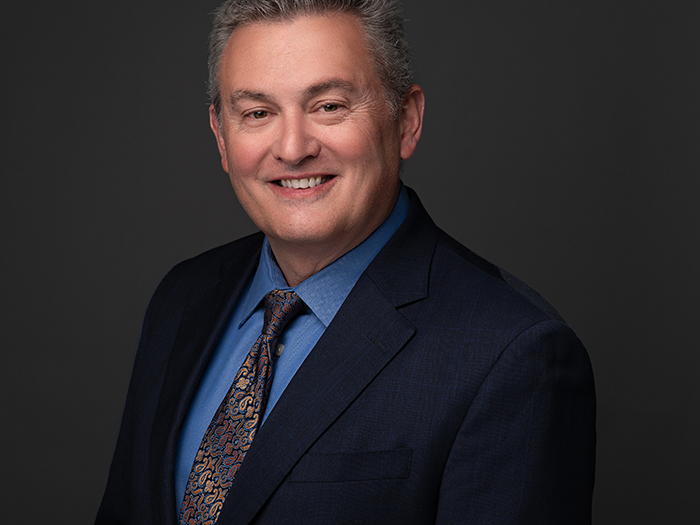
As part of our expanded coverage of our 2026 Workers’ Comp Power Broker® winners and finalists, Risk & Insurance® recently spoke with Gus Aivaliotis, Deputy Chief Executive Officer, Safety National, about workers’ compensation trends. What follows is a transcript of that discussion, edited for length and clarity.
Risk & Insurance: Thanks for meeting with us, Gus. What makes a successful broker in the workers’ compensation space?
Gus Aivaliotis: Starting from the very top, I think the broker must view themselves as a risk and claim mitigation expert for their customers, not a salesperson. What that really means is first understanding a customer and what their needs are—understanding their safety culture, their commitment to safety, and their claims handling philosophy as an employer. It’s critical not to just jump into the sales process but to understand where the customer is coming from.
Part of that is understanding the buying motivation for the customer. Like most things in life, you may have a lower-priced alternative that doesn’t give you as robust a set of services for claim and risk mitigation, or you may have a higher-priced option with robust services that may help you ultimately end up paying less in claims or saving your employees from injury. It all comes down to the motivation of the buyer.
A broker has to understand the key elements and value proposition—the balance between cost and benefit or feature and benefit. Beyond that, an effective broker also needs to understand the fundamentals of exposures and controls for any given customer.
If I’m the buyer of insurance for an organization, I want to talk to an insurance industry person, a broker who understands my business—maybe not the very inner workings, but who has a fundamental understanding of the nature of the operations and what kind of controls should be in place to safeguard employees. That’s critical to me. Balancing understanding of the customers’ needs, their motivations, and their operations, and then matching them up with a carrier that fits the culture is essential.
To me, it’s not a matter of the lowest cost; it’s the best value, which is a trade-off between the cost and the benefit—meaning the services you’re provided. Whether it’s risk control services to help avoid injuries in the first place or claims services that take employees to maximum medical improvement quicker and more effectively.
A lot of people in the industry think about being a broker and just going out to a whole bunch of markets and seeing what you get back. To me, it starts with spending time, investing time in a customer, and seeing what the best fit is.
The third element for what a broker needs to do is understand the market—what are the strong suits of carriers, what’s their long-term commitment, and what’s their value proposition. Some carriers’ models are focused on buyers that are cost-sensitive, so they’re going to be cheaper but won’t provide the whole set of services that a different carrier might. Others say those carriers that provide more robust offerings are expensive but worth it because they provide more value and will help you in the long run.
A broker has to understand all of this, starting with the customer and then the market, matching up buyer and seller to what hopefully is a long-term relationship.
R&I: What risk mitigation tools are getting the most traction as technology continues to advance?
GA: Some of the things that were new years ago are still highly effective. Vehicle telematics, for example, didn’t exist a couple decades ago, and a decade ago people were experimenting. Now telematics is pretty much table stakes.
Telematics helps monitor employees, but there’s also a third-party element from an auto liability standpoint. Auto crashes are a leading severity driver in the workers’ comp space, so you’re protecting your employee and third parties. This is where we are seeing some of the latest industry challenges with litigation funding, jury pool shopping, and related issues.
Telematics and dual vision cameras—inside and out—are tried and true and continue to be effective. But really, it’s AI-enabled tools that are emerging now.
Real-time monitoring of operations is something we’ve seen, and we’ve had a number of customers go this path using existing camera systems with AI overlaid. These systems can identify breaches of protocol in real time—operational aspects like working at heights without lanyards or other safety equipment, or not stopping at designated stops within a warehouse setting. Investment in this technology allows you to capture things in real time for immediate intervention.
You may be able to stop the loss from happening when you see someone in an unsafe working condition. If you can’t prevent it in real time, there’s an immediate training opportunity because it’s captured on film. You can review with your management team to understand what happened and how to mitigate it, then share with employees as well.
AI continues to expand very rapidly, so I think these tools will continue to evolve. Among more current solutions, cell phone control software can prevent people from texting while driving. Drug and alcohol detection systems and gun detection technologies in public settings are also gaining traction—some camera systems have AI overlaid to identify someone harboring a gun when they enter a property.
So it’s a combination of what’s tried and true, what’s current, and forward-looking AI applications. That’s probably the area changing the fastest.
R&I: How does AI integration with existing camera systems enhance real-time safety monitoring in the workplace?
GA: AI providers will come in and have employees wear sensors and devices to train the AI on proper movements, all the way down to proper lifting technique. The technology can analyze the skeletal system to determine whether someone is bending at the waist or bending at the knees to lift a heavy object.
This technology continues to evolve. The time frame for implementation has been significantly compressed—it used to take a couple of weeks with a team of people measuring and monitoring to train the AI, and now that process is much shorter. As a result, the cost has come down significantly, and the amount of time dedicated up front to setup has decreased meaningfully.
Similar to what we’ve seen with vehicle telematics and cameras, this technology used to be cost prohibitive. A decade or two ago, if you had a big fleet with 2,500 units, you simply couldn’t afford to equip them all. The same was true for AI in warehouse settings—the cost was very high, but it has continued to decrease with scale.
When we do the cost-benefit analysis, many people are seeing the benefit of investing in AI systems to measure and monitor in real time. It’s not just the new technology driving adoption—the cost of implementation has come down dramatically. As more organizations recognize how they can afford it and see the benefits, adoption will become more widespread.
Ultimately, someone has to make the decision: Do we invest in this to protect our employees? The variability in those answers is compressing as the value proposition becomes clearer. This helps our industry overall.
Claims frequency is down—there’s probably never been a safer time to be an employee in the U.S. from a frequency standpoint. However, when incidents do occur, severity remains a challenge as the cost of medical care continues to rise.
R&I: How is your firm approaching behavioral health in workers’ compensation claims management?
GA: For at least a decade, I’ve been hearing about the psychosocial approach. Now we’ve transitioned to biopsychosocial. That’s not a new concept—it goes back to the late 1970s—but I have not seen it used very often until recently.
It’s a more holistic approach. My company specifically deals with self-insureds with large retentions or large deductible buyers. When others are bearing the cost of frequency claims, we’re really focused on severity.
When looking at severe, catastrophic losses, we have claim analysts and nurse case managers who get involved proactively up front to develop an engagement plan and a path to treating the employee to maximum medical improvement. There’s a lot of literature out there on biopsychosocial, but we’re actually embracing it and putting it into use.
We take into account family dynamics, early life experiences, and determinants of health, including education and economic stability, because they play a critical role in pain perception, recovery, and disability duration. There have been many studies over time that prove there is a direct link between those factors. We’re well equipped to address these issues with claim professionals who have specialized training.
One thing we’ve seen is that prolonged reliance on medications or invasive treatments isn’t necessarily a long-term solution. We’re using approaches like cognitive behavioral therapy to help injured workers develop coping strategies to improve their final outcomes. Most importantly, we focus on sustainable recovery, not a short-term fix.
Not to minimize it, but surgery may solve something in the short term. However, if the condition is going to return, it wasn’t an effective use of time and money—and it’s difficult for the employee to go through a cycle of feeling improved but ultimately reverting back to an injured state. Something like a pain suppression spinal cord stimulator, if it’s not going to provide a long-term solution, we need to explore other methods.
Functional restoration is part of that as well. We integrate care with physicians, psychologists, physical and occupational therapists, acupuncturists, vocational rehab specialists, and biofeedback providers. Especially with catastrophic claims, you have a whole team of people responsible for care and recovery, not just a treating physician.
You’re looking at all three elements—the biological, the psychological, and the social—trying to develop an individualized treatment plan for an injured employee. That’s what we’re doing proactively, and we’re a leader in catastrophic claims. I don’t usually hold the flag up to say we have more big claims than anyone, but the nature of our customers is such that we insure the biggest organizations in the country.
They retain the frequency losses, and we deal with severity. I think we’re cutting edge in terms of how we embrace the biopsychosocial approach to claim mitigation. All of this is in the interest of helping the employee return to the best state they can be—maximum medical improvement.
R&I: Why is it important to take a holistic, individualized approach when managing workers’ compensation claims?
GA: Not that long ago, we talked about comorbidities being a significant factor. A minor injury can turn into a major loss for someone already suffering from a previous condition. To me, this individualized approach encompasses all of that.
Who is the person? It’s not a case study for a generic type of injury. It’s about bringing all the elements together to best serve the injured party.
This approach also protects the employer. Employers want to see their employees recover, and there’s also a financial aspect. Whether you want to control your experience mod or you’re retaining losses in a large retention, there’s a financial impact.
But most importantly, it’s about helping the employee and their family recover.
R&I: Looking back at 2025, what key takeaways or lessons learned did you pick up over the past twelve months?
GA: I would say it’s reinforcement, if nothing else. Maybe no brand-new learnings, but medical severity will continue to rise well beyond general inflation levels and well beyond generic healthcare costs.
Advances in medical care and equipment are dramatically changing accident survivability and prolonging life expectancies for severely injured workers. These advances are also significantly improving their quality of life and independence. While this is great, all of this progress in medicine and technology comes at a price. For instance, even something like prosthetics—when you talk about somebody who’s a permanent total disability, replacement of a prosthetic arm or leg over a lifetime may cost a million dollars, where in the past it could have been tens of thousands of dollars.
The cost of severity from a workers’ comp perspective continues to go up. Even though workers’ comp as a line of business has been characterized as being highly profitable for the industry for the past decade, I don’t think the rise in the severity element of the cost has really slowed down. That’s a reinforcement, not a new learning, but I continue to observe it.
The other thing is there will always be competitors entering the market. With workers’ comp having been so profitable for the industry, according to most sources like NCCI, you have new entrants come in, and there are only so many ways to sell it.
So I’m back to what’s the value proposition of carriers. Do they come in to be a low-cost provider? If that’s the motivation for the buyer, then it fits their need. Or do you have others that come in and say we cost more, but we can provide better services and better protect your employees?
What’s old is new. There will always be competitors coming to the space, and it reinforces the notion of being a consistent, long-term, stable market, which to me is critical. I think 2025 shows that when I reflect back on the year.
Lessons learned beyond just workers’ comp: invest in the future, invest in young people, invest in technology, build your institutional knowledge, and look to the long term.
R&I: What initiatives are you focused on for the year ahead?
GA: At a very high level, from Safety National’s perspective, we want to continue to deliver on our promises to our brokers and buyers—we view both as our customers. Reputation, service delivery, ease of doing business, and cost stability in a dynamic environment are all critical. You have to deliver on your promises.
Beyond that, learning how to embrace AI and put it to use is critical. I think every industry, not just insurance, is looking to AI for the future. I think about AI in two ways: internal use and external use.
Internal use is about efficiencies gained—having your resources spend their time thinking, strategizing, analyzing, and coming up with conclusions and recommendations as opposed to compiling data. There’s an efficiency to be gained and better use of resources from a capacity standpoint.
Externally, it’s about how you interact with your customers and what kind of product and service they want. Simply said, looking more deeply into AI because it impacts how work is done and completed, and how value is created and delivered, is the way I look at it.
We’ve engaged a lot of resources internally and have teams focused on advanced analytics within the industry. We’re also focused on the customer perspective—what do they want to see from a carrier? &