Newsletters
 Risk Central
 Digital Edition
5 Questions on Health Care Liability for John Livatino of QBE North America
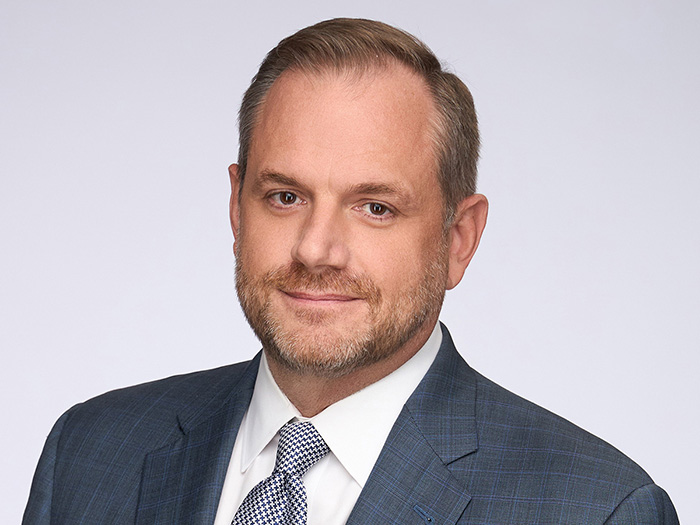
In October, Dan Reynolds, editor in chief of Risk & Insurance, caught up with John Livatino, senior vice president, head of health care liability, QBE North America. What follows is a transcript of that discussion edited for length and clarity.
Risk & Insurance: Thanks for meeting with us John. How is AI being used in health care today, and what are the primary liability concerns associated with its implementation?
John Livatino: Artificial intelligence (AI) is starting to change the landscape of health care delivery with current applications in imaging, cancer detection and patient treatment. It is not only used in diagnosis and treatment, but it has quickly become an important part of record-keeping and office management. As AI becomes an expected standard to enhance the quality of health care, risks related to accuracy and data privacy persist. It cannot be said enough that human oversight is essential in mitigating these risks. In addition, health care providers will soon need to assess whether AI is required to deliver the standard of care.
R&I: What does the term “miscellaneous medical” encompass compared to traditional health care?
JL: Miscellaneous medical refers to various health care services that fall outside traditional segments such as hospitals, senior living facilities and physician groups. These services were previously categorized as Allied Health, which traditionally included health care staffing, home health, imaging, labs and pharmacies. The new term, Miscellaneous Medical, reflects a broadened scope. It extends coverage for health care adjacent segments such as social services, fitness and daycare centers. Success in this area requires a broad appetite and innovative underwriting.
R&I: How does abuse coverage differ between miscellaneous medical and traditional health care settings, and what types of abuse are typically included in these coverages?
JL: The majority of headline abuse cases stem from the traditional health care providers – hospitals and physicians. These claims often involve patients in vulnerable positions, include multiple plaintiffs and generate large settlements. Specialty practice areas like gynecology have accounted for some of the highest-value abuse claims. Historically, the coverage for sexual abuse on hospital policies was silent and across very large towers of limits carried by the facilities. We are now starting to see that market react to these claims and restrictions on coverage are being implemented.
Miscellaneous medical, by contrast, frequently covers outpatient services, which generally reduces the exposure to abuse claims. These claims often involve a single plaintiff, and the values are much lower. However, risks remain in areas like behavioral health, which can include inpatient or residential care, as well as social services involving foster care and transportation. Miscellaneous medical insurers have taken a more intentional approach to abuse coverage, offering specific insuring agreements often with tighter terms, restrictions on coverage and much smaller limits.
R&I: What trends are occurring in the social services liability insurance market regarding capacity, availability and pricing?
JL: The social services liability insurance market has been undergoing significant change. Some of the historical markets for these risks have pulled back on their appetite, pricing and capacity. Rates continue to rise, and carriers have scaled back aggregate limits for primary professional liability and abuse coverage. We are at the point where these coverages have almost entirely converted from occurrence to claims-made triggers. In excess layers, capacity is reduced and provided in smaller limits requiring additional layers.
Renewal structures have become far more complex than in the past, when towers were straightforward with primary and excess layers. Today, carriers are structuring multiple first-layer excesses over abuse or professional liability while determining which portions apply to general liability or auto.
Only a limited number of carriers remain active in this area, and they are deploying capacity with extreme care.
R&I: How has the increasing complexity in health care liability changed the landscape for risk managers and their relationships with brokers?
JL: Renewals now require more preparation and work. Social services and behavioral accounts, in particular, are no longer routine, quote-as-expiring renewals. Brokers and other stakeholders must start earlier and be prepared to design new programs to address the evolving market landscape.
In digital health where different delivery methods are involved, only a few markets currently offer comprehensive digital health policy forms. To secure adequate coverage, risk managers, brokers and carriers need to collaborate early to evaluate evolving exposures and determine the best way to secure the appropriate protection without coverage gaps.
It is important that insurers remain flexible and adapt to these developments. Insurers, brokers and risk managers must evolve alongside emerging risks. &