Newsletters
 Risk Central
 Digital Edition
3 Business-Ending Risks U.S. Executives Aren’t Prioritizing Enough in 2026

U.S. business leaders have no shortage of concerns heading into 2026. Supply chain disruptions, economic volatility, and tariff uncertainty dominate boardroom conversations from coast to coast. But according to the 2026 C-Suite Stress Index—a survey of 1,250 U.S. executives conducted by Wakefield Research on behalf of Sentry Insurance—the risks most capable of delivering a fatal blow to a company are the ones leaders are least likely to rank among their top threats.
The survey, fielded in December 2025 among owners, CEOs, CFOs, and Chief Risk Officers at companies with at least 10 employees, paints a picture of a business landscape where day-to-day pressures are crowding out preparation for catastrophic, company-ending events. The findings carry an urgent message: the threats executives focus on most aren’t necessarily the ones that could put them out of business overnight.
“What we’re seeing is a classic prioritization gap,” said Jeff Cole, AVP of National Accounts at Sentry Insurance. “Executives are understandably focused on the operational pressures they deal with every day—supply chains, labor shortages, economic uncertainty. But the events most likely to threaten a company’s survival are often the low-frequency, high-severity risks that require a different level of planning.”
Hidden Threats with Devastating Consequences

Jeff Cole, AVP of National Accounts, Sentry Insurance
The report identifies three categories of risk that executives widely acknowledge but consistently under-prioritize: runaway litigation, natural catastrophes, and workforce-driven injuries.
Start with lawsuits. A staggering 93% of executives said their companies have been impacted by litigation over the past five years, with nearly half reporting higher insurance premiums or rising legal costs as a direct result. Yet only 17% of leaders listed lawsuits among the biggest threats to their companies in 2026.
The potential consequences of that oversight are severe. Sixty-nine percent of executives believe a single multimillion-dollar verdict—sometimes called a “nuclear verdict”—would likely put their company out of business. That concern is even more pronounced at smaller firms, where 76% of leaders at companies with annual revenues below $5 million said a single massive verdict could be fatal.
The problem is compounded by the rise of third-party litigation funding, in which outside investors—including foreign entities—bankroll lawsuits in exchange for a share of successful payouts.
“A single large verdict today can easily reach levels that threaten the viability of an otherwise healthy business,” Cole said. “The rise of third-party litigation funding is accelerating that trend. Companies that haven’t reassessed their liability exposures recently may be underestimating just how quickly legal risk can escalate.”
Two-thirds of executives view this trend as a growing problem in their industries, with a quarter of long-haul trucking leaders describing it as a massive and increasing threat.
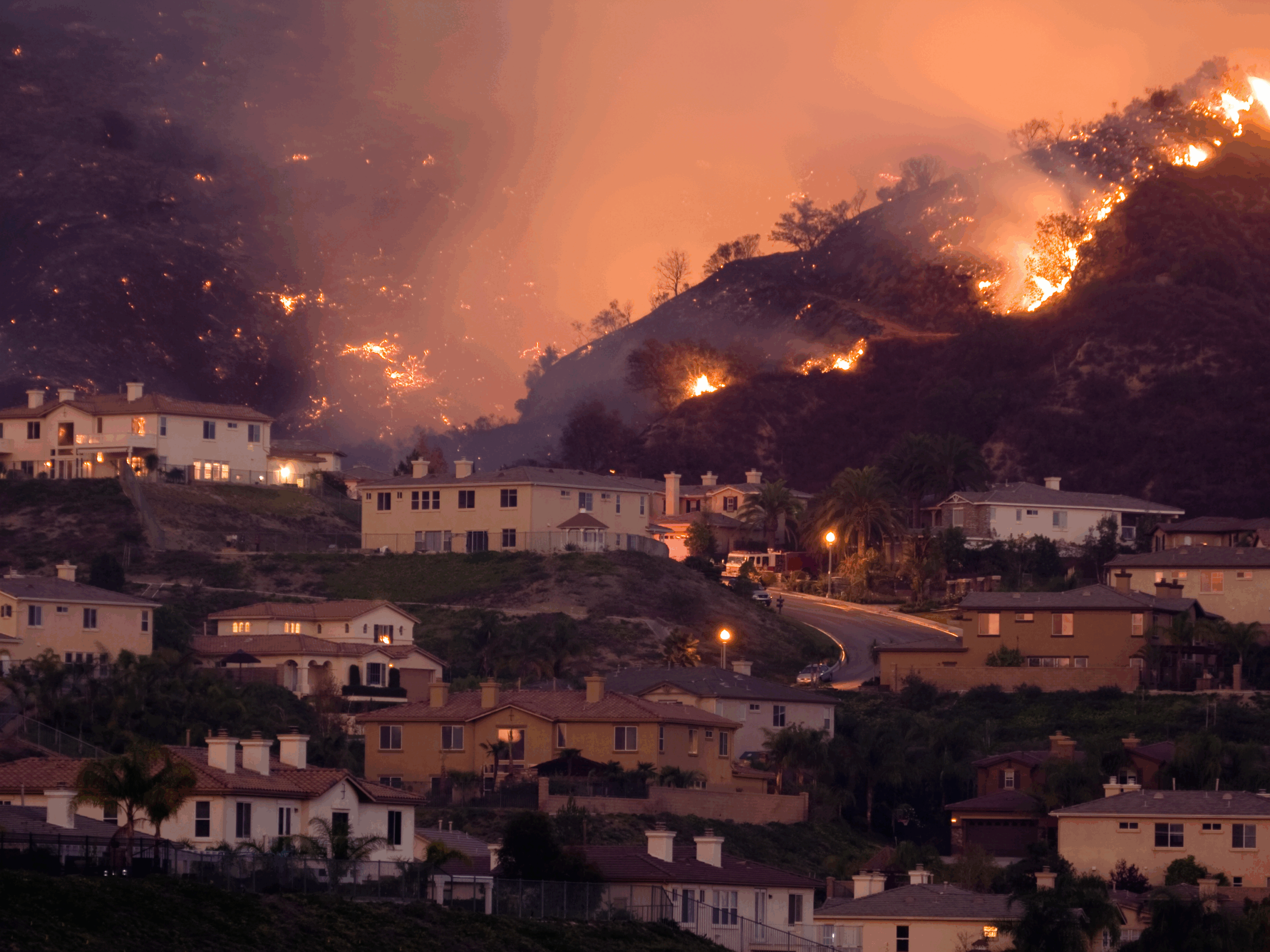
Natural catastrophes tell a similar story. Nearly all executives surveyed (92%) said their companies have experienced some form of severe weather disruption in the past five years, from system outages to supply chain delays to property damage. Half believe the next major weather event could end their company altogether—a figure that climbs to 63% among leaders of firms with 10 to 49 employees. And yet, only 32% cite natural catastrophes among their top risks for the year ahead.
The financial exposure is real and growing. Seventy percent of companies have sustained weather-related property damage, and 84% of executives are concerned that property insurance will become harder to obtain in their operating areas.
“Extreme weather isn’t just a regional issue anymore—it’s a nationwide business risk,” Cole said. “Many organizations assume they’re insulated from catastrophic events until one disrupts their operations, their suppliers, or their workforce. Building resilience into insurance programs and continuity planning is becoming essential.”
In the western U.S., nearly half of leaders expressed serious concern about future insurance availability.
Workforce strains are another major concern for executives. Two-thirds of executives have either already seen an influx of unskilled or under-skilled workers drive up claims or are concerned it will happen soon. Eighty-four percent acknowledge that employees are being asked to perform tasks outside their roles or beyond their training. And 51% said workers are putting in longer hours or taking fewer breaks—conditions that make injuries not just possible, but almost inevitable.
“Workforce strain shows up quickly in injury trends,” Cole noted. “When employees are stretched beyond their training or working longer hours, the likelihood of incidents increases. Companies that invest in training, safety culture, and proactive risk management tend to see significantly better outcomes.”
The healthcare industry faces a particularly acute version of this challenge. Nearly two-thirds of healthcare leaders fear the demands they’re placing on their workers could lead to more injuries, compared with 51% across all industries. An aging patient population is increasing demand for services at the same time healthcare employees themselves are aging and delaying retirement, creating a collision of pressures that strain both operations and liability exposure.
The Stressors Keeping Executives Up at Night
The survey found that 60% of executives enter 2026 feeling more stressed than a year ago—and the sources of that anxiety are largely operational.
Supply chain and logistics challenges top the list, cited by 45% of executives. Economic pressures follow closely at 44%, and uncertainty around tariffs and trade policy ranks third at 39%. Rising employee healthcare costs and labor shortages, each cited by 38% of leaders, round out the top five.
These are real, persistent concerns. Manufacturing executives, for example, are more likely than leaders in other sectors (30%) to worry their businesses could shrink or close this year. Across industries, 46% of executives report that more employees are working until they’re older, while 44% feel the impact of a shrinking labor pool that leaves fewer skilled workers available.
The cumulative weight of these pressures is significant. Forty-two percent of executives report their management teams have been diverted from day-to-day operations to deal with legal matters, and more than a third have had to hire additional staff just to manage litigation demands. In retail, 53% of executives see workers being placed in higher-risk situations due to training gaps.
What’s revealing is the gap between the stressors leaders feel daily and the risks that carry the most destructive potential. Supply chain hiccups and tariff uncertainty can erode margins and slow growth—but a nuclear verdict or a catastrophic weather event can end a company in a single blow. The data suggests that while executives clearly understand these existential threats, the urgency of near-term operational pressures may be drawing focus away from adequate preparation.
Confidence, Action, and a Path Forward
Despite the weight of these overlapping risks, the survey’s most striking finding may be the resilience of executive optimism. Fifty-four percent of leaders believe their company will not just survive but thrive in 2026. Another 22% expect stability, even if they don’t anticipate growth. Confidence is especially strong in retail and long-haul trucking, where 60% of executives predict a thriving year.
More importantly, that confidence isn’t passive. Leaders are backing their optimism with action.
Nearly all executives (98%) plan to reevaluate their insurance policies this year. Forty-three percent intend to purchase additional coverage to mitigate risk, 42% expect to expand existing policies, and 39% are moving to eliminate known gaps. Among executives who anticipate a thriving 2026, more than half plan to expand or add coverage, while just 3% expect to reduce it. Even among those projecting flat growth, only 5% plan to cut back—a sign that business leaders view adequate insurance as a non-negotiable foundation.
“The encouraging takeaway from this research is that executives are taking action,” Cole said. “We’re seeing more leaders reassess coverage, invest in safety, and close gaps before an event occurs. Insurance works best when it’s part of a broader risk strategy—not just a policy on paper, but a partnership focused on prevention and resilience.”
Vehicle safety offers a concrete example of this proactive mindset. Among the 69% of surveyed executives whose companies operate vehicles, 61% have adopted dash cams as a risk management tool—a figure that reaches 77% in long-haul trucking. Half of dash cam users have leveraged footage to exonerate a driver in a lawsuit, and nearly seven in 10 use recordings to reinforce safer driving behavior. When employees violate safe driving practices, 92% of executives take action, ranging from additional training to termination.
Workforce safety investments are expanding, too. Eighty-three percent of executives plan to increase spending on worker safety in 2026, with goals that include combating rising healthcare costs (42%), curbing workers’ compensation incidents (41%), and improving retention and recruitment.
The bottom line is that only 17% of executives feel completely confident their current insurance coverage is sufficient. Rather than sounding an alarm, though, that number reflects a healthy awareness that yesterday’s policies may not align with today’s—or tomorrow’s—threats. As risks grow more complex and more consequential, the leaders who regularly reassess their coverage and invest in prevention will be best positioned to protect what they’ve built.
With more than 120 years of specialization in business insurance and more than 218,000 businesses insured across the U.S., Sentry Insurance has long partnered with companies navigating exactly these kinds of evolving challenges—from small businesses to Fortune 500 organizations. &