Newsletters
 Risk Central
 Digital Edition
2026 Theo Award Winner: Walmart Claim Services
 Managing workers’ compensation at the Walmart scale is, in most respects, unlike managing it anywhere else.
With nearly 1.6 million employees in all 50 states, claims volume can easily become a significant operational and financial exposure. Over time, the technology supporting the operation had expanded in layers alongside the company’s rapid growth, creating opportunities to simplify and unify processes within a modern platform.
“We grew from Bentonville outward,” said Paul Morizzo, director of program management at Walmart Claim Services. “We didn’t need systems in specific states until Walmart operations grew there and needed them. So, we bolted these programs and systems together. And then it became clear that we needed one national, centrally focused system.”
That clarity became his mandate.
The Architecture of Change
Morizzo joined Walmart about four years ago specifically to examine contracting and programs at a national level. What he found was a program that could be enhanced: medical bill review, pharmacy benefit management, provider support, and payment functions spread across separate workflows and multiple vendor partners, with limited integration between them.
The enhancement was achieved via consolidation. Morizzo served as the executive sponsor and architect of a fully integrated national operating model, bringing medical bill review, pharmacy benefit management, provider support, provider payment, and treasury functions under a single accountable partner. It was a non-traditional approach to vendor management at an extraordinary scale — one that required alignment across claims, pharmacy, finance, compliance, and IT, and a governance structure capable of sustaining consistency across the entire enterprise.
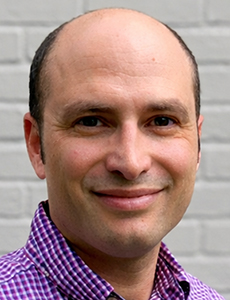
Paul Morizzo, director of program management, Walmart Claim Services
But the Walmart team didn’t bat an eye; the rollout was phased, internal governance structures were established, and its quality training never stopped.
Transparency, Training, Communication
Throughout the implementation, Morizzo returned repeatedly to three principles: transparency, training, and communication.
“We built a roadmap to determine what needed to potentially change,” he said. “And we helped our associates understand that this is going to be a massive amount of change management. It may be uncomfortable. But we’re going to show you how the process works. We’re going to take your feedback and show you where it goes in that timeline to make sure we’re getting things that make sense.”
Listening sessions with adjusters became a regular part of the process. Resources were developed to support consistent communication when questions arose. Feedback loops were built in so the team could course-correct as the new model was activated.
The goal throughout was to free adjusters from administrative tasks so they could redirect more of their time toward injured-associate recovery and claim strategy, the work that actually moves outcomes.
“Training just never stops,” Morizzo said. “We’re committed to finding out ways that people learn and reiterating that message over and over again.”
Results, and What Drives Them
The integrated model delivered measurable improvements. Out-of-network pharmacy utilization declined significantly, strengthening oversight and cost control. Provider payment cycle times improved. Provider disputes decreased meaningfully. And provider satisfaction improved as payments became faster and more accurate.
Internally, adjusters gained time back, with the overall program now operating with the consistency and accountability that a program of Walmart’s complexity demands.
Morizzo is direct about where credit belongs.
“I couldn’t have done it alone,” he said. “This isn’t a one-person thing. I have an incredible team. We have a systems team that helps with integrations, and all of our adjusters are the ones activating it on a day-to-day basis. My team and I can come up with the best program in the world, but if it doesn’t make sense to the adjusters and they aren’t using it, then it would have been meaningless.”
Looking ahead, the team is exploring AI tools — ways to make processes faster, put guardrails in place, reduce the opportunity for error at scale. It is, in many ways, simply the next expression of a cultural value that Morizzo sees as foundational to how Walmart operates.
“Walmart is focused on continual improvement and change,” he said. “You need to walk in the door every day understanding that something about your job is probably going to change today. And when you get done changing it, there’s going to be something else to change tomorrow. It’s a growth mindset — and we simply apply that to our piece of the business.” &

 The Theo Award celebrates its sophomore year, honoring 28 workers’ compensation programs for their excellence and service to workers across the nation. To learn more about the award and amazing qualities each winner possesses, visit here.