Newsletters
 Risk Central
 Digital Edition
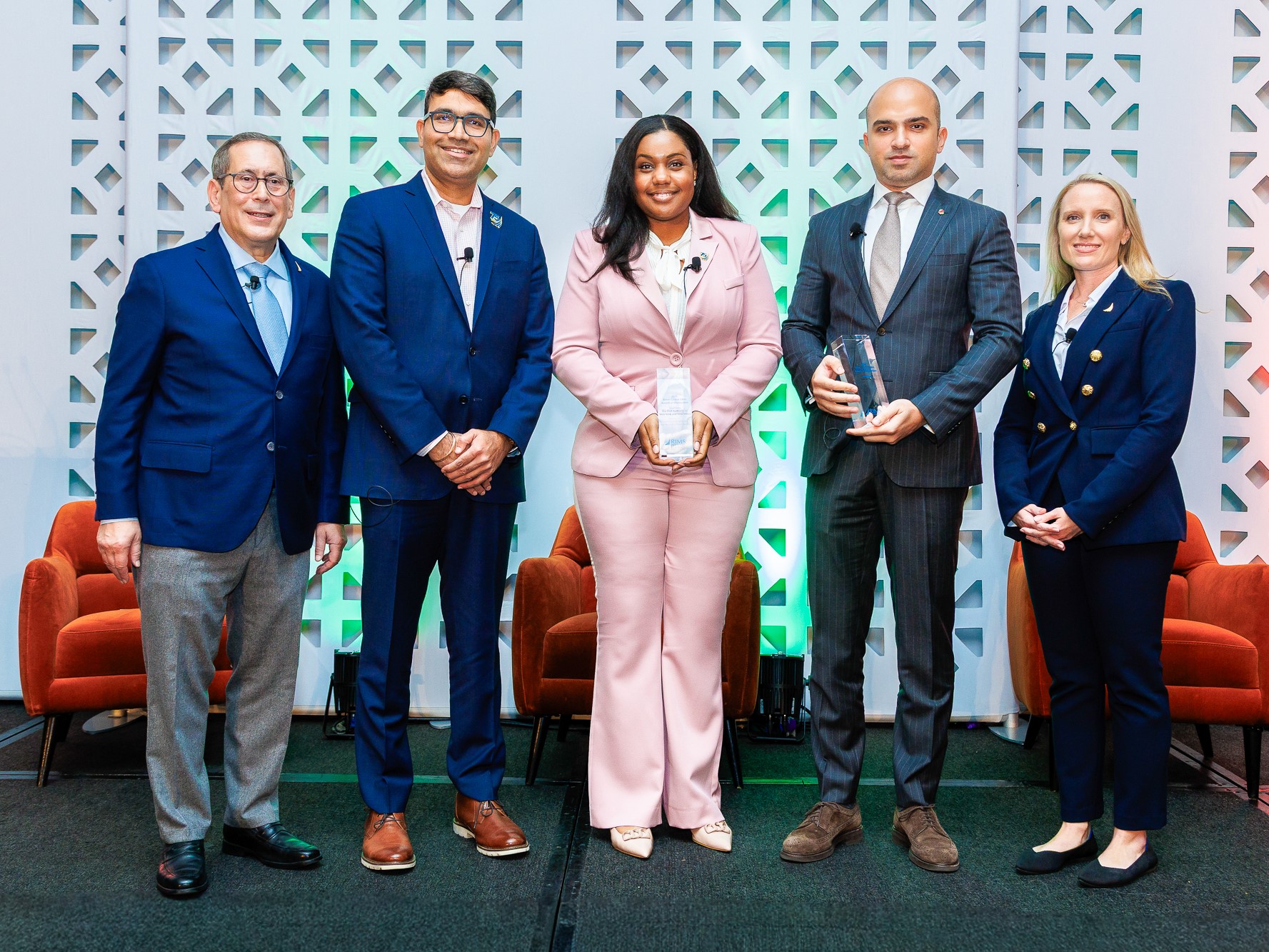
2026 Theo Award Winner: Sacramento Metropolitan Fire District
 Workers’ compensation is complicated enough in most workplaces. In the fire service, it’s a different animal entirely.
Firefighters work 48 hours on, 96 hours off. Their job demands peak physical fitness — not just for their own sake, but because a colleague’s life may depend on it. When a firefighter is hurt, a modified-duty assignment can’t simply mean answering phones or doing light filing. Return to work must be structured around a schedule that bears no resemblance to a standard 9-to-5, and around a job where “cleared for light duty” often means cleared for nothing at all.
“Work comp was definitely not built for first responders,” said Angela Lewis, who joined Sacramento Metropolitan Fire District’s HR team 18 months ago after 15 years on the claims administration side. “It doesn’t account for the very unique way that their job functions.”
At Metro Fire, those structural challenges were compounding. Temporary disability costs were rising. Claims were dragging. And perhaps most critically, trust between the workforce and HR and workers’ comp teams had eroded — not through any single failure, but through years of accumulated frustration and, as often happens, through unintentional misinformation.
“If they have a question about their claim, they’re asking the firefighter sitting next to them,” said Chief Human Resources Officer Melisa Maddux, who has spent 19 years at Metro Fire. “And it may not always be the correct answer. Then they start to distrust the entire process.”
Building the Committee, Doing the Roadshow
The turning point came when Metro Fire committed to something genuinely uncomfortable: bringing everyone into the same room and having an honest conversation.
An ad hoc committee was formed with Metro Fire board members, division chiefs, the union, the HR team, and their third-party administrator, Intercare Holdings. For almost two years, the group worked through the real challenges facing the program — not just the numbers, but the perceptions, the misconceptions, and the communication gaps that were feeding distrust.
One insight was immediate: Having board members in the room changed the dynamic. Several board members were themselves former Metro Fire personnel or fire service veterans. Seeing the complexity of the program firsthand — and understanding what the HR team was actually dealing with — shifted the default assumption when a complaint came in.
“They come at it now with the assumption that they probably don’t have the whole picture,” Lewis said, “as opposed to ‘the work comp system is terrible, this is on purpose.’”
Armed with that foundation, the team took the show on the road — literally. They visited all 42 of Metro Fire’s stations, riding along with a peer support captain from the Health and Wellness Division to lead training sessions with the crews. The approach was deliberate: rather than HR showing up to lecture, a trusted fellow uniform was in the room.
“It’s a lot harder to be mad at someone you know than it is to be mad at the voice you’re talking to in HR,” Lewis said. The sessions walked crews through how the program actually works, covering everything from acceptance rates, approval rates, what to expect and who to call. They asked firefighters to say, in a safe space, what they thought of when they heard the words “workers comp.” And then they addressed it directly.
“Traveling around to all those stations and trying to catch all the shifts was a huge task,” Maddux said. “A lot of time commitment. But it really helped open communication lines with everyone.”
Modified Duty, Metro Fire Style
On the operational side, one of the most creative solutions Metro Fire developed addresses one of the most stubborn return-to-work barriers in the fire service: schedule compatibility.
Most modified-duty programs assume a standard work week. Metro Fire’s crews work a 48-96 schedule. Asking an injured firefighter to shift to a Monday-through-Friday desk assignment doesn’t just disrupt their work life — it upends their family’s entire routine, particularly in households where both partners work and childcare is built around the firefighter’s off days.
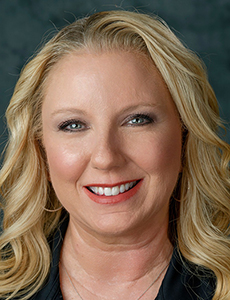
Melisa Maddux, Chief Human Resources Officer, Sacramento Metropolitan Fire District
Metro Fire created six dedicated accommodation positions — two per shift — allowing injured members to return to a fire station on their normal schedule, performing administrative, cleaning, cooking, and project work alongside their regular crews.
“That 56-hour light duty spot has been instrumental,” Maddux said. “Their entire schedule doesn’t have to get rearranged.”
The benefits run deeper than logistics. Staying connected to crew, to station routine, and to the physical rhythms of the job counteracts the psychosocial drift that can turn a manageable injury into a prolonged disability claim.
“You’re not dealing with the psychosocial loss of what they’re normally doing,” Lewis explained. “They’re not losing their physical fitness, they’re not losing all those things that come with being off work.”
Candace Sarlis, the workers’ compensation coordinator who has been with Metro Fire for 12 years, is direct about what’s at stake: “No one gets into the fire service wanting to exit early. They all want to hit their retirement. It’s important for them to know that we’re here to support them in that mission, and not here to fight them through the process.”
A Zero-to-50 Turnaround
Perhaps the most striking outcome the team points to involves presumptive claims — a category unique to California, where the legislature has established lower burdens of proof for conditions disproportionately affecting first responders. Think cancer, heart disease, and post-traumatic stress disorder, to name a few.
These are the most serious claims Metro Fire handles. And before the ad hoc committee’s work took hold, the process for getting them accepted was slow, burdensome, and discouraging.
“Previous to the ad hoc and us coming together, it was still a slow and heavily burdensome process,” said Lewis. “We had a 0% acceptance rate during the investigation delay period.”
The team rebuilt the process from the ground up. Peer support personnel were trained to help members complete paperwork correctly and file early in the week — not on Fridays, where days can be lost inside a tight 75-day investigation window. Medical releases are obtained on day one so records requests can begin immediately.
The result: Roughly half of all presumptive claims in the past year were accepted within the 75-day window. Average days to acceptance on these serious claims fell by more than half.
“That’s a direct result of having all the right players in the room discussing the same situation,” Lewis said. “It’s given us a path to get the members to a ‘yes’ as quickly as possible.”
The successes are seen beyond the internal team too: “Sacramento Metropolitan Fire District is an organization that goes above and beyond to support its employees. They work closely with their Board of Directors to explore innovative solutions that ensure both the safety and long-term wellbeing of their staff,” said Danielle Buri-Beaton, Executive Vice President, Client Success Division, AvonRisk.
“Their Human Resources Department is exceptional, focusing on proactive strategies and recommendations that help the organization and its employees achieve their goals while ensuring excellent care,” Buri-Beaton said.
The Sacramento team remains candid that their work is ongoing. The program has been in place for roughly two years, and there is still refinement ahead. But the shift in culture — at the station level, in the board room, and in the relationship between Metro Fire and its TPA — is real and durable.
“Don’t be afraid to collaborate,” Lewis said, reflecting on what she’d tell other organizations facing similar challenges. “A lot of the ideas we’ve come up with are things we’ve heard other departments doing that we’ve been able to modify. Make sure you’re using those partnerships and make sure no one is making decisions in a silo.” &

 The Theo Award celebrates its sophomore year, honoring 28 workers’ compensation programs for their excellence and service to workers across the nation. To learn more about the award and amazing qualities each winner possesses, visit here.