Newsletters
 Risk Central
 Digital Edition
2026 Theo Award Winner: First Student Inc.
 Every school day, First Student puts more than 5.6 million students on buses across North America. The Cincinnati-based company operates the continent’s largest school bus fleet, with thousands of drivers making the same split-shift runs day after day — morning routes, afternoon routes, summers off.
It’s a workforce unlike most others, and it presents a workers’ compensation challenge unlike most others.
First Student’s drivers tend to be older. A disproportionate share have multiple comorbidities. And nearly three in ten are Medicare-eligible — a rate roughly three times the industry norm. Medicare-eligible claims cost nearly twice as much as standard claims, carry longer disability durations, and involve far greater complexity at settlement. Layered on top of that is the split-shift schedule itself, which — combined with certain disability payment structures — can reduce the urgency some employees feel to return to work.
“Those that drive, they’re more sedentary than some other occupations,” says Karin Holland, who leads workers’ compensation at First Student. “With our aging workforce, people don’t heal as fast. And we have injured workers who don’t understand the workers’ comp system and need a lot of hand holding. We know that if they don’t get care timely, they’re less likely to heal at 100%.”
Managing all of that had historically meant heavy reliance on field case management — and by 2021, the cost of that approach had grown significantly. First Student needed a smarter model.
Dedicated, Unbundled, and Focused
In 2021, First Student partnered with Enlyte to redesign its approach around two complementary priorities: deploying clinical resources more efficiently, and getting objective injury evidence in front of providers early.
The core of the new model was a telephonic case management (TCM)–first approach. Rather than routing most claims through higher-cost field case management, First Student implemented automatic TCM assignment for qualifying lost-time claims in five high-volume states. Field case management was reserved for catastrophic, complex, or extreme-risk cases — where the intensive, in-person engagement genuinely justifies the cost.
Critically, the telephonic case managers assigned to First Student are dedicated exclusively to the program. That distinction matters enormously to Holland.
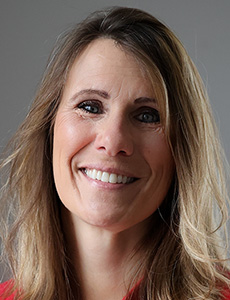
Karin Holland, workers’ compensation lead, First Student
“I wanted dedicated staff because it’s important that they understand our locations and what our injured workers do day in and day out,” she says. “A lot of people haven’t been on a school bus since they were driven to school. People might look at a claim and say, ‘school bus driver — that’s a medium to high impact job.’ But it’s not necessarily that anymore. The buses have power steering, electronics, a lot of modern features. We needed people who really understood our injured workers.”
The dedicated case managers know First Student’s transitional duty options — including nonprofit placement and remote work alternatives for drivers who can’t immediately return to the seat — and they actively work with providers to pursue return-to-work paths rather than defaulting to full disability.
First Student operates an unbundled program, meaning direct vendor relationships rather than routing everything through a TPA. That structure creates the transparency Holland values. “I can’t say enough good things about the direct relationship,” she says. “Not worrying about the politics of one party having to go through another to make recommendations — that directness makes everything better.”
“First Student embraced a forward-looking strategy that redefines how workers’ compensation programs can manage complexity at scale,” says Keith Higdon, President of Customer and Market Operations, Enlyte.
“By combining early clinical intervention, smarter resource allocation, and the use of objective injury data, they’ve created a model that improves outcomes while maintaining strong cost discipline. Just as importantly, their focus on supporting employees through recovery reflects a deep commitment to care that’s critical in today’s environment.”
The Camera Advantage — Used Consistently
Nearly every First Student bus carries interior and exterior cameras. When a motor vehicle incident produces a workers’ comp claim, that footage is potentially invaluable — showing exactly how an occupant moved (or didn’t) at the moment of impact, providing an objective basis for clinical decision-making that self-reported symptoms alone cannot.
The problem was that this evidence wasn’t reliably reaching providers early in the claim process. Without it, physicians worked from subjective reports, increasing the risk of overtreatment and prolonged disability — especially in claims where the actual mechanism of injury was far less severe than initially presented.
First Student operationalized a systematic process to change that. Dedicated telephonic case managers are responsible for obtaining injury video and photographic evidence promptly, escalating when it’s missing, and ensuring providers receive a complete picture before making treatment decisions.
“Our nurses do a really nice job of understanding that they need that information,” Holland says. “An adjuster’s desk is very busy — it may not be their top priority to get those photos and videos over. But our nurses will escalate that to my team to make sure the physician has the full picture.”
The Medicare Problem, Solved Proactively
The third pillar of the program addressed First Student’s most complex financial exposure: Medicare Set-Aside (MSA) costs.
When a Medicare-eligible claimant settles a workers’ comp claim, the settlement must account for future Medicare-covered medical costs related to the injury — a calculation that, if not managed proactively, can produce MSA allocations that make settlements cost-prohibitive. Industry-wide, CMS counter-proposals have been running significantly higher year over year.
First Student partnered with its Medicare vendor to implement an aggressive clinical mitigation program, identifying claims where pre-MSA intervention could meaningfully reduce future allocations — before formal submission to CMS. The results have been striking: substantial reductions in average MSA costs for referred claims, with settlements achieved on cases previously considered unresolvable. First Student’s average approved MSA came in well below both the industry average and CMS counter levels.
Holland keeps the philosophy simple.
“There’s accountability in the program overall,” she says. “It’s not about being punitive to anybody. We have one goal: to get our injured workers back to where they were before they were injured with us. Just do the right thing.”
Continuity as a Competitive Advantage
One aspect of the program that Holland highlights as quietly powerful: the dedicated telephonic case management team maintained continuity even when First Student transitioned to a new TPA — a typically turbulent period when institutional knowledge about open claims can fall through the cracks.
“Having that continuity is priceless,” she says. “New adjusters can reach out to the case managers and get a quick snapshot — what’s transpired, what’s hot right now, what do we need to work on. It’s just a great partnership.”
The results across the program’s evaluation period validate the approach. Medical cost management has improved against industry trends. Disability duration has decreased. Telephonic and field case management have both delivered meaningful per-claim savings. And the Medicare mitigation program has turned what was once an area of uncontrolled exposure into a managed, measurable line of the business.
“I don’t know that we’re doing anything other than the right thing to get better outcomes,” Holland says.
In a program built around 5.6 million student journeys a day, that clarity of purpose turns out to be both the simplest and most powerful part of the strategy. &

 The Theo Award celebrates its sophomore year, honoring 28 workers’ compensation programs for their excellence and service to workers across the nation. To learn more about the award and amazing qualities each winner possesses, visit here.