Newsletters
 Risk Central
 Digital Edition
2025 Theo Award Winner: Starbucks Coffee Company
 When the COVID-19 pandemic struck, Starbucks Coffee Company faced unprecedented challenges with its workforce of more than 235,000 U.S. employees, whom they call partners internally.
The company discovered that traditional approaches to workers’ compensation were no longer sufficient for a workforce heavily weighted toward employees aged 16 to 30 who had experienced significant disruptions during crucial developmental years.
The generational impact became clear as Starbucks noticed increased workplace violence incidents and psychological complications from injuries that historically would have been straightforward recovery cases.
Young partners who missed key social and educational milestones during the pandemic struggled with customer interactions and conflict resolution, creating new complexities in the workplace.
“Our workforce demographics at Starbucks definitely range all the way from baby boomers to those just coming into their first job — 16-year-old Gen Alphas,” said Noreen Olson, senior manager of risk management at Starbucks.
“But the bulk of our retail workforce is ages 16 to 30. During COVID, these individuals in particular experienced substantial disruptions in those late adolescent and young adult social, educational and developmental milestones.”
The impact extended beyond social skills. Starbucks began seeing an increase in violence toward retail partners over the past two to three years, incidents that were virtually unheard of before the pandemic. While the physical injuries were often modest in nature, the psychological impact proved significant and disruptive to employees’ daily lives and career aspirations.
Tackling the Problem
Starbucks responded with a comprehensive whole-person approach that addressed both the immediate needs of injured workers and the underlying challenges facing its young workforce.
The company implemented multiple integrated programs, including Lyra for mental health counseling, the Headspace App for wellbeing and meditation, the CUP Fund for financial support among partners, and Empatha’s biopsychosocial program for workers’ compensation claims.
Central to Starbucks’ strategy was the recognition that engagement represented the biggest barrier to program success. The company developed a multi-pronged approach combining continuous promotional messaging with word-of-mouth endorsements through social media platforms accessible to partners.
When an employee sustains an on-the-job injury, Starbucks sends a separate loss acknowledgment letter alongside the standard third-party administrator packet. This letter introduces the injured worker to their dedicated risk management advocate, one of 10 team members who serves as a direct contact throughout the recovery journey.
“In this letter that we send, it also introduces the partner to their risk management advocate, which is a person on the workers’ comp team who will be that individual’s direct contact so that they have a person they can always go to help them interface with their claims examiner,” Olson explained.
The company maintains regular contact with employees engaged in temporary modified duty, reaching out at 30-, 60-, and 90-day milestones with progress check-ins accompanied by infographics outlining the workers’ compensation recovery journey and highlighting available Starbucks benefits and resources.
Starbucks also leveraged its dozen employee resource groups to promote benefits awareness, asking group leaders to remind partners about available resources. The company engaged benefit advocates through a third-party service to help employees understand and select appropriate benefit packages.
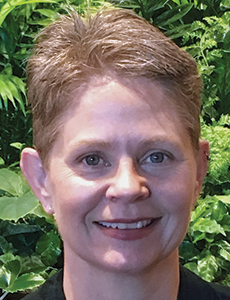
Noreen Olson, senior manager of risk management, Starbucks
What sets Starbucks apart in the fast-service food and beverage industry is its comprehensive benefit structure. The company offers group medical, dental, and vision coverage for anyone working 20 hours per week or more, along with short-term and long-term disability programs. Mental wellness benefits through Lyra include 20 online or in-person visits annually with licensed mental health professionals for employees and dependents.
The company’s college achievement program with Arizona State University provides 100% upfront tuition support for over 30 online degrees, eliminating the financial burden of waiting for reimbursement. Additional benefits include free Headspace and Spotify subscriptions, gym membership subsidies, and “bean stock” — restricted stock units awarded annually to give employees ownership in the company.
For complex cases involving chronic pain, failed surgeries, mild concussions, post-violence incidents, and CRPS, Starbucks utilized Empatha’s Progressive Goal Attainment Programs. This comprehensive approach combines medical care with rehabilitative services, physical and occupational therapy, psychological support, and activity coaching.
“The approach is comprehensive, and it combines the medical care with the rehabilitative care with physical and occupational therapists along with psychological, cognitive behavioral support, and then activity coaching,” Olson said.
“All of these providers are not only working as a team with this individual but also working with the claims team to make sure that we are creating what I will call a milieu for triumphs, small triumphs and recovery.”
These small victories might begin with something as simple as helping a partner organize their daily schedule, set wake-up alarms, prepare meals independently, or take short walks. The incremental approach helps employees regain confidence and control when they feel powerless over their circumstances.
Underlying all these initiatives was Starbucks’ commitment to empathy and compassion as foundational elements. The company extended this philosophy to its vendor relationships, requiring service providers to embrace the same empathetic approach.
Starbucks reinforced these values through monthly meetings highlighting positive partner feedback and implementing bonus programs that reward vendors for empathetic behaviors like prompt communication and timely benefit payments.
“Starbuck’s believes in their mission: ‘With every cup, with every conversation, with every community — we nurture the limitless possibilities of human connection,’ ” said Dr. Darrell Bruga, cofounder and CEO, Empatha Recovery Management. “Starbucks delivers on this promise, integrating empathic biopsychosocial services as part of its partners recovery program.”
The company also pioneered employee self-reporting of claims, a practice it has maintained successfully for almost 10 years as a way to demonstrate trust from the beginning of the process.
Success to Build On
Starbucks’ comprehensive approach yielded impressive results, with Empatha achieving a 72% return-to-work rate and facilitating maximum medical improvement and case closures or settlements. The program demonstrated significant return on investment when benchmarked against Official Disability Guidelines.
Organization: Starbucks Coffee Company * Location: Seattle* Number of Employees: 361,000 * Category: Hospitality & Food Service
The Progressive Goal Attainment Program proved particularly effective for complex cases, helping employees rebuild confidence through incremental achievements that ultimately led to successful return-to-work outcomes. The approach addressed the whole person rather than just the injury, recognizing that psychological overlay often complicated physical recovery.
The company’s emphasis on building trust and transparency through empathetic communication created an environment where injured employees felt supported rather than defensive. This approach removed common stressors that can delay recovery, such as fears about job security or financial stability.
Starbucks’ success stemmed from recognizing that the post-pandemic workforce required different approaches to traditional workers’ compensation management. By addressing the unique challenges facing younger partners who missed crucial developmental experiences, the company created programs that supported both immediate recovery needs and longer-term resilience building.
The integration of multiple support systems, from mental health resources to financial assistance to comprehensive medical care, created a safety net that addressed the whole person rather than just the workplace injury. This approach acknowledged that recovery extends beyond physical healing to encompass psychological wellbeing and confidence rebuilding.
The company’s commitment to empathy and compassion remains central to its philosophy, recognizing these qualities as essential to building trust and encouraging cooperation throughout the recovery process.
“Don’t give up on empathy and compassion,” Olson added. “I think it’s the key to a successful workers’ comp program.” &

 The Theo Award celebrates its sophomore year, honoring 32 workers’ compensation programs for their excellence and service to workers across the nation. To learn more about the award and amazing qualities each winner possesses, visit here.